
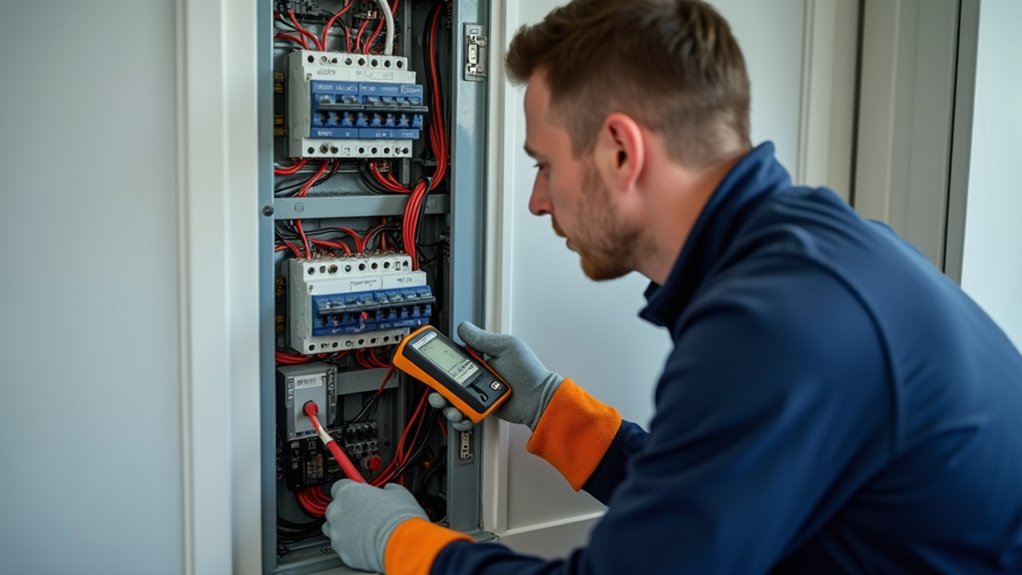
You may not know that UK electrical safety duties can apply even when nothing appears faulty, particularly in rented properties where landlords must arrange periodic inspections. You need to understand how the Electricity at Work Regulations, Building Regulations Part P, and EICR requirements affect wiring, sockets, consumer units, and repairs. Knowing the warning signs helps you act before a minor defect becomes a serious hazard—but the exact checks and responsibilities depend on your property and situation.
Key Takeaways
- UK electrical safety requirements vary by property type, with landlords, homeowners, and businesses responsible for maintaining safe installations.
- Landlords must arrange electrical installation inspections at least every five years and provide tenants with the resulting EICR.
- Qualified, competent electricians should inspect, test, alter, or repair fixed wiring, consumer units, sockets, and supplied appliances.
- EICR classifications C1, C2, and FI require prompt action, while C3 identifies recommended safety improvements.
- Never use damaged equipment or repeatedly reset tripping devices; isolate hazards and obtain professional electrical advice promptly.
Which UK Electrical Safety Rules Apply?
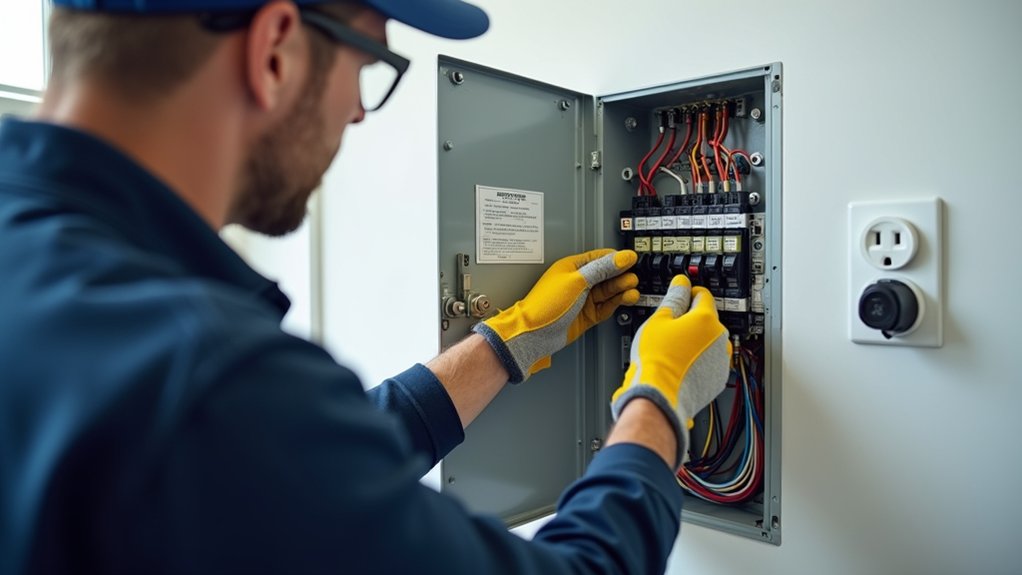
In the UK, electrical safety requirements depend on the property type and the work being carried out. If you’re a homeowner, use a competent, qualified electrician for alterations, repairs, and inspections, particularly where work affects fixed wiring or consumer units.
As a landlord, you’ll need regular electrical inspection and testing, with records and remedial action completed within the required timeframe.
Commercial, industrial, and rented premises also demand suitable risk assessments, maintenance arrangements, and clear responsibilities.
Electrical licensing isn’t a single universal scheme, so check your electrician’s qualifications, competence, and relevant registration before appointing them.
You should keep circuits identified, protect access to electrical equipment, and display Safety signage where hazards, isolation points, or restricted areas require warnings.
Always isolate supplies before work, verify dead circuits, and use appropriate protective equipment.
Understand the Main Electrical Safety Laws
UK electrical safety laws set duties for safe design, installation, use, inspection, and maintenance, but the rules depend on the property and work involved.
The Electricity at Work Regulations 1989 require employers and duty holders to keep electrical systems safe and prevent danger.
In homes, the Electrical Safety Standards in the Private Rented Sector (England) Regulations 2020 require landlords to arrange periodic inspection and provide tenants with reports.
Building Regulations Part P covers electrical installation work in dwellings, particularly work that could create an Electrical hazard.
You should use a competent, qualified professional and retain certificates, reports, and remedial records.
The Health and Safety at Work etc. Act 1974 may also apply to workplaces.
Follow current guidance and act promptly on defects to maintain Safety compliance.
Check Wiring, Sockets and Consumer Units
Once you understand the applicable duties, inspect the installation’s visible condition before arranging any testing or repairs. Look for cracked switches, loose sockets, scorch marks, exposed conductors, damaged insulation, and trailing or overloaded extension leads.
Don’t remove covers or disturb wiring unless you’re competent and authorised to do so. Check whether sockets sit securely, show burn damage, or lack suitable protection in areas where moisture may be present.
Examine the consumer unit for heat damage, missing blanks, corrosion, loose covers, or outdated protective devices. Keep its access clear, and never reset a repeatedly tripping breaker without finding the cause.
Record defects clearly, then use a registered electrician for diagnosis and remedial work. They can specify safe Wiring upgrades, socket replacements, earthing improvements, or consumer-unit repairs without compromising the installation’s protection.
When Do You Need an Electrical Inspection?
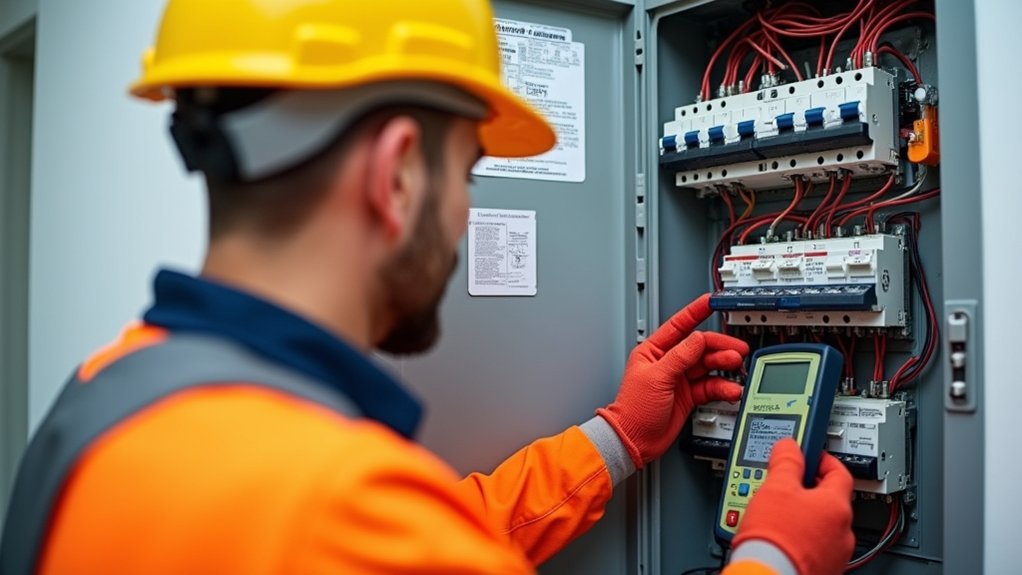
Arrange an electrical inspection when you’re buying, selling, letting, or substantially altering a property, or when the installation shows signs of damage, age, overheating, or repeated faults.
You should also arrange one after flooding, fire, impact damage, or unauthorised electrical work.
If you’re a landlord, obtain an Electrical Installation Condition Report (EICR) at least every five years, or sooner if the previous report recommends it. Review the installation whenever tenants change, especially in older properties.
Homeowners should seek professional advice before renovations, adding high-load appliances, or installing an extension.
Don’t investigate suspected electrical hazards yourself. Isolate the affected circuit only if you can do so safely, keep people away, and contact a competent electrician.
They’ll use suitable Safety equipment and testing instruments to assess risks without exposing you to live conductors.
Know What an EICR Checks
An EICR checks your wiring, sockets, switches, consumer unit, earthing, and bonding for damage, defects, and unsafe conditions.
Your electrician tests key circuits and records observations against current safety requirements.
You’ll receive a report identifying any risks, their classifications, and recommended remedial work.
Inspection Areas Covered
During an Electrical Installation Condition Report (EICR), a qualified electrician inspects the consumer unit, wiring, sockets, switches, lighting points, earthing and bonding, and any fixed electrical equipment.
You’ll receive a careful visual assessment of each accessible area, including the consumer unit’s condition, labels, protective devices, and enclosure.
The electrician examines every Electrical outlet for damage, loose connections, overheating, polarity concerns, and signs of overloading.
They’ll check Cable insulation for cracking, deterioration, exposed conductors, or unsuitable repairs, while looking for damaged switches, light fittings, and accessories.
Inspection also covers concealed or accessible wiring routes, junction boxes, metalwork, and connections to fixed appliances.
You should provide access to relevant rooms, cupboards, loft spaces, and outbuildings so the inspection doesn’t miss safety-critical components.
Testing And Reporting
Once the visual inspection is complete, the electrician performs a series of tests to assess the installation’s electrical safety and performance. You’ll see checks on continuity, insulation resistance, polarity, and earthing arrangements. These tests confirm that protective conductors work correctly and that a ground fault should trigger the appropriate protective device.
The electrician may also test each circuit’s circuit breaker or residual current device (RCD), confirming correct operation and disconnection times. After testing, you’ll receive an Electrical Installation Condition Report (EICR). It records the installation’s condition, test results, limitations, and any observed defects.
C1 indicates immediate danger, C2 identifies potentially dangerous conditions, and C3 recommends improvement. An FI code means further investigation is necessary. You should address C1 and C2 findings promptly, retaining the report for future maintenance and compliance evidence.
Meet Landlord Electrical Safety Duties
As a landlord, you’ll need a valid Electrical Installation Condition Report (EICR) and electrical safety certificate for your property.
Arrange inspections at least every five years, or sooner if the report requires it.
You must also complete necessary repairs promptly and provide tenants with the required safety documentation.
Electrical Safety Certificates
What does an electrical safety certificate confirm? It confirms that a qualified, competent electrician has assessed your property’s fixed electrical installations and recorded whether they meet the required safety standards.
As a landlord, you must provide tenants with a copy of the Electrical Installation Condition Report (EICR), including any required remedial-work results, within the legal timeframe. Keep the certificate securely, supply it to your local authority when requested, and give new tenants the relevant documentation before occupation.
Don’t treat certification as proof that appliances, extension leads, or tenant-owned equipment are safe; those items need separate checks and responsible use. Avoid DIY safety work on fixed wiring. Instead, use a registered professional for electrical upgrades, repairs, and certification.
A valid certificate supports compliance, protects occupants, and provides clear evidence of your landlord electrical safety duties.
Regular Inspection Requirements
To meet landlord electrical safety duties, arrange an inspection and test of the property’s fixed electrical installations at least every five years, or sooner if the previous EICR specifies an earlier date. You’ll need a qualified, competent person to complete the Electrical Installation Condition Report (EICR), evaluating wiring, sockets, consumer units, earthing, bonding, and protective devices.
Schedule inspections before the deadline, allowing time for access arrangements and review of the report. Keep the EICR securely for the required period and provide copies to tenants, prospective tenants, and the local authority when requested.
Record inspection dates and recommendations in your compliance system. Regular Electrical maintenance planning helps you track changing risks, demonstrate safety compliance, and avoid missed statutory intervals.
Don’t assume a recent certificate covers alterations or damage; maintain accurate property records.
Landlord Repair Responsibilities
An EICR only confirms the installation’s condition at the inspection date; you must still repair hazards promptly and keep the property electrically safe between inspections.
As a landlord, you’re responsible for maintaining fixed wiring, sockets, switches, consumer units, and supplied appliances. Arrange repairs with a competent, properly qualified electrician, especially where the report identifies C1 (danger present), C2 (potentially dangerous), or FI (further investigation required) observations.
Don’t leave tenants to manage defects or reset repeatedly tripping protective devices. Provide safe access, isolate dangerous circuits, and retain invoices, test results, and remedial certificates.
You must also address damage reported during the tenancy and complete required Electrical upgrades where existing equipment creates unacceptable risk.
Use clear safety signage for isolated outlets, temporary hazards, or restricted areas, then remove it when safe. Reinspect after significant alterations, faults, or repairs.
Spot Common Electrical Hazards at Home
Electrical hazards at home often arise from overloaded sockets, damaged cables, loose connections, faulty appliances, and exposed wiring. You should check plugs, switches, and flexes regularly for scorch marks, buzzing, heat, fraying, or cracked insulation.
Don’t use an appliance if its cable or casing is damaged, and keep electrical equipment away from water.
Practise Extension cord safety: choose correctly rated leads, fully unwind them, never connect multiple extension blocks, and don’t run them beneath carpets.
Although GFCI outlets are common in North America, UK homes use residual current devices (RCDs) for comparable shock protection; test your RCD using its test button periodically.
Keep sockets unobstructed, replace damaged plug fuses only with the correct rating, and make certain children can’t access exposed connections or portable electrical equipment.
Know When to Call a Qualified Electrician
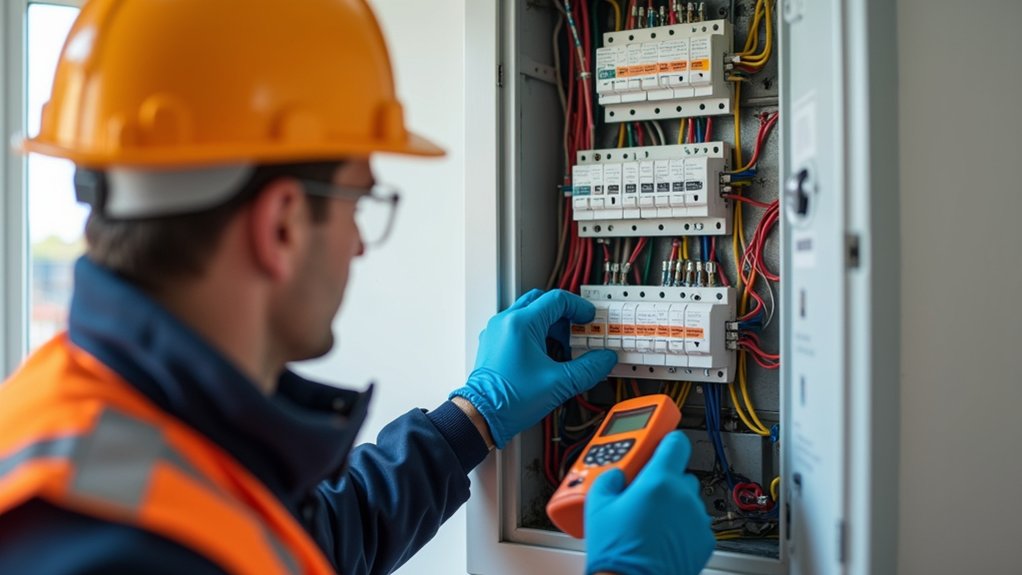
If an electrical fault involves exposed conductors, burning smells, repeated circuit-breaker trips, sparking, or overheating, switch off the affected circuit if it’s safe and call a qualified electrician.
Don’t remove covers, test live parts, or attempt repairs beyond resetting a tripped protective device once.
In the UK, use an electrician registered with a competent-person scheme, such as NICEIC or NAPIT, for installation, alteration, and inspection work.
You should also seek professional advice when sockets feel hot, lights flicker, cables show damage, or an RCD won’t reset.
Keep children away, avoid water, and provide clear access to the consumer unit.
Good Emergency preparedness includes knowing your isolation switch, keeping emergency numbers available, and checking smoke alarms.
Follow basic DIY safety tips, but never compromise on electrical safety: uncertainty means stop and call an expert.
Frequently Asked Questions
Can I Carry Out Minor Electrical Work Myself in a UK Property?
Yes, you can undertake some DIY electrical tasks, but follow safety precautions: isolate power, avoid consumer-unit or bathroom work, and use a qualified electrician for complex jobs, notifiable installations, testing, or uncertainty.
How Much Does an Electrical Inspection Typically Cost?
You’ll typically pay £100–£250 for an electrical inspection, depending on property size and location. Ask for itemised pricing, qualified professionals, and certification requirements; inspections identify Electrical hazards before they cause fires, shocks, or costly repairs.
How Long Do Electrical Certificates and Inspection Reports Remain Valid?
Your Electrical certification’s Inspection validity depends on its type: an EIC usually covers installation completion, while an EICR typically lasts up to five years. Don’t cut corners; follow the report’s recommended reinspection date and address defects promptly.
Can I Sell or Remortgage a Property Without an Electrical Safety Certificate?
You can sell or remortgage without an electrical safety certificate, but lenders or buyers may require evidence. Arrange an inspection, verify Electrical wiring meets Safety regulations, and resolve defects before marketing or refinancing.
What Should I Do During an Electrical Emergency or Power Outage?
If power fails, stay calm: switch off appliances, avoid damaged wiring, and use torches—not candles. For Electrical fire prevention, evacuate immediately; follow Emergency contact procedures, call 999, and never re-enter until professionals declare safety.
Conclusion
Electrical safety isn’t about fearing every switch; it’s about controlling preventable risks. You can’t see deteriorating wiring, but an inspection can reveal it. You might reset a tripping breaker, yet repeated faults demand a qualified electrician. Whether you own or rent, follow UK rules, maintain sockets and consumer units, and arrange an EICR when required. Small checks protect against serious harm, while proper records and prompt repairs help keep your property compliant, safe, and reliable.