

An estate agent valuation isn’t necessarily the price your property will achieve; it may reflect a marketing strategy, recent sales data, or an attempt to win your instruction. To avoid undervaluing your home, you’ll need to compare each agent’s evidence, assumptions, comparable properties, fees, and proposed marketing plan. Pay particular attention to differences between realistic achieved prices and optimistic asking prices, because those details can materially affect your final decision.
Key Takeaways
- Compare each valuation with recent completed sales of genuinely similar properties, prioritising achieved prices over asking prices.
- Check adjustments for size, condition, location, layout, parking, plot, and improvements to ensure comparisons accurately reflect your property.
- Ask agents to provide written evidence, data sources, valuation dates, assumptions, and explanations supporting their recommended prices.
- Treat unusually low or high valuations cautiously, and obtain an independent opinion when figures lack credible supporting evidence.
- Compare marketing plans, fees, contract terms, and negotiation strategies to ensure the chosen agent can achieve your property’s realistic market value.
Compare Estate Agent Valuations Properly
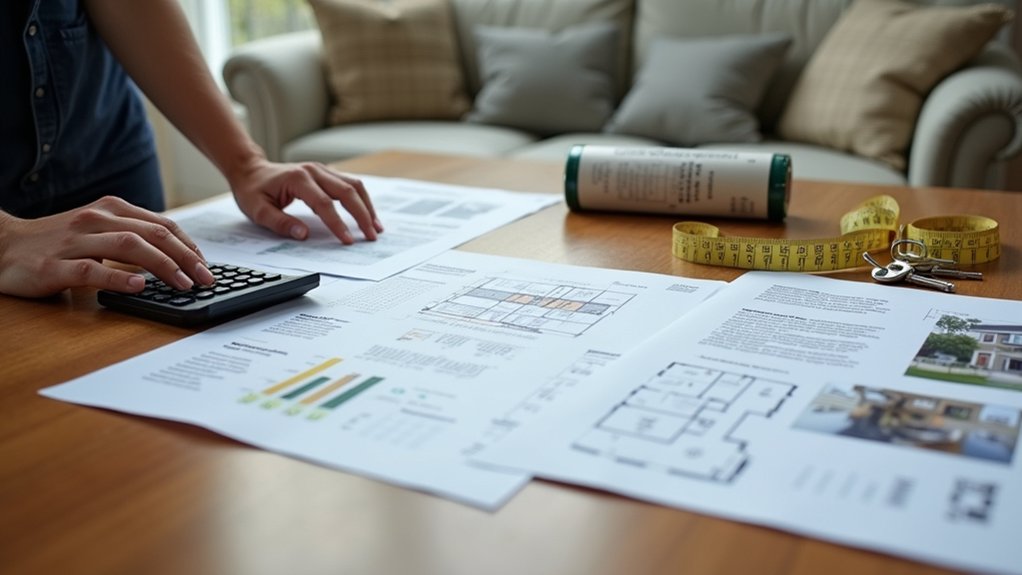
To compare estate agent valuations properly, assess each figure against the same evidence: recent comparable sales, your property’s condition, its location, and current local demand.
Ask every agent to explain the assumptions behind their valuation, including the proposed asking price, expected buyer profile, and estimated time to secure an offer.
Separate a reasoned valuation from a sales pitch. An unusually high figure may reflect optimistic expectations rather than achievable market value, while a low figure may indicate limited effort or risk aversion.
Review each agency’s Marketing strategies, photography, online reach, fee structure, and contract terms together.
Check Customer reviews for evidence of accurate pricing, communication, and negotiation performance.
Request written recommendations and challenge unsupported adjustments.
Choose the agent whose evidence, strategy, and service offer align with your objectives, not simply the highest number.
Check Comparable Local Property Sales
Check recent lettings and sales of comparable properties in the same locality to test each agent’s valuation against current market evidence.
Focus on properties with similar size, condition, tenure, location, and key features. When researching local property services, many renters find that choosing experienced Letting Agents Rainham can make the whole process smoother, from valuations and viewings to ongoing tenancy support.
This comparison’ll help you identify valuations that accurately reflect local demand rather than optimistic estimates.
Compare Recent Local Sales
Recent local sales provide a stronger benchmark than an agent’s opinion alone because they show what buyers have actually paid for comparable properties. Ask each agent for recent evidence from your area, then verify the sale dates, prices, and property addresses through reliable public records or established portals.
Focus on transactions completed within the past three to six months, since older figures may not reflect current demand, interest rates, or neighborhood trends. Calculate the median sold price rather than relying on one unusually high or low transaction.
You should also compare price-per-square-metre figures where reliable floor-area data exists. Use historical data to identify seasonal patterns and longer-term movement, but give the greatest weight to the newest completed sales.
If an agent’s valuation sits above the evidence, ask for a specific, documented reason.
Assess Similar Property Features
When comparing local sales, assess how closely each property matches yours in features that materially affect value. Check floor area, bedroom and bathroom counts, layout, parking, plot size, condition, and tenure.
Then examine location-specific differences, including road noise, outlook, school catchment, flood risk, and proximity to transport.
Record garden features such as landscaping, terraces, privacy, access, and usable outdoor space; these can support a measurable premium.
Note interior upgrades, including kitchen and bathroom refits, insulation, windows, heating systems, and extensions, while separating cosmetic decoration from structural improvements.
Adjust each sale price for these differences rather than treating the headline figure as directly comparable.
If a comparable has superior specification, expect your property’s indicated value to be lower; if yours offers more, apply an evidence-based upward adjustment.
Review the Evidence Behind Each Valuation
Compare each agent’s valuation with the evidence they used, including recent comparable sales, current listings, achieved prices, and adjustments for your property’s size, condition, location, and features.
Check whether the comparable properties genuinely match yours rather than merely sharing a postcode.
Give greater weight to completed sales than asking prices, which reflect seller expectations, not market value.
Ask agents to explain the date, source, and relevance of every figure, and identify any unusual transaction that could distort the comparison.
Consider market trends, including changes in demand, supply, interest rates, and local buyer behaviour.
Test whether each valuation reflects your home’s measurable advantages and drawbacks.
Then assess the pricing strategies behind the figures: an aggressive estimate may attract instructions, while an unsupported low figure could encourage a quick sale below potential market value.
Compare Fees, Services and Contract Terms
You’ll need to compare each agent’s fee structure, including commission rates, fixed charges and potential extras.
Check which services the quoted fee includes, such as marketing, viewings and negotiation support.
Review contract terms for tie-in periods, notice requirements, withdrawal fees and sole-agency restrictions.
Compare Fee Structures
A reliable comparison of estate agent valuations must include the fee structure, not just the suggested selling price. Request each agent’s complete written quotation, including the percentage or fixed fee, VAT, minimum charge, and payment trigger.
Then calculate the net proceeds you’d receive at identical sale prices. Compare commission rates carefully: a lower percentage may still cost more if the agent applies a minimum fee or adds marketing-related charges.
Check whether the quotation uses a sole-agency, joint-agency, or multi-agency arrangement, because each structure can alter your total liability.
Review the contract for withdrawal fees, cancellation rights, exclusivity periods, and commission payable after termination.
Ask agents to explain how their pricing strategies affect incentives, particularly whether the fee changes with the final sale price or includes performance-based tiers.
Assess Included Services
Once you understand the fees, assess exactly what each agent includes for that price. Check whether the package covers professional photography, floor plans, energy-performance information, portal listings, accompanied viewings, buyer qualification, and feedback after appointments.
Confirm who writes the description, manages enquiries, and advises you when market trends change. Ask how the agent develops pricing strategies, including comparable-sales analysis, launch pricing, review points, and recommendations if interest remains weak.
Compare marketing reach objectively: identify the property portals, social-media promotion, mailing lists, and local advertising provided. Verify whether each service is standard or charged separately, and request a written schedule of deliverables.
A lower fee may provide limited exposure or require you to handle viewings, reducing convenience and potentially weakening buyer engagement. Choose the package that best supports your selling objectives.
Review Contract Terms
Review the contract terms before comparing headline fees, focusing on the agreement’s duration, notice period, agency type, and commission trigger.
Check whether you’re signing a sole-agency, sole-selling-rights, or multi-agency agreement, because each arrangement affects your ability to instruct another agent and your potential liability.
Examine Contract clauses covering withdrawal, marketing costs, accompanied viewings, and payment after the agreement ends.
Confirm when commission becomes payable: acceptance of an offer, exchange of contracts, or completion.
Assess Term flexibility, including renewal provisions, minimum periods, and the exact notice method.
Ask the agent to clarify ambiguous wording in writing before signing.
Compare the total contractual cost, not simply the percentage rate. A lower fee may provide poor value if restrictive terms limit competition or leave you paying commission after changing agents.
Match the Valuation to the Marketing Plan

Compare each valuation with the agent’s proposed marketing plan, not as a standalone figure. Check whether the recommended asking price aligns with the planned launch date, listing exposure, photography, floor plans, and viewing arrangements. An agent proposing extensive Marketing strategies should explain how each activity supports that price and attracts suitable buyers.
Assess the proposed audience and channels. A premium property may require targeted digital advertising, professional video, database outreach, and carefully timed open-house events rather than a basic portal listing.
Confirm whether property staging, repairs, decluttering, or refreshed photography form part of the preparation, and establish who’ll pay for them.
Request a written schedule showing when each action will occur and how performance will be monitored.
This comparison helps you judge whether the valuation reflects a properly supported campaign, not merely the agent’s initial opinion.
Challenge Unrealistic Property Valuations
A well-supported marketing plan doesn’t make an unrealistic valuation credible. Challenge any figure that sits well above comparable properties without a clear, measurable explanation.
Ask the agent to identify the evidence, including recent completed sales, property condition, location factors, and differences in size or specification.
Don’t accept broad claims about demand, future development, or market trends unless the agent can connect them to relevant, current data.
Test the valuation’s assumptions: does it rely on a rare premium feature, an unusually fast market, or optimistic buyer behaviour?
Compare each agent’s methodology, not just the headline number, and request clarification in writing.
You’ll also expose inconsistent pricing strategies by asking how the agent calculated adjustments and what evidence supports them.
If the reasoning remains weak, treat the valuation cautiously and seek an independent opinion.
Set an Asking Price Based on Evidence
Set the asking price where recent comparable sales, your property’s condition and specification, and current buyer demand intersect.
Use completed transactions, not optimistic listing prices, and adjust for differences in floor area, plot size, location, tenure, parking, energy efficiency, and renovation quality.
Check at least three genuinely comparable sales from the previous six to twelve months, then test the evidence against current listings and agreed sales.
Market trends can reveal whether prices are rising, stable, or weakening, but don’t treat broad averages as a valuation.
Apply Pricing strategies carefully: a competitive launch price may attract multiple offers, while an inflated figure can reduce viewings and extend marketing time.
Ask each agent to document their comparable evidence, proposed range, and assumptions.
You’ll then choose a price supported by data rather than persuasion.
Frequently Asked Questions
How Long Does an Estate Agent Valuation Appointment Usually Take?
You’ll usually spend 30–60 minutes with an estate agent during a valuation appointment. They’ll inspect your property, discuss improvements, analyse market trends, and explain factors affecting valuation accuracy before providing an estimate.
Should I Prepare My Property Before an Estate Agent Valuation?
Yes, you should prepare: declutter rooms, complete minor repairs, improve lighting, and clean thoroughly. Combine practical Property staging with Market research, so your agent assesses condition accurately and compares your home against relevant local sales.
Can I Request a Valuation if I Am Not Ready to Sell?
Yes, you can request a valuation before you’re ready to sell. Ask whether it’s free, clarify valuation accuracy, compare several agents, and use the information strategically to avoid seller’s remorse later.
What Documents Should I Provide During the Valuation?
Provide your property photographs, Ownership documents, recent renovation invoices, planning permissions, guarantees, floor plans, and council tax details. Include leasehold information, service-charge statements, and rental records, if applicable, to support an accurate valuation.
Are Online Property Valuations as Reliable as In-Person Assessments?
Online valuations aren’t usually as reliable as in-person assessments. Digital valuation methods quickly analyse comparable sales, but online appraisal accuracy suffers without inspecting condition, renovations, location nuances, or defects. Use them as estimates, then verify with an agent.
Conclusion
Comparing estate agent valuations protects more than your asking price—it protects your equity. With UK homeowners typically paying thousands in selling costs, a small valuation error can materially reduce your return. Don’t choose the highest figure without testing its comparables, adjustments, fees and marketing assumptions. Ask each agent to justify the number with recent, relevant evidence, then set a price that reflects current demand. A defensible valuation attracts serious buyers and reduces costly renegotiation later.