If your narrow terrace hallway feels dark or cramped, the right colour scheme can improve both brightness and perceived space. Start by evaluating natural light, existing flooring, and fixed features before choosing paint. Warm whites, soft ivories, pale greiges, misty blues, and muted sages can reflect light without looking stark. You can also add contrast through doors, trim, or a two-tone finish—but the best option depends on how your hallway changes throughout the day.
Key Takeaways
- Assess natural and artificial light throughout the day, considering window orientation and how flooring undertones affect perceived colour.
- Choose warm whites, soft ivory, or pale greige on walls and ceilings to make a narrow hallway feel brighter and wider.
- Consider pale blue-grey, sage, or misty aqua, testing large samples beside the flooring under different lighting conditions.
- Keep walls light while using one bold accent colour on doors, skirting, or architraves to add definition without narrowing the space.
- Create a two-tone scheme with a darker lower section and lighter upper walls, using related shades for a cohesive, taller appearance.
Check Your Hallway Light and Flooring First
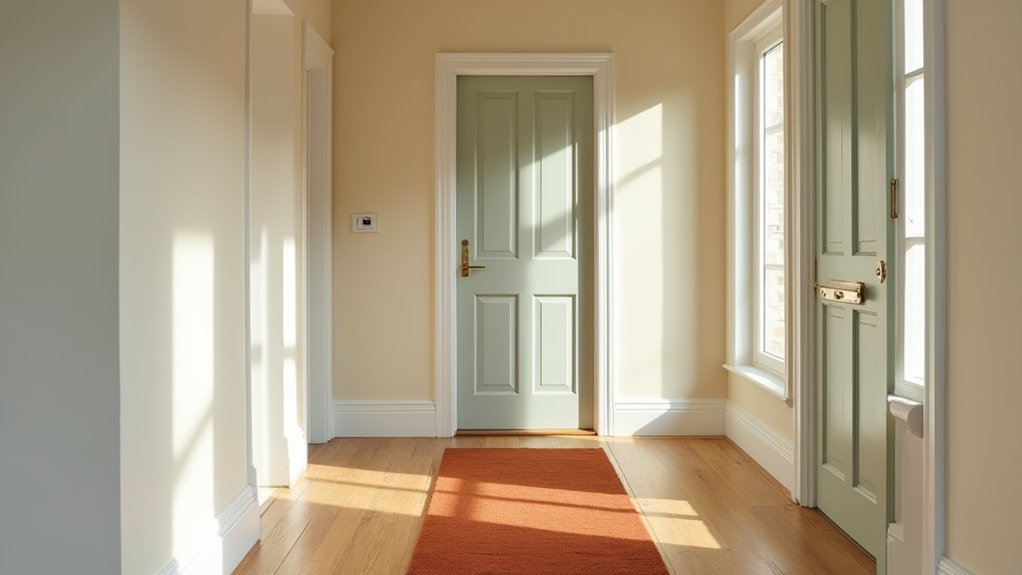
Before choosing a colour, assess how much natural and artificial light your hallway receives, since both affect how paint will appear. Track daylight at morning, midday, and evening, noting whether windows face north, south, east, or west. North-facing light can look cooler, while southern exposure may intensify warmth.
Switch on your usual lighting fixtures and check for yellow, blue, or uneven illumination. Test sample cards on each wall, observing them at different times rather than relying on one viewing.
Next, examine your flooring textures and undertones. Glossy tiles reflect light and may highlight wall variations; matte boards absorb light and can make the corridor feel darker.
Warm timber, red brick, or beige stone may clash with cool undertones. Clean the floor, identify its dominant colour, and use it as a reference when evaluating paint samples.
Also inspect skirting and door finishes before deciding.
Light Neutral Hallway Colour Schemes
With your hallway’s light and flooring in mind, light neutrals can make the corridor feel wider without overpowering adjoining rooms. Choose warm white, soft ivory, or pale greige according to your bulbs and existing finishes.
Test large samples on both walls, because shadows can change their appearance throughout the day. Use one consistent tone along the passage to reduce visual breaks; paint skirting boards and door surrounds a similar shade for a streamlined effect.
If the ceiling is low, select a lighter ceiling colour to increase perceived height. Add contrast through slim black frames, textured wall art, or carefully positioned decorative rugs, rather than dark paint.
Keep finishes durable and washable, particularly near entrances. Satinwood trim resists scuffs, while a matt wall emulsion minimises glare and uneven surfaces.
Choose Pale Blues and Greens
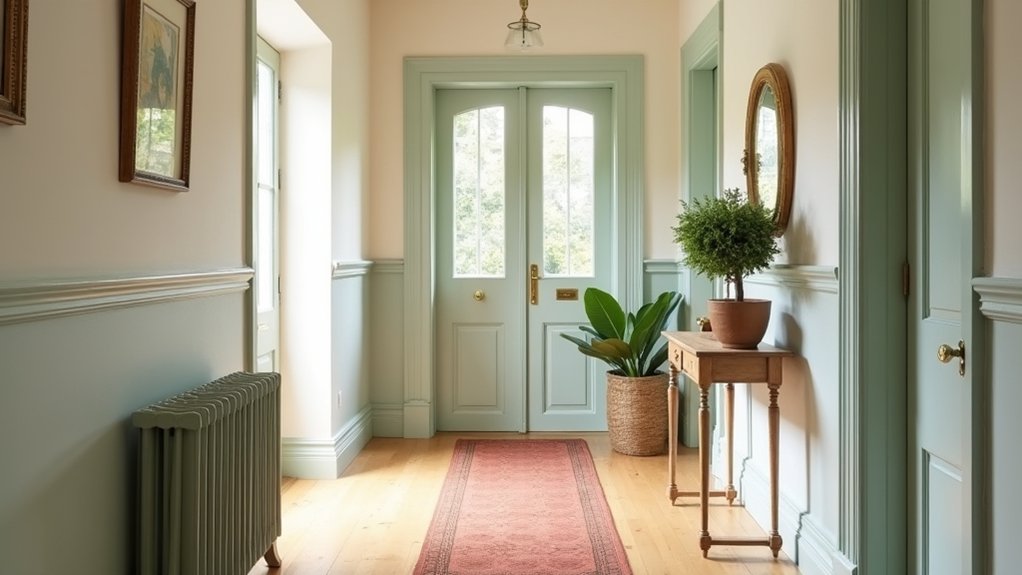
Pale blue and green hues can add colour without making a narrow hallway feel enclosed. Choose shades with high light-reflectance values to help walls bounce daylight through the passage. Blue-grey, sage, or misty aqua work well because their muted saturation prevents visual intensity. Test samples beside your flooring and under both natural and artificial light; undertones can shift noticeably across the day.
For cohesive soothing color palettes, carry one pale hue through the hall rather than switching between several competing shades. If your terrace receives little sunlight, select a green with a warm yellow undertone to prevent the space feeling cold.
In brighter halls, blue with a slight grey base provides balance. Use eggshell or washable matt paint for durability and gentle light diffusion. These calming interior tones can make the corridor feel wider, fresher, and more connected to adjoining rooms.
Use Bold Accents on Doors and Trim
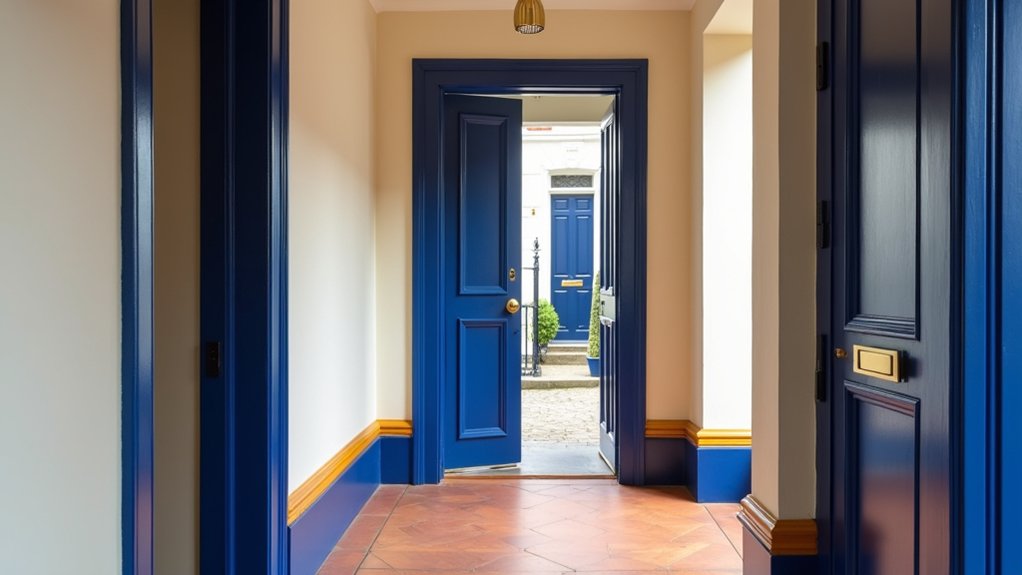
If you want more contrast without overwhelming a narrow hallway, use a bold colour on doors, skirting boards, or architraves while keeping the walls light. This approach defines architectural features and creates visual rhythm without reducing perceived width.
Choose one consistent accent shade, such as charcoal, deep navy, forest green, or terracotta, and repeat it across selected woodwork. Bold door accents work particularly well on the front door or doors leading to adjoining rooms, giving each opening clear definition.
For effective Trim color contrasts, use a durable satin or eggshell finish that reflects modest light and withstands frequent contact. Prepare timber carefully: sand, clean, prime, then apply two thin topcoats.
Keep hardware simple, and test your colour beside the wall finish before committing to the entire hallway.
Try Two-Tone Colours to Add Height
Divide the hallway horizontally to create a stronger sense of height: use a darker colour on the lower section and a lighter shade above it. Set the dividing line around one-third of the wall height, or align it with your door trim for a deliberate finish.
Choose related tones, such as deep sage below and soft sage above, to maintain continuity without making the corridor feel narrower. Use satin or washable paint on the lower section to withstand scuffs, then select a low-sheen finish overhead to reduce glare.
Contrast wall textures by pairing smooth paint with subtle beadboard or textured wallpaper below the line. Incorporate decorative moldings at the junction to sharpen the transition and protect the wall.
Keep ceilings white or pale to reflect light and reinforce the vertical effect.
Frequently Asked Questions
How Can Mirrors Make a Narrow Hallway Appear Wider?
You can make a narrow hallway appear wider through strategic mirror placement. Position large mirrors opposite light sources; their wall reflection doubles brightness and visual depth, creating an open, expansive feel without structural changes.
What Hallway Lighting Fixtures Work Best in Small Spaces?
Choose slim Ceiling mounted fixtures for even, unobtrusive illumination, and install compact wall sconces where ceiling height allows. You’ll maximize floor clearance, reduce shadows, and brighten the corridor without overcrowding its limited width or circulation path.
Which Paint Finishes Withstand Heavy Hallway Traffic?
Choose durable satin or eggshell finishes for heavy hallway traffic. You’ll gain washable, scuff-resistant walls without harsh glare. Compare matte vs gloss, and review durability testing data before selecting paint for your busiest passageways.
How Should Artwork Be Arranged in a Narrow Hallway?
Arrange artwork at eye level, keeping frames aligned along one horizontal line to create flow. Use slim pieces, avoid protruding frames, and balance Decorative wall hangings with hanging plant arrangements without narrowing your walkway.
What Furniture Can Provide Storage Without Obstructing the Walkway?
Choose slim storage ottomans or wall mounted shelves to keep belongings organised without narrowing your walkway. You’ll preserve clear circulation by maintaining at least 900 millimetres’ passage and selecting shallow, securely fitted furniture.
Conclusion
A narrow terrace hallway can feel brighter with a measured colour plan. First, assess daylight and flooring, then choose warm white, ivory, or pale greige walls to maximise reflectance. Misty aqua and soft sage add colour without absorbing too much light. Use navy or terracotta on doors and trim for controlled contrast, and consider darker lower walls with a lighter upper section to increase perceived height. Remember, light colours can reflect up to 80% of available light, helping your hallway feel more open.