
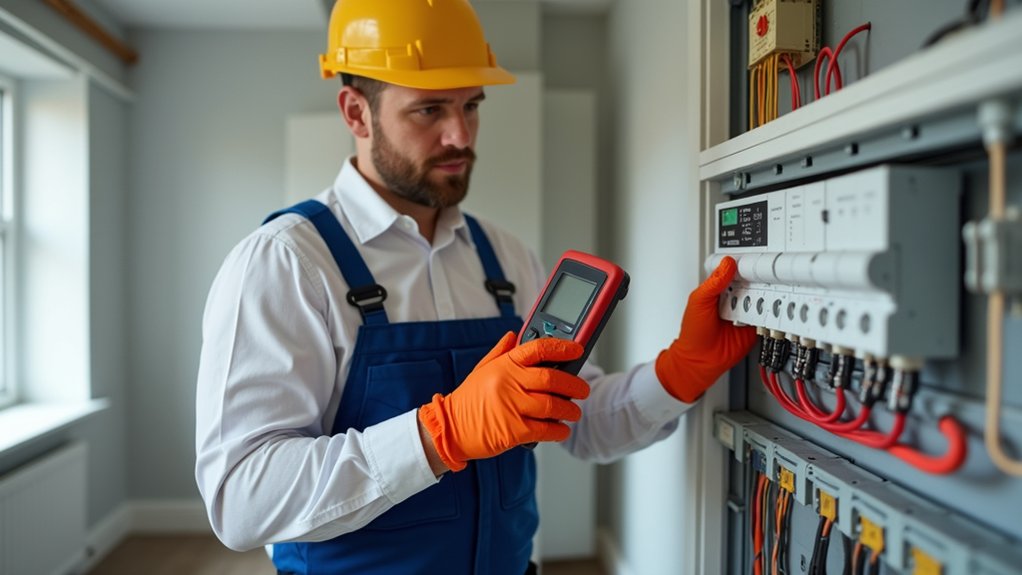
Your home’s wiring is its hidden nervous system, so Part P compliance helps keep every circuit working safely. You need to understand which domestic electrical jobs fall under the rules, when you must notify building control, and what certificates you should receive. Using a registered electrician, proper testing, and accurate documentation can reduce shock and fire risks while protecting your property. The key question is whether your planned work requires formal notification.
Key Takeaways
- Part P requires domestic electrical work to be designed, installed, inspected, and tested to protect against shock, fire, burns, and equipment damage.
- It covers fixed wiring, consumer units, sockets, lighting, heaters, and electrical work in kitchens, bathrooms, gardens, and outbuildings.
- New circuits, consumer-unit replacements, and work in special locations may require building-control notification under current regulations.
- Obtain the appropriate Electrical Installation Certificate or Minor Electrical Installation Works Certificate, including test results and circuit details.
- Use a government-approved competent-person electrician, agree written responsibilities, and retain certificates, invoices, and inspection records.
What Does Part P Mean for Homeowners?
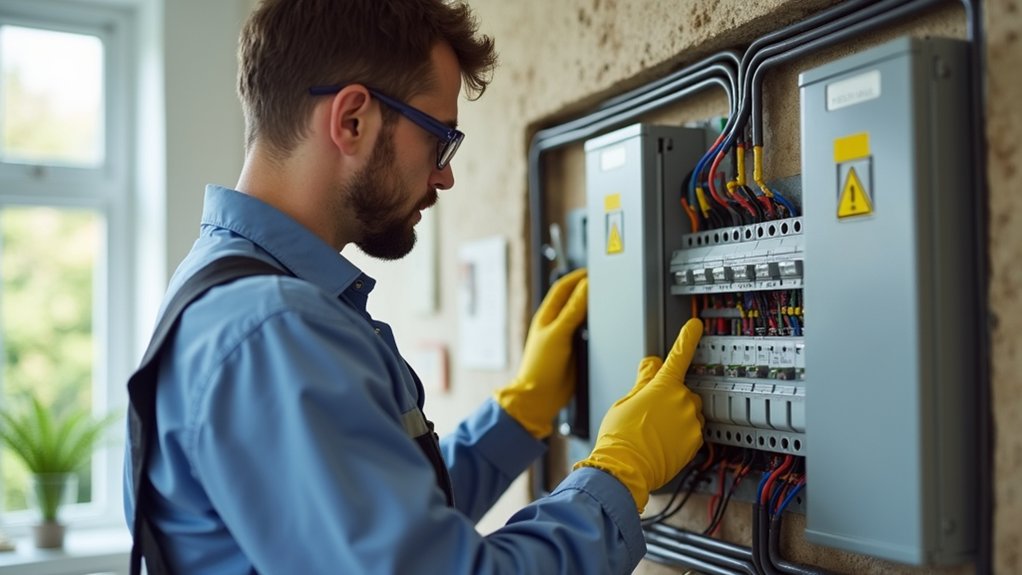
Part P means that electrical work in a domestic property must be designed, installed, and tested to protect you from electric shock, fire, and other hazards.
As a homeowner, you should treat compliance as a core part of home safety, not merely paperwork. Use a competent, appropriately qualified electrician who can assess the installation, select suitable equipment, verify protective measures, and provide test results.
You’re responsible for ensuring work meets applicable Building Regulations, even when you appoint someone else. Keep certificates, invoices, and inspection reports with your property records; they can support future maintenance, insurance claims, and a sale.
You’ll also need to meet legal obligations by arranging required notifications or certificates through the appropriate authority. Never conceal defects or energise altered circuits until testing confirms they’re safe.
Which Electrical Work Does Part P Cover?
The rules apply to electrical installation work in a dwelling, including new circuits, alterations, additions, and work in locations such as kitchens, bathrooms, and outdoor areas. They cover fixed wiring and equipment connected to that installation, including consumer units, socket outlets, lighting, showers, heaters, and garden supplies.
Part P focuses on preventing electric shock, burns, fire, and damage caused by poor design or installation. You must guarantee suitable cable sizing, earthing, bonding, protective devices, and testing for the installation’s intended use.
Work in bathrooms, special locations, and outside areas demands particular attention to zones, enclosures, and additional protection. Use a competent electrician when you lack the required knowledge or test equipment.
Your electrical safety depends on accurate inspection and testing. Keep test results and complete the Certification process properly.
Is Your Electrical Work Notifiable?
Whether your electrical work is notifiable depends on the type and location of the installation. Under Part P, you’ll usually need to notify building control before work begins if you install a new circuit, replace a consumer unit, or add wiring in a special location, such as a bathroom or garden.
Work outside these categories may still require safe design, installation, testing, and documentation, even when notification isn’t required. Check current regulations and your local authority’s process before starting, particularly for alterations involving bathrooms, swimming pools, or outbuildings.
Use a competent electrician who understands Inspection procedures, including dead testing, live testing, and verification of protective measures. Confirm the project’s Certification requirements in advance, and retain test results and technical records.
Don’t energise an installation until testing confirms it’s safe.
Which Part P Certificates Should You Receive?

Once the work is complete, you should receive the correct electrical certificates and test results for the installation. For notifiable work, you’ll usually receive an Electrical Installation Certificate (EIC), confirming that the installation meets the required safety requirements.
If you’ve had minor additions or alterations completed, a Minor Electrical Installation Works Certificate (MEIWC) may apply instead. The certificate should identify the work, circuit details, inspection results, and the person responsible for testing.
Your installer should also provide schedules of inspections and test results, including continuity, insulation resistance, polarity, and RCD performance where applicable. These records demonstrate compliance with current Inspection standards and form an essential part of the Certification process.
Keep them with your property documents, as you may need them when selling, renovating, or investigating future electrical faults.
How Can You Choose a Part P Electrician?
Choose an electrician who’s qualified to carry out Part P notifiable work and can provide evidence of competence, such as registration with a government-approved competent person scheme. Check the electrician’s registration details independently and confirm that their scope covers your planned installation.
Ask to see relevant electrician qualifications, including inspection, testing, and current wiring-regulations training.
Before work starts, request a written quotation describing the design, materials, testing, and notification arrangements.
A registered installer should manage the Certification process, issue an Electrical Installation Certificate, and arrange Building Regulations notification where required.
Verify that you’ll receive test results, schedules, and any applicable compliance certificate.
Don’t select solely on price: confirm insurance, experience with domestic properties, and a clear method for isolating circuits and rectifying defects.
Never allow unqualified work on safety-critical installations.
Frequently Asked Questions
Can Homeowners Carry Out Part P Electrical Work Themselves?
Yes, you can undertake some Part P electrical work yourself, but you must follow DIY safety requirements, building regulations, and the Certification process. Use a qualified electrician for notifiable or complex installations to guarantee compliance.
What Happens if Electrical Work Fails a Part P Inspection?
Like a failed brake test, a failed Part P inspection means you must stop using unsafe circuits, correct defects, and arrange reinspection. Follow Electrical safety guidance and Inspection procedures; you may need certification, remedial work, or enforcement.
How Long Should Part P Electrical Certificates Be Retained?
You should retain Part P electrical certificates for the property’s ownership period, ideally indefinitely. Follow record keeping standards, preserve digital and paper copies securely, and maintain certification validity evidence for future alterations, inspections, sales, or safety checks.
Does Part P Apply to Extensions, Renovations, and Garden Buildings?
Part P applies to extensions, renovations, and garden buildings when you add or alter fixed wiring. Check Building regulations requirements, use a competent electrician, and verify Electrical safety; don’t cut corners where hidden risks multiply.
Are Part P Requirements Different for Landlords and Tenants?
No, Part P requirements generally don’t differ: you must guarantee electrical work is safe. Landlord obligations include arranging compliant installations and records; tenant safety requires reporting defects and never altering fixed wiring yourself.
Conclusion
Part P compliance isn’t optional—it’s your home’s electrical shield against shocks, fires, and potentially catastrophic damage. You’ll need to know whether your project is notifiable, use a competent registered electrician, and insist on the correct certificates after testing. Don’t treat paperwork as a formality: it proves the installation meets safety requirements and protects your property’s value. By following these steps, you’ll turn electrical work from a hidden hazard into a thoroughly documented, professionally controlled improvement.