
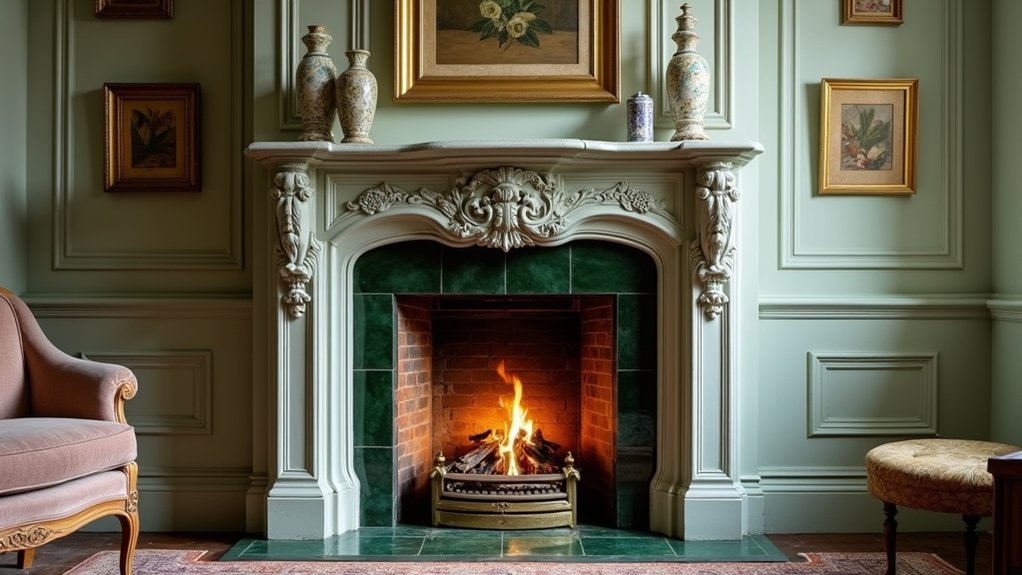
A Victorian fireplace can become your room’s strongest architectural feature when you preserve its original character while updating its surroundings. Before choosing colours or accessories, inspect the chimney, hearth, tiles, ironwork, and surrounding masonry for movement, damp, soot, or unsafe alterations. Arrange professional repairs where needed, then plan lighting, furniture, and mantel styling around the fireplace’s proportions. The right sequence protects the structure and reveals which design choices will make it a convincing focal point.
Key Takeaways
- Inspect the fireplace, chimney, masonry, paint, and mortar before restoration, documenting original dimensions and surviving Victorian details.
- Preserve patterned tiles and ironwork carefully, using compatible repairs and accurate reproductions where replacement is unavoidable.
- Choose wall and mantel colours that draw from the strongest tile tones while complementing surrounding materials and architectural features.
- Balance an ornate mantel with streamlined modern furniture, repeating selected colours and maintaining safe circulation around the fire.
- Make the fireplace the focal point with centered artwork, restrained accessories, layered lighting, and a clear, fire-safe hearth.
Inspect the Fireplace Before Restoring It
Before restoring a Victorian fireplace, inspect its structure, materials, and ventilation system to identify hazards and define the project’s scope. Check the mantel, breast, hearth, and surrounding masonry for cracks, movement, dampness, or previous alterations.
Use a qualified chimney professional to test the flue for blockages, leaks, and adequate draw before you plan any fire. Confirm that the chimney has a suitable liner and that nearby walls meet current clearance requirements.
Examine paint and mortar for lead, asbestos, or other hazardous substances, and arrange specialist testing when needed.
Record dimensions, construction details, and surviving features to support historical accuracy.
Your safety considerations should include ventilation, protective equipment, dust control, and isolation of gas or electrical services.
Photograph everything before removing or changing any component.
Repair Victorian Fireplace Tiles and Ironwork
Once the fireplace is documented and made safe, repair its tiles and ironwork with methods suited to each material.
Photograph Victorian tile patterns before removing anything, then label every tile and store pieces in padded boxes. Lift loose tiles carefully; don’t pry against sound edges. Clean deposits with a pH-neutral solution, test first, and reset tiles using compatible, reversible adhesive or lime-based bedding. Replace missing tiles with accurately sized reproductions, matching glaze, thickness, and colour rather than disguising differences with filler.
For Ornamental ironwork, wear gloves, eye protection, and a suitable respirator while removing flaking rust and old coatings. Use gentle hand tools or controlled abrasive cleaning; avoid aggressive blasting that can erase detail. Treat exposed metal with a compatible rust converter or primer, following the manufacturer’s instructions.
Reattach components with sound fixings, and ask a specialist to repair cracked cast iron or structural damage safely.
Choose Paint Colours for a Victorian Fireplace
Choose paint colours that complement the Victorian fireplace’s tiles, ironwork, and surrounding wall rather than competing with them. Build your Color palette from the strongest existing tile shade, then test sample boards in daylight and lamplight.
Soft mineral neutrals can calm ornate patterns, while a restrained deep tone can frame pale tiles and sharpen architectural detail. Use accent hues sparingly on the mantel wall or trim, matching historic colours where evidence remains.
Check undertones; a blue-grey beside warm terracotta may look discordant. Prepare surfaces carefully: remove dust, repair cracks, and use a suitable primer before applying durable, low-VOC paint.
Don’t paint unsealed masonry, active damp, or heat-exposed firebox surfaces. Keep coatings away from ventilation openings, and follow the paint manufacturer’s curing and temperature guidance before lighting the fireplace.
Mix the Mantel With Modern Furniture
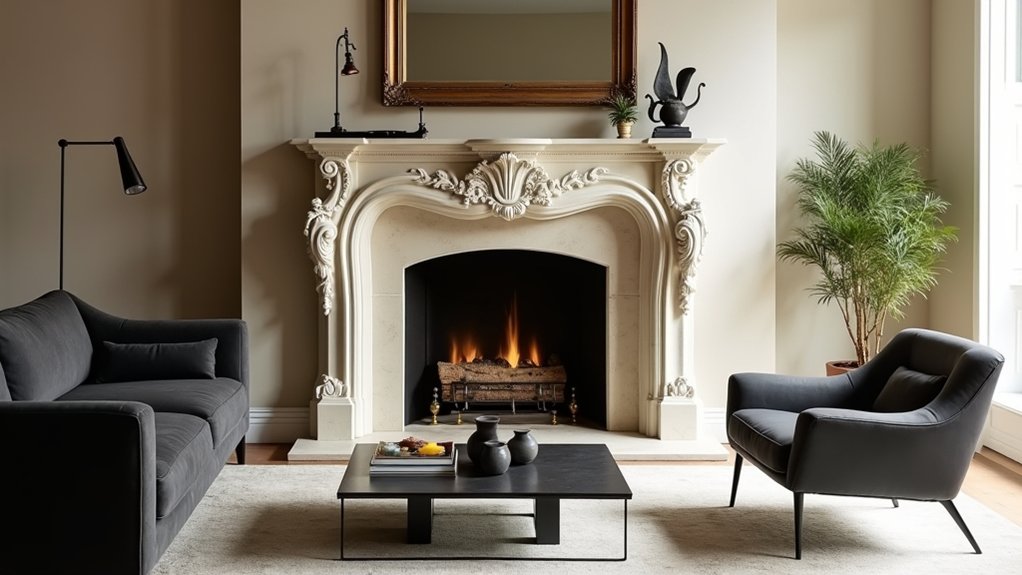
Pair the ornate mantel with modern furniture by repeating one or two existing colours while keeping silhouettes simple and proportions balanced. Choose a streamlined sofa, low-profile chairs, or a glass-topped table to prevent visual competition. Repeat the mantel’s painted tone in cushions or upholstery, then add Contemporary accents through metal, glass, or polished stone.
Keep Minimalist decor practical: select furniture with clear floor space and avoid placing combustible fabrics directly against the firebox or hearth. Measure the hearth projection, required clearances, and circulation paths before positioning each piece.
Secure tall furniture to wall studs where tipping could pose a hazard, and keep vents unobstructed. Use certified, heat-resistant materials near the opening, and follow your stove, insert, or fireplace manufacturer’s installation distances.
You’ll create a cohesive, usable arrangement without compromising safety.
Style the Fireplace as a Room Focal Point
To style the fireplace as a room focal point, establish a clear visual hierarchy around its mantel, opening, and hearth. Center artwork or a mirror above the mantel, keeping its width below the mantel’s span and securing heavy pieces to wall studs.
Use restrained accessories at varying heights to support Victorian elegance without obscuring carved details. Repeat one or two colors from the surround in nearby upholstery or rugs, creating cohesion while preserving contrast.
Keep the hearth clear of combustible baskets, curtains, and furniture; follow the appliance manufacturer’s clearance requirements and local fire codes. If you use candles, choose stable, nonflammable holders and never leave flames unattended.
For focal point enhancement, add layered lighting: an adjustable wall fixture can highlight masonry, while ambient lamps prevent glare and maintain comfortable circulation around the fireplace.
Frequently Asked Questions
Do I Need Planning Permission to Restore a Victorian Fireplace?
You usually don’t need planning permission for like-for-like restoration, but check local rules first. Listed buildings or structural alterations may require consent. Preserve Historical authenticity through careful Material restoration, and use qualified professionals for safety.
How Much Does Professional Victorian Fireplace Restoration Typically Cost?
You’ll typically pay £1,000–£4,000 for professional Victorian fireplace restoration. Costs vary with fireplace material, damage, access, and restoration techniques; request itemised quotes, verify structural safety, and confirm whether specialist conservation skills are required.
What Safety Checks Should a Chimney Sweep Perform Before Use?
Before lighting up, you’ll want a thorough chimney inspection: your sweep should check blockages, creosote, liner integrity, joints, caps, masonry, ventilation, and carbon-monoxide risks, then recommend safety precautions and confirm proper draft and appliance connections.
Can a Victorian Fireplace Be Converted to Gas or Electric?
Yes, you can convert a Victorian fireplace through Gas conversion or electric adaptation. Hire qualified professionals, inspect the chimney and structure, verify ventilation, install approved components, and comply with local codes before operation.
How Can I Identify the Fireplace’s Original Manufacturer or Age?
You can identify age through Historical markings, maker’s plates, casting stamps, patents, catalogs, and construction details. Photograph everything, then compare records with archives, preservation societies, or specialists. Don’t disturb asbestos, lead paint, or fragile components during Manufacturer identification.
Conclusion
Restoring a Victorian fireplace takes careful inspection, compatible repairs, and disciplined styling. Once tiles, ironwork, masonry, and paint are secure, you can make the mantel the room’s anchor without compromising safety. Select breathable, heat-resistant finishes, keep combustibles clear, and have the chimney professionally checked before use. Then balance ornate detailing with restrained furniture, centred artwork, and layered lighting. Your finished fireplace will stand like a crafted jewel, combining period character with practical, contemporary comfort.