
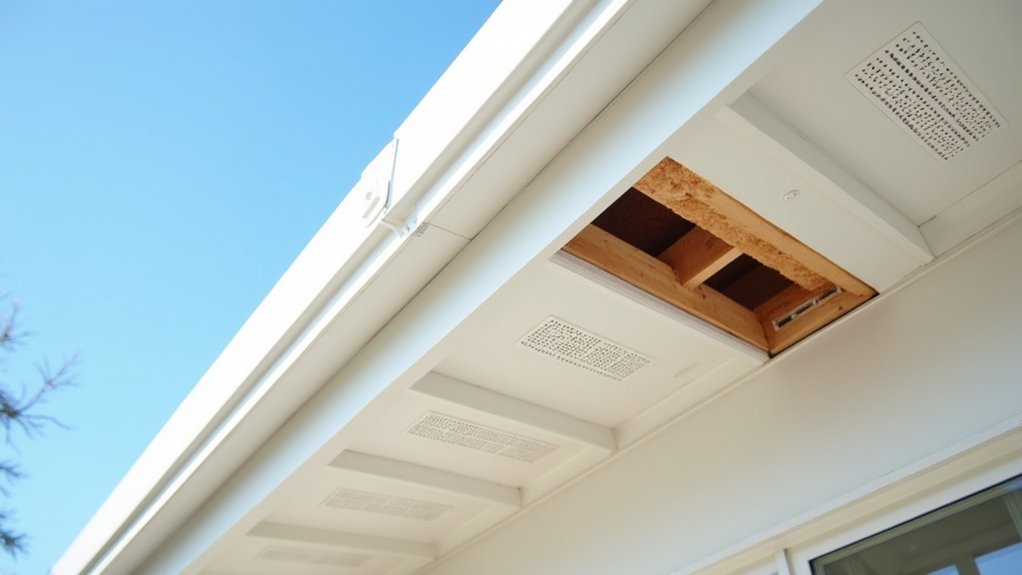
You may not realize that soffit vents don’t exhaust attic air—they supply the intake airflow your roof ventilation system needs. As outdoor air enters beneath the eaves, it replaces heated, moisture-laden air that exits through ridge, gable, or roof vents. Correct vent sizing, clear insulation paths, and regular maintenance help prevent condensation, mold, and premature roof damage. But if your soffit vents are blocked or poorly balanced, the system can fail even when other vents appear adequate.
Key Takeaways
- Soffit vents are openings beneath roof eaves that introduce fresh air into the attic or roof cavity.
- Air enters through soffits, travels beneath the roof deck, and exits through ridge, gable, or other exhaust vents.
- Balanced intake and exhaust ventilation helps remove heat and moisture, reducing condensation, mold, rot, and roof deterioration.
- Install baffles to keep insulation from blocking airflow channels, and use insect screens to prevent pest entry.
- Provide approximately 1 square foot of net free ventilation area per 150 square feet of attic space, divided between intake and exhaust.
What Is Soffit Ventilation?
Soffit ventilation uses vents installed beneath a roof’s overhanging eaves to introduce fresh outdoor air into the attic or roof cavity. As a defined roof component, it provides a continuous, protected intake opening while preserving the eaves’ finished appearance.
You’ll find soffit vents in new construction and retrofit projects, typically coordinated with roof, insulation, and moisture-control requirements.
Historical development reflects changing building practices: older homes often relied on incidental gaps, whereas modern designs use engineered vent panels, strips, or individual units.
Material options include aluminum, vinyl, galvanized steel, and molded polymer products. Choose a material that resists corrosion, withstands local weather, and matches the soffit assembly.
Proper sizing, secure fastening, and insect-resistant screens help maintain durable performance. Treat soffit ventilation as a planned roofing detail, not an improvised opening.
How Does Soffit Ventilation Work?
As outdoor air enters through the soffit, it moves along the underside of the roof deck and exits through higher vents, such as ridge or gable vents. This continuous movement relies on pressure differences and temperature changes: warm air rises, creating an upward draw that pulls cooler replacement air through the soffit openings.
As you maintain clear intake paths, air can remove heat and moisture from the attic before they damage insulation, sheathing, or framing. Properly sized openings support balanced airflow dynamics, while blocked or undersized soffits restrict circulation and reduce ventilation efficiency.
Install baffles where insulation could obstruct the air channel, and keep screens clean to preserve free airflow. You’ll get the best performance when intake openings remain distributed consistently along the eaves and aren’t sealed by paint or debris.
How Soffit Vents Work With Roof Vents
You need balanced soffit intake and roof-vent exhaust to maintain effective attic ventilation.
Together, they create a continuous airflow path that carries warm, humid air out of the roof space.
This circulation helps prevent moisture buildup, condensation, and related damage.
Balanced Intake And Exhaust
A balanced attic ventilation system pairs soffit vents with roof or ridge vents to create a continuous airflow path. Soffit vents provide intake openings, while higher roof vents release warm, moisture-laden air.
You’ll achieve the best ventilation efficiency when intake and exhaust capacity remain properly matched. If exhaust capacity greatly exceeds intake, the system may draw air through gaps, recessed lights, or other unintended openings.
If intake capacity exceeds exhaust capacity, warm air can linger, reducing performance and increasing moisture risk. Aim for comparable net free vent area at both locations, and follow local code requirements and manufacturer specifications.
Keep insulation from blocking soffit openings, and inspect roof vents for obstructions. Proper airflow balance helps your ventilation system manage heat and humidity reliably without relying on accidental leaks or pressure differences.
Continuous Airflow Path
How do soffit vents work with roof vents? They create a continuous airflow path through your roof assembly. Soffit vents provide low-level intake, while ridge, box, or turbine vents provide high-level exhaust.
As warm air rises, it exits through the upper vents and draws replacement air through the soffits. This movement depends on unobstructed channels between the intake and exhaust points. Install rafter baffles to preserve that channel where insulation could block the eaves.
Effective airflow dynamics require adequate intake and exhaust capacity; an oversized exhaust vent can’t compensate for restricted soffit intake. Plan vent placement across the roof’s perimeter and peak, maintaining consistent distribution.
Don’t mix intake and exhaust vents in ways that short-circuit circulation. When you connect both sides correctly, natural convection and wind pressure sustain steady air exchange across the entire roof deck.
Preventing Moisture Buildup
Moisture buildup occurs when warm, humid indoor air reaches cold roof surfaces and condenses. You can reduce this risk by combining clear soffit intake vents with properly installed ridge or roof exhaust vents. Soffit vents draw cooler outdoor air into the attic, while roof vents release heated, moisture-laden air.
This continuous exchange supports effective moisture control and helps keep roof sheathing, insulation, and framing dry.
Don’t block soffit openings with insulation; use baffles to preserve an unobstructed airflow channel. Seal ceiling penetrations around light fixtures, ducts, and plumbing to limit indoor air leakage into the attic.
You should also confirm that exhaust vents terminate outdoors, not inside the roof cavity. Balanced intake and exhaust improves ventilation efficiency, limits condensation, and helps prevent mold, wood decay, and premature roof deterioration.
Inspect vents seasonally for nests, debris, or damage.
How Soffit Ventilation Prevents Moisture Damage
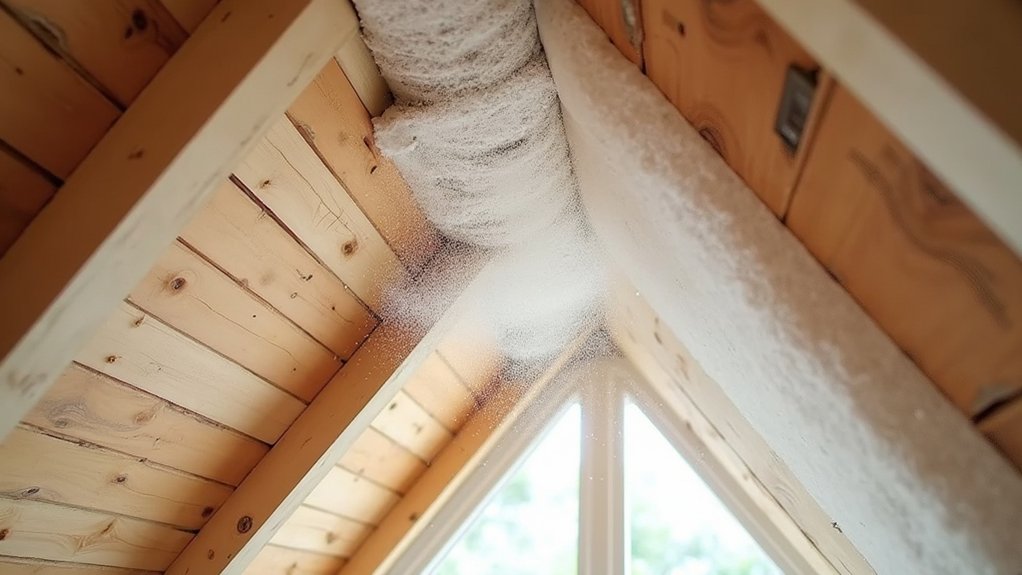
Soffit ventilation reduces attic humidity by drawing in cooler, drier air and moving moisture-laden air toward the roof vents. This airflow helps prevent mold growth on insulation, decking, and framing.
Reducing Attic Humidity
Why does attic humidity matter? Moist air raises the risk of condensation on roof decking, fasteners, and insulation, allowing moisture damage to develop unnoticed. You can reduce that risk by supplying steady intake air through soffit vents and exhausting warm, humid air near the roof peak.
Your soffit design should provide continuous, unobstructed openings along the eaves. Use baffles to preserve airflow where insulation could block the channels, and seal ceiling penetrations so household moisture doesn’t enter the attic. Match intake capacity with adequate exhaust capacity; otherwise, air movement will remain weak.
Consider ventilation types carefully. Continuous strip vents deliver uniform intake, while individual vents suit specific roof layouts. Follow local code and manufacturer net-free-area requirements, and keep vents clear of paint, insulation, and debris.
Inspect airflow seasonally to maintain dry roof components.
Preventing Mold Growth
When humid attic air meets cooler roof surfaces, condensation can create the damp conditions mold needs to grow. Soffit ventilation limits this risk by supplying a continuous path for fresh outdoor air to enter beneath the eaves.
As warmer, moisture-laden air rises and exits through the upper ventilation system, your attic stays drier, reducing the humidity mold requires. Choose a perforated soffit material that resists moisture and remains unobstructed by insulation, paint, or debris.
Different ventilation types, including continuous strips, individual vents, and hidden systems, can support airflow when you size and position them correctly. You should also seal ceiling penetrations around lights, ducts, and wiring to prevent indoor moisture from entering the attic.
Check vents seasonally, and address leaks or persistent dampness promptly before mold spreads.
Protecting Roof Structures
How can a small ventilation opening protect the roof structure above it? By allowing continuous airflow through the attic, soffit vents remove warm, moisture-laden air before it condenses on rafters, roof decking, and insulation. This reduces rot, corrosion, warped sheathing, and weakened fasteners that can compromise structural performance.
You’ll get the best protection when intake vents work with properly sized ridge or exhaust vents, creating balanced circulation rather than forcing moisture into the roof assembly. Keep insulation from blocking soffit channels, and install baffles to preserve clear airflow.
During upgrades, follow manufacturer installation tips, seal gaps around penetrations, and inspect for damaged screens or clogged openings. Choose durable aluminum or vinyl vents, considering available Color options, but prioritize corrosion resistance and adequate net free ventilation area over appearance.
Which Soffit Vents Work Best?
The best soffit vents provide continuous, unobstructed airflow while resisting pests, moisture, and corrosion. You’ll find several soffit vent types, including continuous-strip, individual-panel, and circular vents.
Continuous-strip models deliver consistent ventilation along the eave and suit new construction or replacement projects. Panel vents work well when you’re replacing specific soffit sections, while circular vents offer a practical option for limited spaces.
Choose aluminum or UV-stable vinyl for durability, and select perforations fine enough to deter insects without trapping debris. Critical installation considerations include maintaining a clear path behind each vent, fitting insect screening securely, and sealing joints against wind-driven rain.
You’ll also need vents that match your soffit material and withstand local weather conditions. Properly installed, quality vents protect roof components and support reliable attic performance.
How Much Soffit Ventilation Do You Need?
Vent type matters, but you’ll also need enough net free ventilating area (NFVA) to move air effectively through the attic.
As a baseline, provide 1 square foot of NFVA for every 150 square feet of attic floor area. If you install a balanced system with adequate high-level exhaust ventilation and a continuous vapor retarder, you may use the 1:300 ratio where local codes permit.
Divide the required NFVA between intake and exhaust, generally allocating about half to soffits. For example, a 1,500-square-foot attic needs 10 square feet of total NFVA at 1:150, or 5 square feet of soffit intake.
Check each product’s labeled NFVA rather than its physical dimensions. Soffit material, screen area, and ventilation types affect performance, so size vents from their ratings and follow code requirements.
How to Check for Blocked Soffit Vents
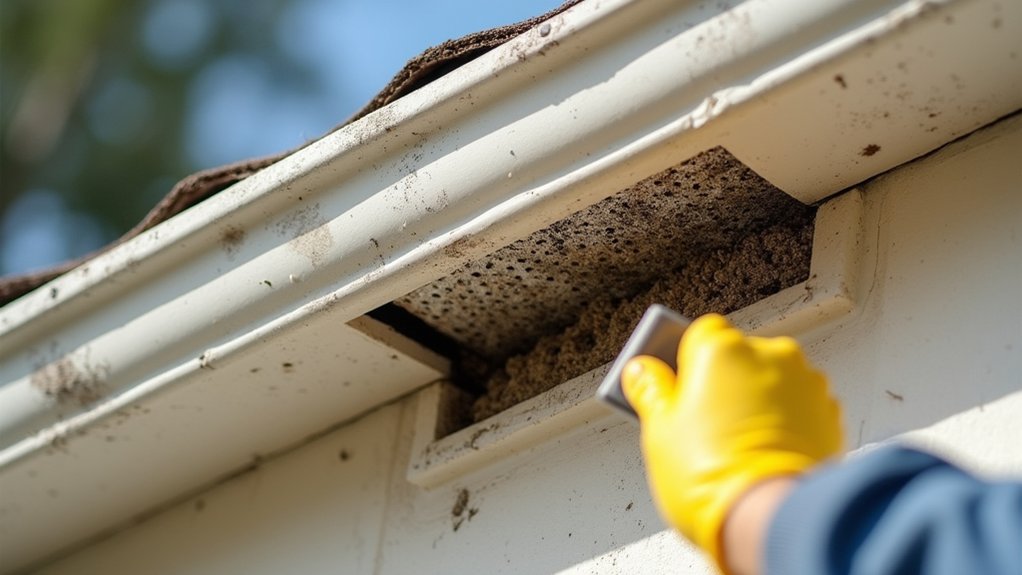
Before inspecting, wait for a dry day and use a flashlight to examine each soffit opening from the exterior. Look for compressed insulation, paint, dust, insect nests, leaves, or other debris covering the grille. Blocked vent signs include dark staining, cobweb buildup, reduced airflow, and visible moisture around openings.
From the attic, check whether insulation extends into the vent channel; it should stop behind a baffle, leaving a continuous passage from the soffit to the roof space.
Hold a thin tissue near an opening on a breezy day to detect airflow, but don’t force tools through the grille.
For safe Soffit vent cleaning, wear eye protection and a dust mask, then gently remove loose debris with a soft brush or vacuum.
Record obstructed locations so you can monitor them during routine inspections.
When to Repair or Replace Soffit Vents
Repair soffit vents when they’re loose, partially blocked, rusted, or damaged but the surrounding soffit remains sound. Remove debris, tighten fasteners, replace screens, and seal minor gaps with compatible exterior-grade materials. Confirm that repairs restore unobstructed airflow without reducing the vent’s net free area.
Replace vents when corrosion has weakened the frame, louvers no longer open, or damage extends into the soffit panel. You should also replace undersized, poorly positioned, or incompatible vents that fail to provide balanced intake ventilation.
If moisture damage, mold, or rot surrounds the opening, inspect the roof edge and fascia before installing new components.
Choose durable Ventilation materials rated for exterior exposure, such as aluminum or UV-resistant polymer. Follow these Maintenance tips: keep openings clear, inspect annually, and repaint metal only with compatible coatings.
Call a professional when structural deterioration or persistent moisture remains.
Frequently Asked Questions
What Does Soffit Ventilation Cost to Install?
You’ll typically pay $300–$1,500 to install soffit ventilation, depending on roof size, materials, labor, and access. Cost considerations include vent type; installation challenges, such as blocked cavities, can increase pricing considerably.
Can Soffit Vents Be Added to an Existing Roof?
Can you add soffit vents to an existing roof? Yes—you can, provided your contractor confirms adequate eaves and clear intake paths. Protect roof insulation, select suitable ventilation types, and seal penetrations against pests and moisture.
Do Soffit Vents Attract Insects or Pests?
Soffit vents don’t inherently attract insects or pests, but damaged screens can invite entry. For effective insect prevention and pest control, you should install fine-mesh covers, seal gaps, and inspect vents regularly for damage.
Are Soffit Vents Necessary in Every Climate?
You don’t need soffit vents in every climate, but Climate impact matters. In humid, snowy, or hot regions, balanced intake improves Ventilation effectiveness; mild climates may require fewer vents, depending on local codes and roof design.
Can Soffit Vents Reduce Attic Temperatures and Energy Bills?
Yes—soffit vents can cool your attic like opening a pressure valve, reducing heat transfer and energy bills. Pair balanced Ventilation types with adequate Attic insulation; otherwise, airflow improvements may deliver limited savings.
Conclusion
With proper soffit ventilation, your attic can breathe quietly while you stay comfortable below. Cool air enters through clear soffit vents, pushes rising heat toward roof vents, and carries moisture away before it can damage insulation, rafters, or roofing. Ignore those small openings, however, and your “protective” roof may shelter mold, rot, and expensive repairs instead. Inspect vents regularly, remove obstructions, and repair damaged sections promptly. A little airflow today can prevent a major reconstruction tomorrow.