
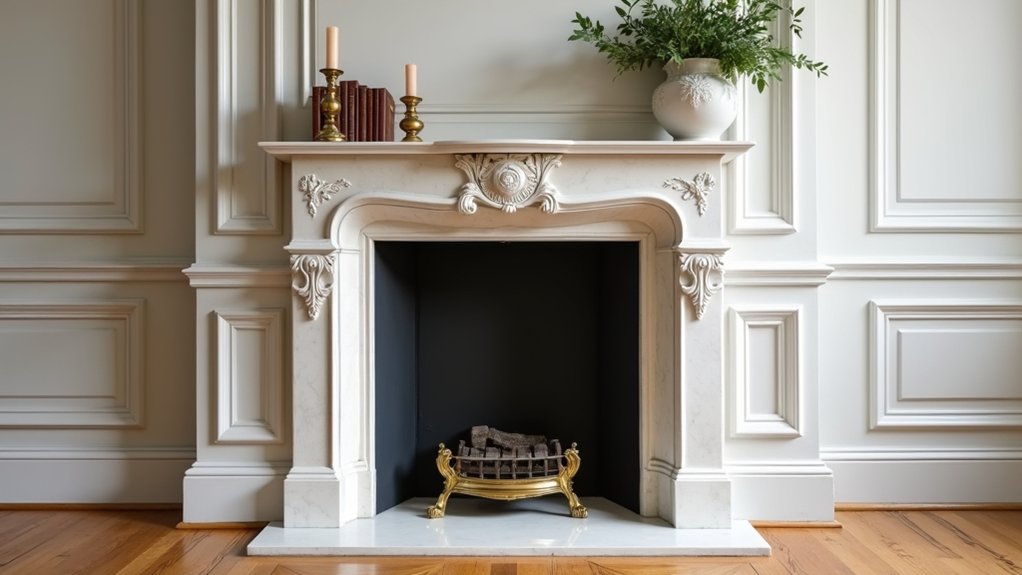
Your Georgian fireplace can remain both elegant and serviceable when you protect its original proportions, finishes, and materials. Start by identifying period features, then select heat-resistant colours and arrange accessories without overcrowding the mantel or hearth. Clean soot and dust using methods suited to the surface, and inspect the firebox, tiles, grate, and chimney regularly. Avoid modern treatments that may damage historic fabric, because one overlooked defect can affect both appearance and safety.
Key Takeaways
- Highlight Georgian proportions with period-appropriate colours, breathable finishes, and contrasting mouldings that enhance architectural details.
- Centre a mirror or artwork above the mantel, balancing accessories by height and weight while maintaining safe clearances from heat.
- Use non-combustible hearth accessories, secure loose ornaments, and keep combustible decorations safely away from the firebox.
- Clean only when completely cool, removing ash carefully and using soft cloths on painted, polished, or original surfaces.
- Schedule annual chimney inspections, monitor cracks, dampness, and smoke leakage, install a carbon-monoxide alarm, and document all repairs.
Identify Your Georgian Fireplace’s Key Features
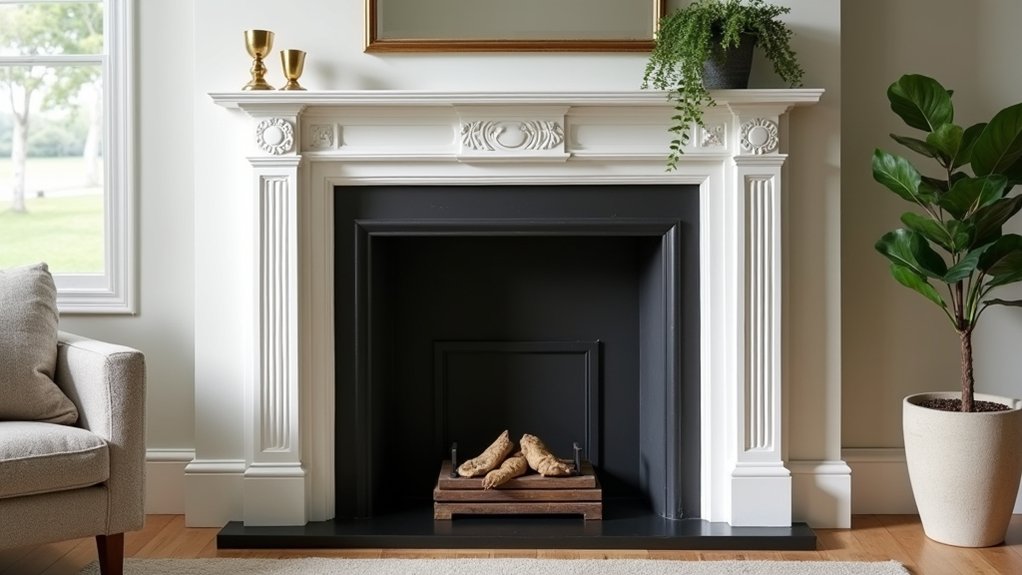
Start by examining the fireplace’s proportions, materials, and decorative details. A Georgian design typically presents balanced symmetry, a restrained profile, and a clearly defined opening.
Measure the fireplace surround, including its height, width, projection, and relationship to the room’s ceiling and floor. Identify whether it uses marble, timber, stone, or painted plaster, then check each material for cracks, warping, loose joints, stains, or previous repairs.
Look closely at the mantel shelf, pilasters, frieze, and decorative carvings; repeated motifs and precise spacing can help confirm the period character. Home renovators researching period‑correct upgrades often choose Georgian fireplace surrounds for their balanced proportions, crisp detailing and the way they instantly anchor a DIY restoration project with authentic 18th‑century elegance
Don’t assume the fireplace is safe because it looks intact. Inspect the hearth, fireback, flue, and chimney for damage, and arrange an assessment by a qualified professional before lighting any fire.
Record original features before cleaning or alteration.
Choose Colours for Your Georgian Fireplace
Choose wall tones that complement the fireplace while meeting the manufacturer’s heat-resistance requirements.
Select classic mantel shades suited to its material, and don’t apply flammable finishes near the firebox.
Use contrasting colours to accentuate mouldings and other architectural details without obscuring cracks, damage, or required ventilation.
Complementary Wall Tones
Because Georgian fireplaces often serve as architectural focal points, select wall tones that support the mantel’s material, period detailing, and room proportions. Use moderate color contrast to define the surround without making the room feel visually divided.
In smaller rooms, choose a lighter, warm-neutral background to reflect available light and preserve spaciousness. In larger rooms, deeper, muted tones can add balance, provided they don’t obscure carved details.
Assess wall texture before painting: uneven plaster scatters light, while smooth surfaces show colour variation and preparation flaws. Repair cracks, allow plaster to dry, and apply a compatible primer before your finish coat.
Keep paint away from hot surfaces and use heat-resistant products where manufacturers specify. Test samples under daylight and artificial light, then check that the selected tone complements furnishings without competing with the fireplace.
Classic Mantel Shades
Which colour best suits a Georgian mantel depends on its material, period character, and the room’s natural light.
For painted timber, choose durable eggshell in muted ivory, soft grey, or heritage blue; these shades reflect light without appearing glossy. Test samples beside the fire, because soot, shadows, and changing fireplace lighting can alter their appearance.
For marble, retain the stone’s natural white, cream, or veined tones, using a breathable, compatible sealer rather than paint.
If your surround includes decorative tiles, select a mantel shade that harmonises with their dominant colour without matching every detail.
Keep combustible finishes away from the firebox opening, and use heat-resistant coatings where manufacturers specify them. Don’t apply ordinary emulsion to heated surfaces.
Let coatings cure fully before lighting the fire, and inspect them regularly for blistering or discolouration.
Accentuating Architectural Details
Accentuate a Georgian fireplace’s architectural details by using controlled contrast: a slightly deeper shade on carved mouldings, corbels, or pilasters can define their profiles without overpowering the room. Choose durable, heat-resistant coatings where surfaces may warm, and follow the manufacturer’s temperature limits. Test paint samples in daylight and under fireplace lighting, because undertones can shift dramatically.
Keep the inner opening, firebrick, and ventilation grilles finished only with products rated for high temperatures; never apply standard emulsion near flames or cover safety markings. Use one dominant mantel colour, then repeat its accent subtly in the room to preserve mantel symmetry.
Mask adjacent walls carefully, clean soot and grease first, and allow each coat to cure fully before lighting the fire. If masonry is damp or damaged, resolve it before decorating.
Create a Balanced Fireplace Display
Arrange the mantel around a clear focal point, such as a mirror or artwork, then balance it with objects of varying heights and similar visual weight. Keep the arrangement symmetrical or use deliberate asymmetry: place a taller item opposite two or three smaller pieces to distribute visual mass.
Leave sufficient clearance around the chimney breast, mirror, and any heat source, and don’t overload the shelf. Test fireplace lighting at night to prevent glare and verify cords stay away from heat.
On the hearth, position decorative hearth accessories in a stable grouping, maintaining the manufacturer’s required distance from the firebox. Use non-combustible bases where necessary, secure top-heavy objects against tipping, and keep all openings, vents, and screens unobstructed.
Step back frequently to check alignment, proportion, and safe clearances before lighting the fire.
Choose Accessories That Suit the Period

Choose accessories that reflect Georgian design through restrained ornament, classical proportions, and quality materials. Select a pair of brass, bronze, orirons with simple finials, ensuring their feet sit level and remain clear of the firebox opening.
Add a clock, candlesticks, or a small classical vessel, but limit the grouping so the mantel retains visual calm. Look for vintage textiles, such as a wool runner or finely woven cushion, in muted jewel tones, cream, or faded blue; keep fabric well away from heat and sparks.
Ornamental carvings should appear crisp and proportionate, not excessively elaborate or newly distressed. Secure heavy objects against tipping, and use heat-resistant, noncombustible materials near the hearth.
Don’t place paper, dried foliage, or unstable décor on the mantel. Check every accessory’s condition before installation.
Clean Your Georgian Fireplace Safely
Once your accessories are safely positioned, clean the fireplace with methods suited to its materials and age. Begin by removing ash only when it’s completely cold; use a metal shovel and a lidded, non-combustible container. Don’t sweep dry soot into the room.
Instead, apply suitable fireplace cleaning techniques: vacuum loose debris with a HEPA-filtered machine, then use a barely damp, soft cloth on painted or polished surfaces. Test any pH-neutral cleaner in an inconspicuous area, and never saturate porous stone, timber, or old plaster.
For iron, brush gently with a soft-bristle brush and dry it immediately to prevent rust. Your safety equipment essentials include nitrile gloves, safety glasses, a suitable respirator, and protective clothing.
Ventilate the room, avoid abrasive pads and acidic products, and stop if you find loose masonry, flaking coatings, or suspected hazardous residues.
Shield and Preserve Original Details
Protect original Georgian fireplace details by limiting moisture, heat, and physical contact after cleaning. Let masonry, plaster, and decorative finishes dry completely before replacing accessories or lighting a fire.
Use a breathable, acid-free protective coating only when a conservation specialist approves it; impermeable sealants can trap moisture and accelerate decay.
Fit a properly sized grate or fireback to shield the rear wall from excessive temperatures, and keep combustible décor, curtains, and furniture at a safe distance.
Don’t drill, polish, repaint, or remove patina from carved timber, stone, or iron without professional assessment.
Photograph existing features and record repairs to support historical accuracy during future fireplace restoration.
Arrange annual chimney inspections, install a carbon-monoxide alarm, and stop using the fireplace if you notice cracking, dampness, smoke leakage, or loose ornament.
Frequently Asked Questions
Can a Georgian Fireplace Be Used With a Modern Heating Appliance?
Yes, you can use a Georgian fireplace with a modern heating appliance, but verify Modern compatibility first. Have a qualified installer assess structure, ventilation, flue integrity, clearances, and Heating efficiency before installation, commissioning, or regular use.
Do Georgian Fireplaces Require Professional Restoration Before Installation?
Like a medical checkup, you’ll often need professional restoration before installation. Specialists assess structure, chimney safety, and compatibility, applying restoration techniques that preserve historical accuracy while meeting current building and appliance regulations.
How Much Does Restoring an Original Georgian Fireplace Typically Cost?
You’ll typically pay £2,000–£6,000 to restore an original Georgian fireplace; complex structural work may exceed £10,000. Request itemized quotes covering Historical accuracy, Material authenticity, masonry, fire-safety inspections, and specialist conservation before commissioning.
Are Georgian Fireplaces Suitable for Homes With Children or Pets?
Yes, you can use Georgian fireplaces safely with children and pets. Prioritize Child safety and Pet protection: install a secure screen, supervise fires, guard hot surfaces, remove sharp tools, and maintain working carbon-monoxide alarms.
Where Can Reclaimed Georgian Fireplace Surrounds Be Sourced Responsibly?
You can source reclaimed Georgian fireplace surrounds through reputable architectural salvage yards, verified dealers, estate auctions, and specialist marketplaces. Prioritize Antique sourcing and ethical procurement by requesting provenance, restoration records, material details, and legal ownership documentation.
Conclusion
By identifying Georgian features, choosing heat-resistant colours, and arranging period-appropriate accessories with restraint, you’ll keep your fireplace elegant without compromising safety. Clean gently, inspect masonry and flues regularly, and protect original finishes with conservation-approved products. Remember, fireplaces can produce carbon monoxide, an odourless gas, so install and test an alarm in the room. Document every repair and avoid cluttering the hearth. With these practical habits, you’ll preserve character, function, and value for years.