
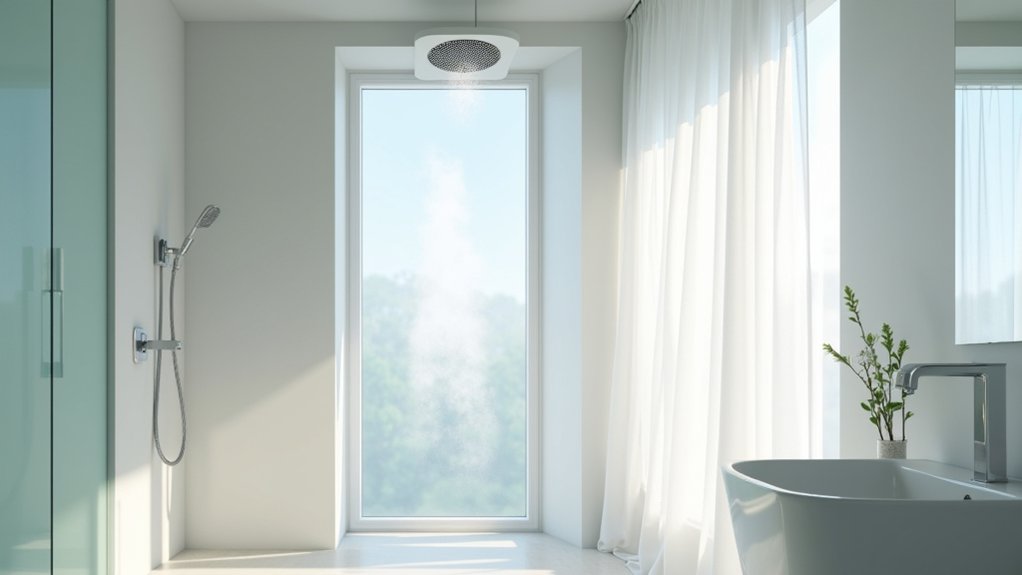
Condensation and damp often indicate that moist air isn’t escaping, rather than a simple cleaning problem. Start by identifying moisture sources, then improve airflow where it’s produced, especially in bathrooms and kitchens. Use extractor fans correctly, ventilate rooms briefly, and keep air moving around cold surfaces and furniture. Monitor humidity and check for leaks, blocked vents, or poor insulation. If these measures don’t resolve the problem, your home may need a more effective ventilation system.
Key Takeaways
- Use extractor fans in bathrooms and kitchens during activities and for 15–20 minutes afterwards, ensuring they vent outdoors.
- Open windows for 5–10 minutes after showering, cooking, or drying laundry to create rapid cross-ventilation.
- Maintain indoor relative humidity between 30–50% using hygrometers, dehumidifiers, heating, and outdoor laundry drying.
- Keep furniture, curtains, and storage 50–100 mm away from external walls to improve airflow around cold surfaces.
- Clean and inspect fans, vents, and ducts regularly, upgrading ventilation systems if condensation, mould, or stale air persists.
Check What’s Causing Condensation and Damp
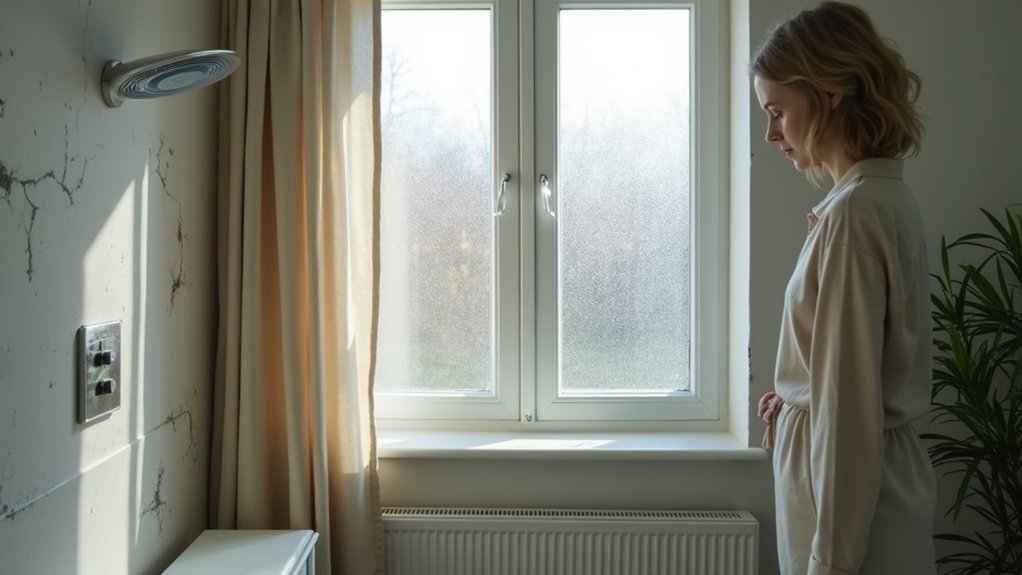
Start by identifying where condensation and damp originate before changing your ventilation system. Inspect window reveals, external walls, ceilings, and floor edges for staining, mould, peeling finishes, or salt deposits. These signs can distinguish surface condensation from penetrating damp, plumbing leaks, or rising moisture.
Check whether cold surfaces, inadequate insulation, blocked gutters, damaged seals, or drying laundry contribute to the problem. Record humidity with a digital hygrometer in affected rooms, ideally at different times and temperatures. Relative humidity consistently above 60% indicates excessive moisture, while cold surfaces may condense even at lower readings.
List all moisture sources, including cooking, bathing, occupancy, plants, and unvented appliances. Then assess air circulation around furniture, corners, and wardrobes. Resolve leaks and building defects first; otherwise, improved airflow won’t address the underlying cause.
Improve Bathroom and Kitchen Ventilation
Improve bathroom and kitchen ventilation by installing effective extractor fans that discharge air outdoors.
Run them during cooking and showering to remove moisture, heat, and airborne pollutants at the source.
Keep them running afterward to clear residual humidity and reduce condensation.
Install Effective Extractor Fans
Install extractor fans sized for the room and rated for its moisture or heat load to remove humid, polluted air at the source. Choose a model with adequate extraction capacity, measured in litres per second, and verify that its duct diameter matches the manufacturer’s specification.
Position the fan near the main moisture source, while keeping it clear of obstructions. Use rigid, insulated ducting where possible to reduce resistance, noise, and condensation within the pipe.
Check airflow patterns with a smoke pencil or tissue; air should move toward the fan rather than leak into adjoining rooms. Fit backdraft shutters to prevent cold air and pollutants returning.
Ascertain the fan discharges outdoors, not into a roof void. Include accessible grilles, filters, and controls in your ventilation maintenance schedule.
Ventilate After Cooking and Showering
Once your extractor fan is correctly installed, use it during and after cooking or showering to clear moisture, heat, grease, and odours at their source. Keep the fan running for at least 15–20 minutes afterwards, or longer if mirrors, walls, or windows remain wet.
Close the bathroom door while showering, but leave the fan’s airflow path unobstructed.
In the kitchen, cover pans where practical and switch on the fan before steam spreads. Don’t rely on opening windows alone, especially in cold or wet weather; controlled extraction removes humid air more reliably.
Wipe standing water from surfaces and dry wet towels promptly.
These habits support better indoor air quality, limit condensation, and strengthen mold prevention.
Clean fan grilles and filters regularly so reduced airflow doesn’t undermine performance.
Open Windows Without Losing Too Much Heat
Use brief, five- to ten-minute ventilation bursts to replace stale air while limiting heat loss.
Open windows on opposite sides of your home when possible, and close interior doors to contain the airflow and protect heated rooms.
Use Brief Ventilation Bursts
Brief, wide-open window bursts can refresh indoor air efficiently without letting your home lose excessive heat. Open windows fully for five to ten minutes, creating rapid air exchange rather than leaving them slightly open for hours. This approach removes humid air while limiting heat loss from walls, furnishings, and building fabric.
Use timing strategies that match moisture production: ventilate soon after showering, cooking, drying clothes, or cleaning. Keep the burst long enough to replace stagnant air, but close windows once the room feels refreshed. A timer or humidity sensor can support consistent routines, while mechanical ventilation technology can provide controlled background airflow when windows remain closed.
If condensation frequently returns, measure indoor relative humidity with a hygrometer. Aim for roughly 40–60 percent, and address persistent dampness at its source rather than relying on ventilation alone.
Open Windows Strategically
Strategic window placement and timing can improve air exchange while limiting heat loss. Use windows on opposite sides of your home when possible to create cross-ventilation, allowing stale, moisture-laden air to exit quickly.
If cross-flow isn’t available, open the largest practical window and a smaller, higher opening to encourage buoyancy-driven natural airflow.
Your window placement matters: prioritize rooms with condensation, such as kitchens, bathrooms, and bedrooms. Open windows wide rather than leaving them slightly ajar for long periods.
Ventilate after showering, cooking, drying laundry, or waking, when indoor humidity peaks. Choose milder, drier conditions, and check outdoor humidity before opening windows.
A hygrometer can guide decisions; aim for indoor relative humidity between 40% and 60%. Close windows once humidity falls, minimizing unnecessary heat loss.
Close Doors During Ventilation
Close interior doors around the room you’re ventilating to contain the airflow and reduce heat loss from the rest of your home. Focus ventilation where moisture accumulates, such as bathrooms, kitchens, and bedrooms.
Before opening the window, shut doors to unoccupied rooms and keep the target room’s door mostly closed. This directs damp air outdoors instead of creating uncontrolled airflow paths through your home.
Use door timing to coordinate ventilation with moisture production. After showering or cooking, switch on the extractor, open the window, and close the door promptly. Ventilate for several minutes, then close the window before reopening doors.
Don’t block undercuts or vents that provide essential replacement air, and never seal a room containing fuel-burning appliances without checking combustion-air requirements.
If condensation persists, extend ventilation rather than leaving windows ajar all day.
Control Indoor Humidity Every Day
Keep indoor relative humidity between 30% and 50% to limit mold growth, dust mites, and excess moisture that can damage building materials.
Use Humidity sensors in bedrooms, kitchens, bathrooms, and other moisture-prone areas to track conditions continuously. Check readings at consistent times, especially after bathing, cooking, or drying laundry.
If humidity exceeds 50%, run an extractor fan, use a dehumidifier, or reduce indoor drying. Empty and clean the dehumidifier regularly so it operates efficiently and doesn’t spread contamination.
Set heating controls to maintain steady temperatures without creating unnecessary energy use.
Air purifiers can remove airborne particles and some allergens, but they don’t lower humidity, so don’t treat them as moisture-control equipment.
Record readings for several days, identify recurring peaks, and adjust your routine before condensation develops on windows, walls, or furnishings.
Keep Air Moving Around Cold Surfaces
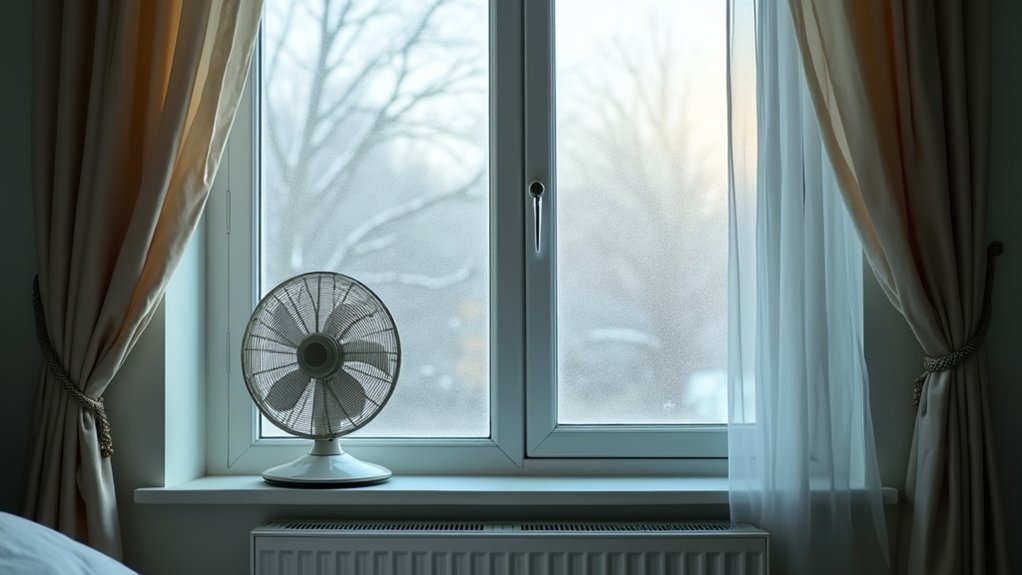
Cold surfaces need unobstructed airflow because stagnant air allows moisture to condense and support mold growth. Keep furniture, curtains, and storage at least 50–100 mm from external walls, especially behind wardrobes and beds. This gap improves air circulation, helping room air reach the wall and reducing localized humidity.
Don’t block radiators or cover convectors, since restricted heat output increases surface cooling and raises condensation risk. Open internal doors periodically to balance temperatures, but close kitchen and bathroom doors during moisture-producing activities to prevent damp air spreading.
Use a small circulating fan when necessary, directing air across—not directly at—cold walls to avoid drafts and energy waste. Check corners, window reveals, and wall-floor junctions regularly. If you find persistent moisture, dry the area promptly and investigate leaks or insulation deficiencies.
Know When to Upgrade Home Ventilation
If condensation, mold, or stale air persists despite regular airing and unobstructed airflow, your home’s ventilation system may no longer provide adequate air changes. Persistent moisture on windows, peeling finishes, musty odors, or recurring mold indicates that you should investigate performance rather than simply wipe surfaces.
Check whether extract fans operate effectively and vent outdoors. Inspect ducts for blockages, and confirm that replacement air can enter through designed inlets. A qualified professional can measure airflow, humidity, and pressure to identify faults or undersized equipment.
If your system can’t meet current occupancy or moisture loads, plan an upgrade.
Energy efficient upgrades, such as continuous mechanical extract ventilation or balanced heat-recovery systems, can reduce damp while limiting heat loss. Smart ventilation systems adjust airflow using humidity or air-quality sensors, delivering ventilation when you need it and conserving energy when you don’t.
Frequently Asked Questions
Can Ventilation Improvements Help Prevent Mould From Returning After Cleaning?
Yes, ventilation improvements can help prevent mould from returning after cleaning. Increase Airflow circulation, use extractor fans, maintain moisture control, and monitor humidity; you’ll reduce damp conditions that support regrowth.
How Often Should Extractor Fans and Ventilation Grilles Be Cleaned?
You should complete fan maintenance every three to six months and grille cleaning monthly. Don’t wait for dust to clog airflow; inspect sooner in humid rooms, and follow the manufacturer’s cleaning instructions carefully.
Can Furniture Placement Affect Ventilation and Condensation Behind Wardrobes?
Yes, your furniture arrangement affects ventilation and condensation. Keep wardrobes 50–100 mm from external walls, avoid blocking grilles or radiators, and improve wardrobe airflow by leaving gaps beneath and behind stored items.
Do Landlords Have Legal Responsibilities for Ventilation and Damp Problems?
Yes, your landlord duties include meeting legal obligations to provide habitable, adequately ventilated accommodation and address damp hazards. Report problems promptly, document evidence, and request repairs; contact your council if conditions remain unsafe or unresolved.
When Should Condensation Damage Be Reported to a Home Insurance Provider?
Report condensation damage promptly, before mould spreads or repairs begin. Check your policy’s notification deadline, document affected areas with photographs, and contact your insurer immediately. Accurate Damage reporting supports Insurance claims and prevents coverage disputes.
Conclusion
Good ventilation can stop condensation and damp before they become costly problems, but the warning signs are easy to miss. Use kitchen and bathroom extractors during moisture-producing activities and afterward, briefly cross-ventilate, and keep internal doors open to maintain airflow. Monitor humidity, clean fans, clear vents, and keep furniture away from cold surfaces. If moisture persists despite these measures, investigate leaks, insulation defects, or an inadequate ventilation system before hidden mould takes hold.