

Choosing the right bathroom radiator starts with balancing heat output, available wall space, and your preferred style. You’ll need to compare ladder, panel, and designer models, then measure the room and calculate its required BTU or wattage. Consider whether central heating, electric, or dual-fuel operation suits your installation and running costs. Finish, controls, wall support, and plumbing access also affect the decision, and one overlooked measurement can compromise both performance and appearance.
Key Takeaways
- Choose between towel rails, panel radiators, electric models, or dual-fuel designs based on room size, heating needs, and year-round use.
- Measure available wall space carefully, allowing clearance for valves, brackets, doors, towels, cleaning, and bathroom safety zones.
- Calculate required BTU output using room volume, insulation, windows, external walls, and ceiling height rather than radiator size alone.
- Match the radiator’s material, finish, and style with your bathroom fittings, tiles, lighting, and desired towel-storage capacity.
- Compare purchase, installation, running, and maintenance costs while checking pipework, electrical compatibility, wall strength, controls, and regulations.
Choose the Best Bathroom Radiator Type

Choosing the best bathroom radiator type starts with matching its heating performance, size, and installation requirements to your space.
Choose a heated towel rail when you want drying capacity alongside background warmth.
Select a panel radiator for stronger heat output, especially in a larger or poorly insulated bathroom.
A compact electric model suits rooms without accessible central-heating pipework, while dual-fuel designs let you run the rail independently during warmer months.
Consider radiator placement near cold external walls, but keep clearances from baths, showers, and splash zones in line with electrical and building regulations.
Check the radiator’s wattage, heat output, and material; aluminium heats quickly, whereas steel offers durable, consistent performance.
Add thermostatic valves or a programmable controller for precise temperature control.
Your choice should also support efficient operation, easy cleaning, and practical towel access.
Measure Space for Your Bathroom Radiator
Before you buy a bathroom radiator, measure the available wall space, floor clearance, and distance from nearby fixtures. Use a tape measure to record wall height and width, then compare these dimensions with the radiator’s overall measurements, including valves and brackets. Leave sufficient clearance for installation, cleaning, towel access, and door or cabinet movement.
Check the manufacturer’s required spacing from baths, showers, basins, and electrical equipment. Your measurements should also account for skirting boards, pipe routes, window openings, and uneven walls.
Maintain effective Bathroom ventilation, ensuring the radiator won’t obstruct vents or airflow.
Follow Safety precautions by keeping required electrical zones clear and confirming the wall can support the unit’s weight. Mark fixing points carefully, and verify level alignment before drilling.
Recheck every measurement before ordering.
Work Out Your Bathroom Radiator Output
Calculate your bathroom radiator’s required output in British Thermal Units (BTUs) or watts so it can heat the room effectively.
Start with your bathroom’s length, width, and height to calculate its volume. Multiply the volume by a suitable heat-loss factor, adjusting for insulation, external walls, windows, ceiling height, and your local climate.
A bathroom usually needs more output than a bedroom because you’ll want comfortable warmth after bathing.
Use a recognised BTU calculator or heating professional’s guidance rather than relying on radiator size alone.
Check the manufacturer’s stated wattage or BTU rating, measured under specific conditions.
Radiator material affects heat transfer and warm-up speed, so compare ratings consistently.
Choose a model with enough capacity for reliable temperature control, then allow extra output if your insulation is poor or ventilation is high.
Compare Electric, Central Heating, and Dual Fuel
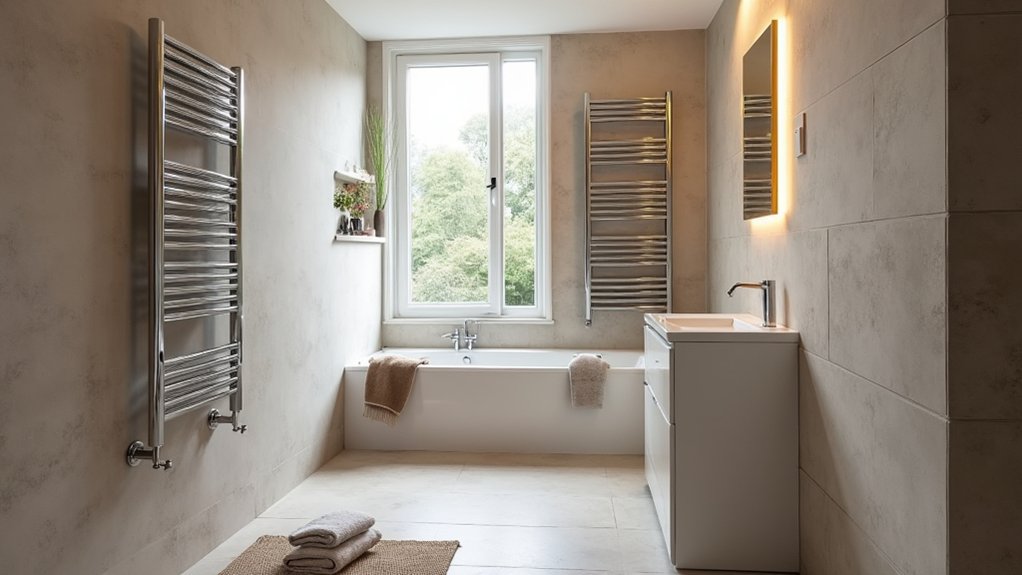
How you heat your bathroom affects installation, running costs, and year-round usability. A central-heating radiator connects to your boiler and usually costs less to run when the system operates. However, it won’t warm towels or the room independently during warmer months. You’ll need suitable pipework, valve access, and careful radiator placement.
An electric radiator uses a heating element and timer, so you can heat the bathroom on demand without starting the boiler. Installation may be simpler, although electricity typically costs more per unit. Choose a model with appropriate bathroom safety ratings and keep controls outside prohibited zones.
A dual-fuel radiator combines both systems, giving you central-heating efficiency in winter and electric control in summer. Check element compatibility, wattage, wiring, and operating clearances. Compare connection requirements, controls, and aesthetic options without compromising safe, accessible maintenance.
Choose a Bathroom Radiator Finish and Style
Once you’ve selected the heating system, choose a finish and style that suit your bathroom’s moisture levels, layout, and maintenance needs. Assess the radiator material first. Powder-coated steel offers durable colour and broad styling flexibility, while stainless steel resists corrosion and suits humid rooms. Brass can provide a distinctive appearance, but check its protective coating and cleaning requirements.
Consider how the finish interacts with your fittings, tiles, and lighting. White creates a clean, unobtrusive look; black or anthracite adds contrast; chrome reflects light and complements polished taps.
Review design options such as ladder, column, or flat-panel profiles. Ladder rails support practical towel placement, whereas compact vertical or slimline designs preserve limited wall space. Choose smooth, accessible surfaces that you can wipe easily, and confirm the finish can withstand bathroom humidity without discolouring or flaking.
Compare Installation Needs and Running Costs
Before choosing a model, check whether you’ll need new pipework, electrical connections, wall reinforcement, or professional installation.
Compare electric, central-heating, and dual-fuel radiators by calculating energy use, tariffs, controls, and expected operating hours.
Factor in purchase, installation, maintenance, and running costs to assess the total expense.
Installation Requirements
Installation requirements vary by radiator type, heat source, and bathroom layout, so check the available pipework, wall strength, electrical supply, and clearance around fixtures before choosing a model.
Confirm that your central-heating system can accommodate the radiator’s connections, or arrange a qualified electrician for an electric unit.
Use suitable wall fixings, especially on plasterboard, and verify that the mounting surface can support the filled radiator.
Maintain manufacturer-specified distances from showers, baths, doors, and combustible materials.
Fit pipe insulation where accessible to protect heat delivery and reduce unwanted heat loss within walls or floors.
Plan thermostat placement away from draughts, direct sunlight, and hot pipework so temperature readings remain accurate.
You’ll also need accessible isolation valves, secure joints, and adequate ventilation during installation.
Always follow regulations and the manufacturer’s instructions.
Running Cost Comparison
Running costs depend on the radiator’s heat output, energy source, controls, and how efficiently your bathroom retains heat. You’ll generally pay less with a correctly sized model, because it reaches your target temperature without excessive cycling.
A thermostatic valve or programmable controller lets you reduce output when the room’s unused, improving Energy efficiency.
Electric radiators are straightforward to install, but electricity tariffs can make daily operation more expensive.
Central-heating models often cost less to run, although pipework alterations can increase installation costs.
Dual-fuel radiators offer flexibility: use central heating during colder periods and electricity for summer towel drying.
Compare each model’s wattage, expected operating hours, and tariff before choosing.
You’ll also need to budget for maintenance costs, including valve replacement, corrosion checks, and occasional bleeding of wet systems.
Frequently Asked Questions
How Often Should I Bleed My Bathroom Radiator?
Bleed your bathroom radiator when it feels cold at the top, makes bubbling noises, or heats unevenly—not on a fixed schedule. Include this in radiator maintenance; bleeding frequency may range from monthly to annually.
Can I Safely Install a Radiator Near a Shower or Bathtub?
Play it safe: you can install a radiator near a shower or bathtub only when you follow electrical zones, clearance, and IP-rating requirements. Choose electric heating carefully, verify radiator placement, and hire a qualified electrician.
What Accessories Work Best With a Bathroom Radiator?
You’ll get the most from towel hooks, decorative covers, thermostatic valves, and bleed keys. Choose corrosion-resistant, heat-rated accessories, secure hooks away from controls, and maintain clearance for airflow, cleaning, and safe towel drying.
How Do I Prevent Rust and Corrosion in a Humid Bathroom?
Ironically, your bathroom’s warmest feature can invite rust. For Rust prevention, choose corrosion resistance, keep surfaces dry, improve ventilation, wipe condensation promptly, inspect paint, and repair chips immediately. Don’t use abrasive cleaners or leave wet towels draped over radiators.
What Warranty Coverage Should I Expect for a Bathroom Radiator?
You should expect a five-to ten-year warranty covering manufacturing defects, leaks, and finish failure, though exclusions apply. Check radiator material, installation requirements, corrosion protection, and energy efficiency claims; register your purchase and retain documentation.
Conclusion
Choosing the right bathroom radiator means balancing heat output, available wall space, fuel type, installation requirements, and visual design. Measure carefully, calculate the required BTU output, and compare central-heating, electric, and dual-fuel options before you buy. Then select a finish that complements your fittings while considering running costs and maintenance. Remember, “measure twice, cut once”: accurate planning helps you avoid inefficient heating, costly alterations, and an unsuitable radiator, giving you lasting warmth and style.