
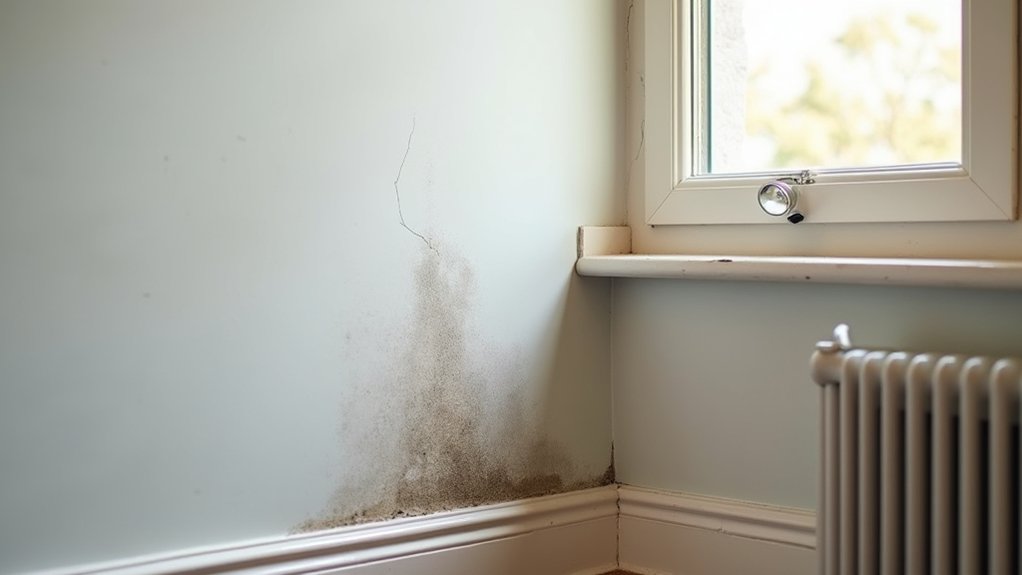
A faint musty smell, a cold patch on the wall, or paint bubbling like a blister can signal damp before serious damage appears. You can limit the risk by checking vulnerable areas, improving ventilation, controlling humidity, clearing gutters, and repairing leaks or exterior cracks promptly. Early signs can point to condensation, penetrating damp, or rising damp, and each requires a different solution—so identifying the source should come first.
Key Takeaways
- Look for musty odours, mould, peeling paint, bubbling wallpaper, discolouration, condensation, or cold surfaces.
- Regularly inspect roofs, gutters, plumbing, windows, external walls, basements, and areas that become damp after rainfall.
- Control humidity between 40–60% using ventilation, extractor fans, consistent heating, hygrometers, and dehumidifiers.
- Prevent moisture buildup by drying wet surfaces, ventilating while cooking or bathing, and avoiding indoor clothes drying.
- Repair leaks and external defects promptly; seek professional diagnosis if damp persists, spreads, or damages plaster, timber, or masonry.
What Causes Damp in Your Home?
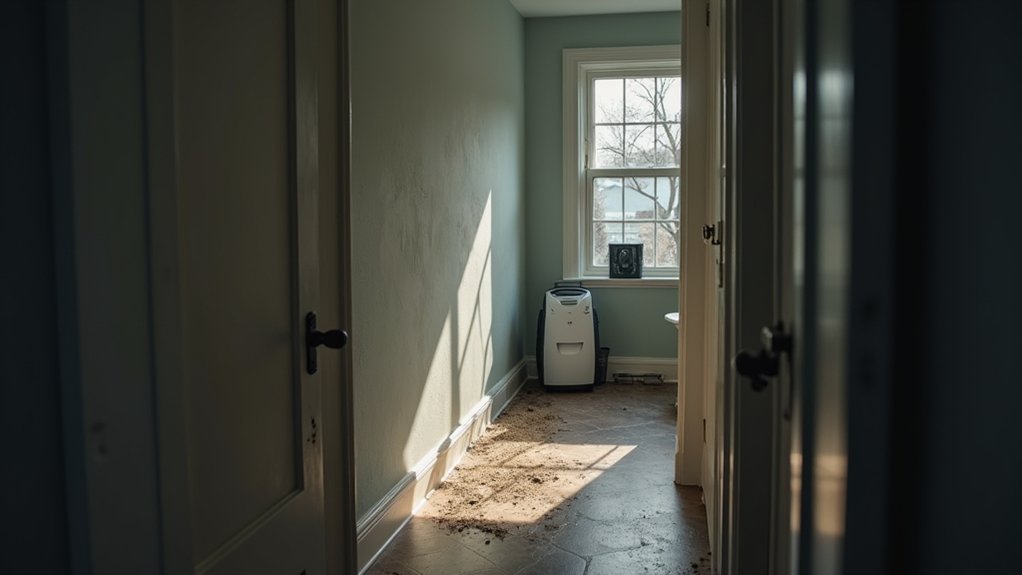
Damp usually develops when moisture enters or accumulates in your home faster than it can escape. Moisture intrusion may occur through leaking roofs, defective gutters, damaged seals, cracked masonry, failed plumbing, or rising groundwater.
Condensation forms when warm, humid air contacts cold walls, windows, or pipes, especially where ventilation and insulation are inadequate. Construction defects, including missing damp-proof courses or poorly sealed foundations, can also allow water to migrate into floors and walls.
Everyday activities such as cooking, drying laundry, and showering add indoor moisture, while blocked air vents prevent its removal. Act early by repairing leaks, maintaining drainage, sealing openings, and improving controlled ventilation.
These measures reduce persistent humidity and help prevent mould growth, timber decay, corrosion, and costly structural damage caused by prolonged damp.
How Can You Spot Damp Early?
You can spot damp early by checking for musty odours, peeling paint, discolouration, mould, or persistently cold surfaces.
Inspect damp-prone areas such as bathrooms, kitchens, basements, external walls, and around windows regularly.
Early detection lets you improve ventilation, fix leaks, and prevent structural damage.
Spotting Early Warning Signs
Early detection starts with checking for musty odours, condensation, peeling paint, discoloured patches, and mould, especially around windows, external walls, ceilings, and plumbing.
Note when each symptom appears and whether it worsens after rainfall, cooking, bathing, or heating.
Mould growth often begins as small black, green, or white specks, while bubbling paint or lifting wallpaper can indicate moisture beneath the surface.
Use odour detection carefully: a persistent earthy smell, even without visible staining, deserves investigation.
Check windows and walls for recurring condensation rather than isolated droplets, and watch for damp-looking marks that expand or change colour.
Don’t ignore cold surfaces, flaking finishes, or musty cupboards.
Record findings with dated photographs, then investigate promptly to prevent hidden moisture from damaging materials or affecting indoor air quality.
Checking Damp-Prone Areas
Where should you look first? Check rooms with poor ventilation, including bathrooms, kitchens, basements, and utility areas. Examine corners, window reveals, ceilings, and floors for staining, bubbling paint, peeling wallpaper, mould, or a musty smell. Pay close attention behind furniture and inside cupboards, where restricted airflow can trap moisture.
During wall inspections, use a moisture meter to compare readings across surfaces rather than relying on appearance alone.
Inspect external walls after heavy rain, checking gutters, downpipes, pointing, and cracks that could admit water. Test around windows and doors for failed seals or condensation.
Also examine plumbing joints, tanks, and appliances for slow leaks. Confirm that moisture barriers remain intact beneath floors and within walls.
Record changes with dated photographs, then repair leaks, improve ventilation, and investigate persistent readings promptly before damage spreads.
What Type of Damp Do You Have?
Identifying the type of damp affecting your property is the first step towards choosing the correct treatment. Condensation forms when warm, humid air meets cold surfaces, leaving droplets on windows, walls, or ceilings. You’ll often notice it in bathrooms, kitchens, and poorly ventilated rooms, alongside musty smells or surface mold.
Penetrating damp enters through external defects, such as damaged gutters, cracked masonry, or failed seals, and usually creates isolated, worsening patches after rain.
Rising damp travels upward through porous masonry from ground moisture, typically leaving a horizontal tide mark and salt deposits near the base of walls.
Don’t confuse plumbing leaks with these patterns; they often produce concentrated staining.
Accurate identification supports mold prevention and helps you select suitable Moisture barriers before damage spreads throughout your property.
How Do You Fix Leaks and Rising Damp?
Once you’ve distinguished a leak or rising damp from condensation, address the moisture source before repairing damaged finishes.
For Roof leaks, inspect tiles, flashing, gutters, and penetrations, then replace failed materials and check the loft after rainfall.
Trace plumbing leaks with pressure testing or moisture mapping, isolate the supply, and replace damaged joints promptly.
For rising damp, expose the wall’s base and check the damp-proof course, ground levels, and external drainage.
Lower soil or paving below the course, clear bridging debris, and repair the barrier where necessary.
Improve Basement drainage with a functioning sump, perimeter drain, or tanking system designed for site conditions.
Allow masonry to dry before replastering with compatible, breathable materials.
Don’t seal wet walls with impermeable coatings; they can trap moisture and conceal recurring defects.
How Can You Reduce Damp and Condensation?

You can reduce damp and condensation by improving airflow in moisture-prone areas, especially kitchens, bathrooms, and utility rooms. Use extractor fans, open trickle vents, and avoid blocking airbricks to maintain effective ventilation.
You’ll also need to control indoor humidity by heating rooms consistently, drying laundry outside where possible, and using a dehumidifier when necessary.
Improve Home Ventilation
Improve airflow through your home to reduce moisture and prevent condensation. Open windows briefly each day, particularly after cooking, showering, or drying clothes, to replace stale, moisture-laden air with drier outdoor air. Use trickle vents consistently, and keep internal doors slightly open when practical so natural airflow can circulate between rooms.
Don’t block air bricks, window vents, or extractor grilles with furniture, paint, or insulation. Run kitchen and bathroom extractors during moisture-producing activities and for several minutes afterwards; check that fans discharge outdoors, not into a loft or cavity.
For persistent problems, consider mechanical ventilation systems, such as continuous low-level extract or mechanical ventilation with heat recovery. Clean grilles and filters regularly, and arrange professional testing if airflow seems weak or ductwork becomes damaged.
Control Indoor Humidity
Good ventilation works best when you also control the amount of moisture released indoors. Use extractor fans while cooking and showering, keep lids on pans, and dry clothes outdoors or in a well-ventilated room. Close internal doors during moisture-producing activities, but don’t block permanent air vents.
Monitor relative humidity with a hygrometer; aim for 40–60% to limit condensation and mould growth. If readings stay high, compare Dehumidifier options: compressor models suit warmer rooms, while desiccant units perform better in cooler spaces. Empty tanks regularly and clean filters as the manufacturer specifies.
Indoor plant benefits include improved appearance and limited moisture absorption, but plants also release water vapour. Don’t overcrowd rooms, and avoid placing them on cold windowsills.
Keep furniture slightly away from external walls so air can circulate, and wipe condensation from windows each morning.
verter your boiler’s condensate pipe.
How Can You Prevent Damp at Home?

Preventing damp starts with controlling moisture before it can accumulate: ventilate kitchens and bathrooms, use extractor fans during and after activities that create steam, repair leaks promptly, and keep gutters and downpipes clear.
For effective humidity control, keep indoor relative humidity between 40% and 60%; use a hygrometer to monitor levels and a dehumidifier when necessary.
Leave space between furniture and external walls so air can circulate, and dry wet surfaces immediately. Avoid drying clothes on radiators unless you provide strong ventilation.
Check window seals, roof coverings, plumbing joints, and exterior masonry regularly for defects.
Clean condensation from windows each morning, and maintain consistent heating to reduce cold surfaces.
These measures support mold prevention by limiting persistent moisture, improving airflow, and stopping damp conditions from developing.
When Should You Call a Damp Specialist?
You should call a damp specialist when moisture persists despite basic ventilation, heating, and repair measures, or when you can’t identify its source. Arrange professional damp detection if you notice spreading stains, peeling finishes, mould, musty odours, or worsening damage to plaster, timber, or masonry.
Don’t paint over affected areas; concealment can delay treatment and allow structural decay to develop.
Seek specialist consultation when damp appears low on walls, follows rainfall, or returns after drying, as these signs may indicate rising damp, penetrating damp, plumbing leaks, or condensation.
A qualified surveyor can use moisture meters, thermal imaging, and hygrometers to trace the source without unnecessary disruption.
Ask for a written diagnosis, repair recommendations, and a clear explanation of any proposed chemical treatment.
Prompt action limits health risks, prevents costly repairs, and helps you maintain a dry, safe home.
Frequently Asked Questions
Can Damp Affect Your Health and Wellbeing?
Yes, damp can harm your health and wellbeing. It worsens Indoor air quality, encourages mold growth prevention challenges, and may trigger allergies, asthma, coughing, fatigue, or irritation. Improve ventilation, fix leaks, and remove moisture promptly.
Does Home Insurance Cover Damp-Related Damage?
Home insurance coverage usually excludes gradual damp, condensation, poor maintenance, and rising damp. You’ll need to review your policy, document damage, report leaks promptly, and distinguish sudden water damage from preventable damp claims.
How Much Does Professional Damp Treatment Usually Cost?
You’ll typically pay £500–£5,000 for professional damp treatment, depending on severity and property size. Request itemised cost estimates, compare treatment options, and obtain an independent survey before approving preventative work or repairs.
Can Damp Damage Furniture, Clothing, and Personal Belongings?
Yes, damp can damage furniture, clothing, and personal belongings by causing staining, swelling, mould, and odours. Prioritise Furniture preservation and Clothing protection: improve ventilation, reduce humidity, isolate affected items, and address leaks promptly.
How Long Does Damp Treatment Take to Complete?
Treatment may take several days to weeks, depending on severity. You’ll speed progress by fixing leaks, improving ventilation, and using moisture control. Maintain damp prevention measures afterward, or problems may return and spread silently.
Conclusion
Damp starts as a whisper but can become your home’s unwelcome tenant. By checking walls, roofs, gutters, and hidden leaks, you’ll catch trouble before it spreads. Ventilate kitchens and bathrooms, keep humidity between 40–60%, and repair defects promptly. Don’t paint over mould or ignore persistent staining; identify the source first. If moisture returns, call a qualified damp specialist. With regular inspections and timely action, you’ll protect your property’s structure, air quality, and long-term value.