Choosing living room flooring means balancing comfort, durability, maintenance, and cost. You’ll need to take into account how much foot traffic, moisture, pet activity, and daily wear the space receives before selecting a material. Hardwood adds lasting warmth, carpet improves insulation, luxury vinyl handles demanding routines, and tile offers low-maintenance performance. Color, texture, slip resistance, and installation requirements also affect the final result. Compare each option carefully, because the most attractive surface may not suit your household’s practical needs.
Key Takeaways
- Hardwood provides timeless warmth, visual continuity, and lasting value; choose engineered planks for fluctuating humidity or solid wood for stable rooms.
- Carpet delivers superior softness, warmth, and sound insulation, with low-pile nylon or wool offering practical comfort and easier maintenance.
- Luxury vinyl combines stylish wood or stone appearances with cushioning, water resistance, and durability; choose a wear layer of at least 20 mils.
- Porcelain or ceramic tile offers moisture and scratch resistance, easy cleaning, and compatibility with radiant heating, though rugs can add warmth.
- Choose warm neutrals, matte finishes, and subtle textures to create inviting rooms while coordinating undertones with walls, furniture, and natural lighting.
Compare Living Room Flooring by Cost and Comfort

When comparing living room flooring, weigh upfront cost against long-term comfort, maintenance, and durability. Start by calculating material, installation, subfloor preparation, and replacement costs rather than comparing product prices alone.
Carpet often provides a lower initial investment and softer underfoot performance, while resilient flooring can offer straightforward cleaning and strong moisture resistance.
Evaluate comfort through surface resilience, thermal feel, and cushioning, especially if you spend significant time standing or sitting nearby.
Also consider acoustic benefits: carpet and cushioned products typically reduce footfall and airborne noise more effectively than hard surfaces.
For Eco friendly options, examine recycled content, renewable materials, low-emission adhesives, and end-of-life recyclability.
Request samples, test slip resistance, and verify warranty terms.
Your best value balances daily comfort, service requirements, installation conditions, and expected service life.
Choose Hardwood for Lasting Warmth
Hardwood adds lasting warmth, visual continuity, and value to a living room, provided you match the species, finish, and plank construction to household conditions.
Choose engineered boards for basements, fluctuating humidity, or concrete subfloors; their cross-layer construction limits seasonal movement. Solid hardwood suits stable, above-grade rooms and allows multiple refinishing cycles.
Select a durable finish, such as aluminum-oxide polyurethane, when you expect heavy traffic, pets, or frequent furniture movement.
Before installation, acclimate planks according to the manufacturer’s moisture specifications, verify subfloor flatness, and leave expansion gaps at walls and connectors. These hardwood installation tips reduce cupping, gaps, and squeaks.
For hardwood maintenance, use entry mats, felt furniture pads, and a dry microfiber mop. Wipe spills promptly, control indoor humidity, and avoid steam cleaners or soaking water.
Recoat worn areas before damage reaches the wood.
Try Carpet for Soft, Cozy Comfort
Choose carpet when you want plush comfort underfoot and a softer surface for daily living. Its fibers help retain warmth, reduce drafts, and provide insulation against cold floors and room noise.
You’ll also find versatile colors, patterns, and pile heights to match your décor and maintenance needs.
Plush Comfort Underfoot
Carpet adds warmth and softness to a living room while reducing footstep noise and improving insulation over cold subfloors. Its dense fibers provide silky softness beneath bare feet, while the underpad delivers cushioned support for sitting, playing, or stretching.
Choose a pile height based on your needs: low pile offers easier cleaning and firmer footing, whereas medium or high pile feels more luxurious. Check fiber construction, too. Nylon resists crushing and stains, polyester offers color retention, and wool provides durable resilience with a premium texture.
For better comfort, select padding with the manufacturer’s recommended density and thickness; excessive compression can damage carpet backing. Before installation, confirm that doors clear the finished floor and that seams won’t fall in high-traffic sightlines.
Vacuum regularly to preserve its texture and appearance.
Warmth And Insulation
Because carpet traps insulating air within its fibers and underpad, it helps keep a living room warmer over concrete, tile, or other cold subfloors. You’ll notice less heat loss through the floor, particularly when you choose a dense carpet and a properly rated pad.
Check the product’s tog or R-value, then match it to your room’s moisture conditions and subfloor construction. Although carpet adds thermal resistance, you can still install it over compatible underfloor heating; confirm the manufacturer’s maximum combined tog rating first, because excessive insulation can restrict heat transfer.
Select low-VOC insulation materials in the underpad, and install the pad tightly without gaps that create cold spots. Seal drafts around perimeter edges, maintain stable indoor humidity, and vacuum regularly to preserve carpet’s insulating loft and performance.
Style And Versatility
Whether you prefer a calm neutral, bold pattern, or textured finish, carpet gives you broad design flexibility while adding soft, cozy comfort underfoot. You can coordinate its color with walls and furniture or use a contrasting pattern to define a seating area.
Review available patterns and finishes, including loop, cut-pile, and patterned styles, to match your room’s traffic level and visual goals. Choose solution-dyed fibers when you need stronger resistance to fading and stains, particularly in bright rooms or homes with pets.
Before installation, measure carefully and confirm the carpet’s pile direction for a consistent appearance. You’ll also want to evaluate maintenance and cleaning requirements; low-pile, stain-resistant options generally simplify routine vacuuming and spot treatment.
Add a quality pad to improve resilience, cushioning, and long-term comfort.
Pick Luxury Vinyl for Everyday Durability

When your living room needs flooring that can handle daily traffic, luxury vinyl offers a practical balance of durability, comfort, and style. Its layered construction typically includes a rigid or flexible core, a high-resolution design layer, and a transparent wear layer that resists scratches, stains, and scuffs.
Choose a wear layer of at least 20 mils for busy households, especially if you have pets or children. Waterproof options help protect the subfloor from spills, while textured finishes can improve traction underfoot.
You’ll also appreciate luxury vinyl’s resilient surface, which feels warmer and softer than many hard flooring materials. Select planks or tiles with UV-resistant coatings if sunlight reaches your seating area.
With routine sweeping and occasional damp mopping, you can maintain its appearance and achieve dependable everyday durability for years.
Select Tile for Easy-Care Style
Tile gives your living room a durable, easy-care surface that resists scratches, stains, moisture, and fading. Porcelain tile offers low water absorption, making it a strong choice for areas exposed to occasional spills.
Ceramic tile provides a broader range of colors and finishes, while both materials support radiant-heating systems when properly installed.
Choose a tile’s hardness, thickness, and slip resistance according to its location and expected foot traffic. Large-format tiles create fewer grout joints, simplifying routine cleaning and producing a more continuous visual field.
Mosaic patterns can define a border, hearth, or recessed accent without overwhelming the room. For added visual depth, use textured tiles, but confirm that their surface won’t trap debris.
Seal cement-based grout, clean with a pH-neutral product, and replace cracked tiles promptly to protect the installation’s appearance and performance.
Match Flooring to Pets, Kids, and Budget
After comparing tile’s maintenance needs, evaluate how your household will use the living room. If you have pets, choose pet friendly materials that resist scratches, moisture, and odor absorption. Luxury vinyl, sealed tile, and durable laminate provide practical surfaces; verify each product’s wear layer, slip resistance, and warranty before buying.
For children, prioritize impact tolerance, easy cleaning, and low chemical emissions. Secure rugs and inspect seams or shifts, where tripping can occur. Your budget should include underlayment, installation, subfloor repairs, adhesives, and future maintenance—not just the advertised price.
Budget conscious options include sheet vinyl, laminate, and mid-grade luxury vinyl, which typically cost less than hardwood while offering straightforward upkeep. Request samples, compare installed estimates, and calculate replacement costs.
Choose the flooring that fits your household’s demands without exceeding your spending limit.
Choose Living Room Flooring Colors and Textures
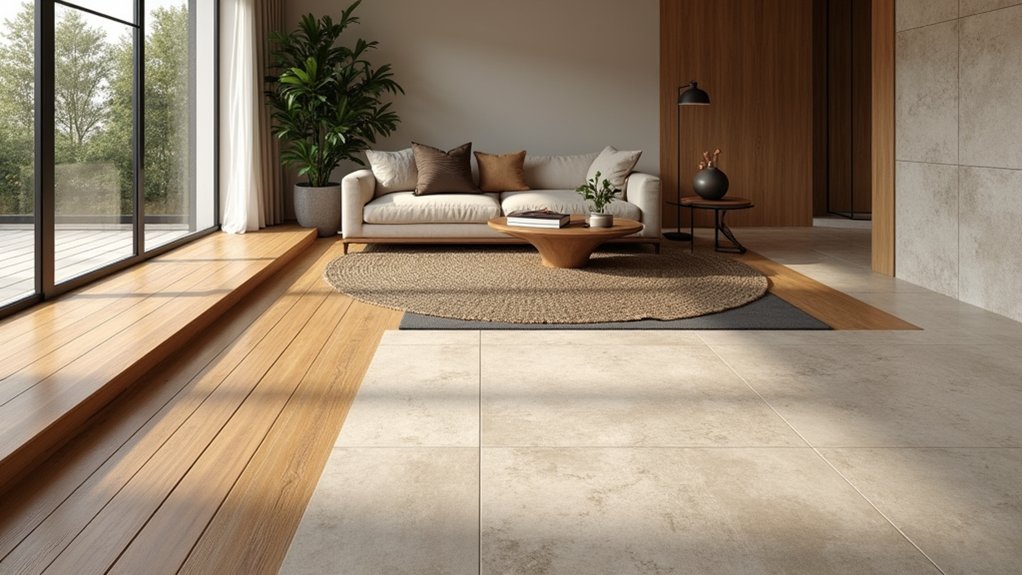
You’ll create a versatile foundation with warm neutral flooring tones that complement varied furniture and lighting.
Use bold color accents strategically through rugs, borders, or patterned materials to define zones without overwhelming the room.
For added visual and tactile interest, consider textured flooring options such as wire-brushed wood, embossed vinyl, or low-pile patterned carpet.
Warm Neutral Tones
Warm neutral flooring—such as oak, maple, limestone, beige porcelain, or greige luxury vinyl—creates a comfortable foundation without making the living room feel visually heavy. Choose undertones that coordinate with your walls and furnishings: honey or red oak warms cool interiors, while greige and pale limestone balance rooms with warmer finishes.
Review samples in daylight and evening light, because artificial bulbs can shift beige toward yellow or gray. Select matte or low-sheen surfaces to reduce glare and disguise minor scratches.
For wood, compare plank width, grain variation, and finish durability; for tile, check texture and slip resistance. Sustainable materials, including responsibly sourced wood or recycled-content tile, can reduce environmental impact.
Evaluate acoustic properties, too: wood with an underlayment and resilient vinyl generally feels quieter than porcelain over a hard subfloor, improving everyday comfort.
Bold Color Accents
Bold flooring can anchor a living room’s color scheme while adding visual interest through texture and pattern. For bold color accents, choose saturated navy, forest green, charcoal, terracotta, or deep burgundy flooring, then evaluate samples beside your walls and furnishings.
Check the color under daytime, evening, and artificial lighting, since undertones can shift noticeably. Balance a strong floor with restrained upholstery and accessories, or repeat one flooring hue in cushions, curtains, or artwork for cohesion.
If you prefer a quieter base, install a neutral floor and introduce color through a well-defined area rug, ensuring its dimensions leave consistent exposed flooring around seating.
Coordinate statement wall decor with the floor’s dominant or secondary tone, but avoid matching every element exactly.
Confirm the product’s finish, maintenance requirements, and warranty before installation.
Textured Flooring Options
How can texture add depth without making a living room difficult to maintain? Choose surfaces with controlled variation, durable finishes, and cleaning requirements that match your routine.
Textured concrete creates a modern, tactile foundation, but seal it with a penetrating or film-forming product to resist stains and simplify mopping. Select a low-sheen finish to reduce glare and highlight subtle movement without emphasizing dust.
If you prefer warmth, use engineered wood with wire-brushed grain; its protective coating handles everyday traffic while adding visual dimension.
For carpet, choose a tightly woven, low-pile construction that traps less debris and supports easier vacuuming.
Layer patterned rugs over smooth flooring to introduce color and texture without permanent installation. Secure each rug with a nonslip pad, and coordinate its scale with your furniture for balanced visual weight.
Frequently Asked Questions
How Should Living Room Flooring Be Prepared Before Installation?
You should remove existing flooring, repair cracks, and guarantee the subfloor’s clean, dry, level, and structurally sound. Check moisture, acclimate materials, and follow manufacturer instructions; plan Flooring maintenance and decorating ideas before installation begins.
Can Underfloor Heating Be Installed Beneath Living Room Flooring?
Yes, you can install underfloor heating beneath living room flooring. Choose compatible materials, verify system temperature limits, install adequate Floor insulation, and follow manufacturer guidance for efficient, safe Radiant heating performance and proper floor preparation.
How Long Does Professional Living Room Flooring Installation Take?
You’ll typically need one to three days, echoing a craftsman’s measured pace. Preparation, subfloor repairs, material acclimation, and layout affect timing; Decorative patterns extend installation, while Flooring durability depends on precise, professional fitting.
What Subfloor Issues Can Affect Living Room Flooring Installation?
Subfloor moisture can warp flooring, promote mold, and weaken adhesives. An uneven subfloor creates gaps, squeaks, and premature wear. You’ll need moisture testing, leveling, repairs, and proper curing before installation begins to guarantee stable, durable results.
How Should Old Living Room Flooring Be Removed and Disposed Of?
You’ll find floor removal easier when you coincide with a helper’s schedule: wear protective gear, score adhesive, lift carefully, test for asbestos, and seal debris. Follow local flooring disposal rules; don’t burn, dump, or mix hazardous materials.
Conclusion
Choose your living room flooring by balancing comfort, cost, care, and character. Hardwood adds lasting warmth, carpet creates cushioned coziness, luxury vinyl delivers durable, dependable performance, and tile offers clean, cool style. Consider your household’s pets, kids, traffic, humidity, and budget before deciding. Then coordinate color, texture, and slip resistance with your décor and daily routines. With thoughtful planning, you’ll create a practical, polished, and pleasant space that stays stylish through years of living.