
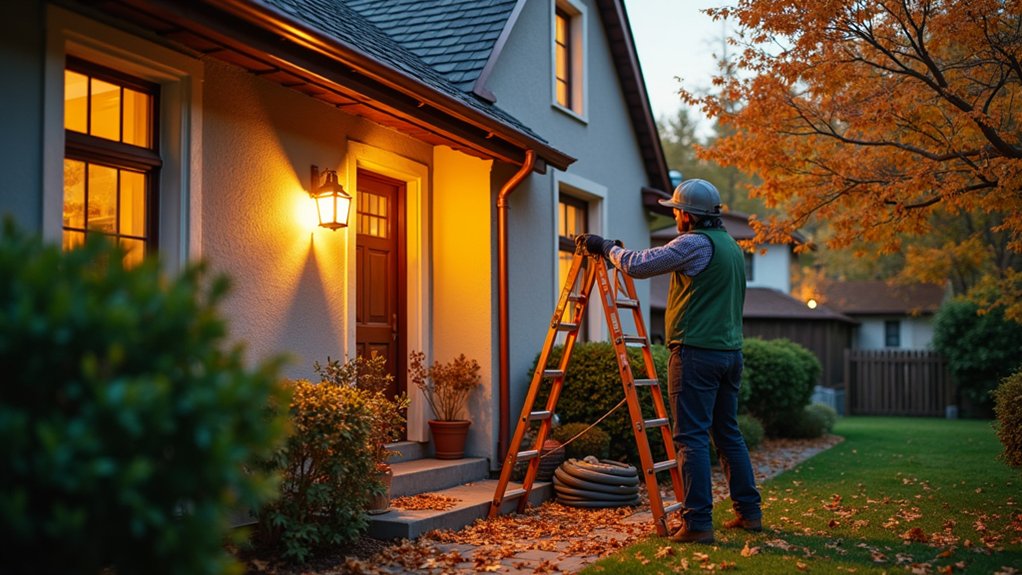
Preparing your home for changing seasons starts with a systematic inspection, not a costly repair bill. Walk around the exterior and interior to identify damaged siding, clogged gutters, drainage problems, drafts, and worn equipment. Clean and repair these areas before weather conditions worsen, then service your HVAC system and test safety devices. A few preventive tasks can improve efficiency and protect your home, but one overlooked seasonal problem may cause the most damage.
Key Takeaways
- Inspect the roof, foundation, attic, and basement for damage, moisture, cracks, mold, pests, and drainage problems.
- Clean gutters and downspouts, check for leaks, and direct water at least four feet away from the foundation.
- Service HVAC equipment, replace filters, test thermostats, and clear outdoor units and condensate drains.
- Seal windows and doors by replacing damaged caulk, weatherstripping, thresholds, and door sweeps.
- Test smoke and carbon monoxide alarms, replace compatible batteries, and record testing and replacement dates.
Inspect Your Home Before Each Season
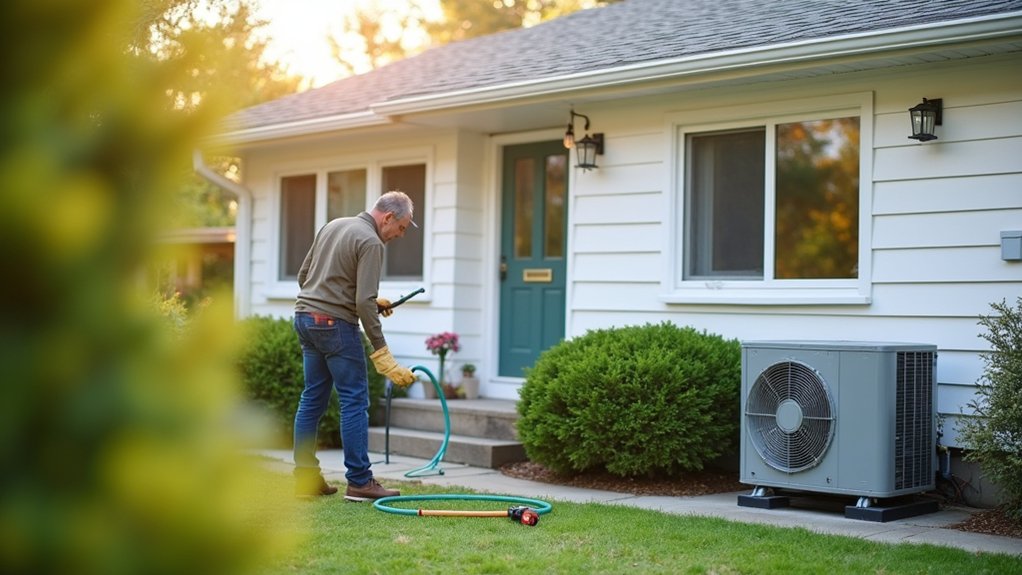
Before each season, inspect your home’s exterior and major systems for damage, wear, and conditions that could affect safety or efficiency. During this seasonal inspection, check the roof for missing shingles, damaged flashing, and blocked drainage components. Examine the foundation, basement, and attic for moisture, cracks, mold, or pest activity.
Test smoke alarms, carbon monoxide detectors, sump pumps, and backup power systems, and replace expired batteries. Schedule professional service for heating, cooling, electrical, or plumbing equipment when you notice unusual noise, odors, leaks, or performance changes.
Review insulation and ventilation in accessible areas to identify energy losses or condensation risks. Record findings, photograph damage, and prioritize repairs by urgency.
Consistent home maintenance helps you prevent costly failures, protect indoor conditions, and keep your household safer throughout every seasonal *changeover*.
Prepare Siding, Walkways, and Outdoor Faucets
Inspect siding, walkways, and outdoor faucets as temperatures and weather conditions change.
For effective siding maintenance, look for cracked panels, loose fasteners, warped sections, and failed caulk around windows and doors. Replace damaged materials and reseal joints promptly to prevent moisture intrusion. Clean surfaces with a suitable detergent, but avoid forcing water beneath panels or into vents.
Check walkways for lifted edges, widening cracks, loose pavers, and slippery organic growth. Schedule walkway repairs before freezing weather worsens defects or creates trip hazards. Reset uneven pavers, fill compatible cracks, and improve traction where needed.
At each outdoor faucet, inspect the handle, spout, connections, and nearby piping for leaks or corrosion. Repair dripping valves, disconnect hoses, and install insulated covers before freezing temperatures arrive. Shut off interior supply valves and drain exposed lines when possible.
Clean Roof Gutters and Improve Drainage
After addressing siding, walkways, and outdoor faucets, clean roof gutters and downspouts to keep seasonal rainfall and melting ice moving away from the house.
Remove Gutter debris, including leaves, nests, and sediment, while wearing gloves and using a stable ladder. Flush each section with a hose, then check seams, end caps, and downspout connections for leaks or blockages.
Confirm that water flows freely through elbows and exits at ground level. Add or adjust extensions so discharge ends at least four feet from the foundation.
For practical Drainage solutions, grade soil away from walls, install splash blocks, and consider a buried drain line where runoff remains concentrated.
Inspect gutter hangers and maintain a slight slope toward outlets. Schedule another cleaning after autumn leaf drop and before spring storms, and repair damage promptly to prevent erosion, moisture intrusion, and foundation stress.
Service Heating and Cooling Equipment
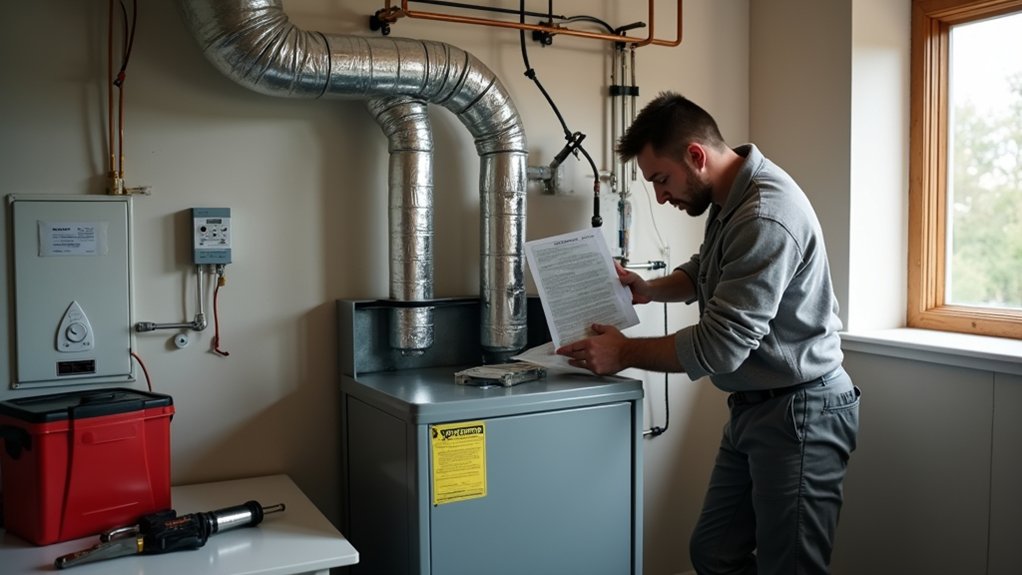
As temperatures shift, service your heating and cooling equipment to maintain safe, efficient operation. Schedule professional HVAC maintenance before heavy seasonal use begins. A technician can inspect electrical connections, test safety controls, measure refrigerant levels, clean coils, and verify airflow.
Replace or clean filters according to the manufacturer’s schedule; restricted airflow strains equipment and increases energy consumption.
Test your thermostat and arrange thermostat calibration if readings don’t match room conditions. Confirm that programmed temperatures and mode settings suit the upcoming season.
Clear leaves, grass, and other debris from outdoor condenser units, while keeping the surrounding area open for adequate airflow. Check condensate drains for blockage and inspect accessible ductwork for damage.
Don’t attempt electrical or refrigerant repairs yourself. Record service dates, filter changes, and unusual noises so you can address developing problems before breakdowns occur.
Seal Windows, Doors, and Drafty Gaps
Inspect window seals for cracks, shrinkage, or gaps, and replace damaged caulk or weatherstripping.
Block doorway drafts by checking the threshold and installing a properly fitted door sweep. These repairs’ll reduce heat loss and help maintain consistent indoor temperatures.
Inspect Window Seals
Check window seals before seasonal temperature swings expose small gaps to drafts and moisture. Inspect every window frame, sash, and corner for cracked caulk, shrunken gaskets, peeling sealant, or daylight. Run your fingers around closed windows to detect moving air, then look for condensation between panes, which can indicate failed insulating glass seals.
Clean dirty surfaces before any sealant application, because dust and moisture prevent proper adhesion. Remove loose material with a scraper, allow the area to dry, and apply a compatible exterior-grade sealant according to the manufacturer’s instructions.
Replace brittle, compressed weatherstripping or damaged glazing seals rather than covering defects. Test each window after curing by checking for air movement and rattling.
Effective window insulation reduces heat loss, protects interior finishes, and helps your heating and cooling systems operate efficiently.
Block Doorway Drafts
Cold air often enters beneath exterior doors, around jambs, and through gaps where the frame meets the wall. Inspect these areas on a windy day, then close curtains and feel for moving air with your hand.
Install a door sweep or adjustable threshold seal beneath each exterior door. Replace compressed, cracked, or missing weatherstripping around jambs, ensuring the material contacts the door without preventing closure.
For stationary gaps, apply paintable caulk indoors and exterior-grade sealant outside. Pack larger openings with backer rod before caulking, and check the wall-to-frame joint for separation.
These draft prevention techniques reduce heat loss, moisture intrusion, and strain on your heating system. They also support Indoor air quality by limiting dust, outdoor pollutants, and unconditioned air entering living spaces.
Reinspect seals each season.
Test Smoke Alarms and Carbon Monoxide Detectors
Test each smoke alarm and carbon monoxide detector using its test button to confirm the siren works.
Replace weak or expired batteries immediately, and schedule regular battery changes before seasonal heating begins.
Make certain every device remains unobstructed and operational.
Test Alarm Functionality
As seasons change, press each smoke alarm’s and carbon monoxide detector’s test button to verify that the siren sounds, replace weak batteries, and address any unit that doesn’t respond immediately.
During alarm testing, stand where you can hear every device throughout the home, including bedrooms, basements, and utility areas.
Confirm interconnected alarms activate together when you test one, and check that visual indicators or voice alerts operate correctly.
Never use smoke, candles, or exhaust to trigger a detector; use the manufacturer-approved test method.
Record failed units and arrange prompt inspection, repair, or replacement according to the manufacturer’s instructions.
Keep vents and sensors unobstructed, and don’t paint, cover, or disable devices.
Include every occupant in your safety protocols, explaining the alarm sound and your emergency exit procedure.
Replace Batteries Regularly
After testing each alarm, replace its batteries on the schedule specified by the manufacturer, or immediately when a low-battery warning sounds. Check the manual for the recommended Battery lifespan, because rechargeable and disposable cells may require different replacement intervals. Use the correct battery type and size; never mix old and new cells or different chemistries.
Before installation, inspect the compartment for corrosion, clean contacts carefully, and confirm the battery fits securely. If your alarm uses sealed, long-life batteries, replace the entire unit when its service life ends.
Consider alarms with backup batteries if hardwired power sources fail during an outage. Keep spare batteries in a cool, dry location, away from children and metal objects.
After replacement, press the test button and verify every alarm’s audible signal. Record installation dates so seasonal maintenance remains consistent.
Frequently Asked Questions
When Should I Schedule Professional Seasonal Home Maintenance Inspections?
Schedule professional inspections twice yearly: early spring and early fall. You’ll identify seasonal hazards, service heating or cooling equipment, improve energy efficiency, and protect Home safety before extreme temperatures and weather arrive.
Which Tools and Supplies Should I Keep Available for Seasonal Maintenance?
Keep a stocked toolkit for DIY projects: screwdrivers, pliers, adjustable wrenches, a drill, utility knife, tape measure, flashlight, ladder, caulk, filters, gloves, goggles, sealant, and batteries. Follow safety precautions and replace worn supplies.
How Can I Protect Outdoor Furniture and Equipment During Seasonal Weather Changes?
Use Protective covers and Weatherproofing techniques to shield furniture and equipment. You’ll clean, dry, elevate, and secure items; apply rust-resistant coatings, seal exposed surfaces, drain fuel-powered tools, and store batteries indoors before severe weather arrives.
What Seasonal Maintenance Tasks Are Important for Plumbing and Water Heaters?
Inspect pipes for leaks, test shutoff valves, and schedule drain cleaning before seasonal demand increases. Add pipe insulation before freezing weather, flush your water heater, check its anode rod, and set safe temperatures.
How Should I Prepare My Landscaping and Garden for Changing Seasons?
Your garden can become a jungle overnight: schedule Plant pruning, remove dead growth, test soil, and adjust irrigation seasonally. Add Mulch replenishment to conserve moisture, suppress weeds, insulate roots, and prevent erosion before weather changes.
Conclusion
Seasonal maintenance doesn’t need to be complicated. Inspect your home, clear gutters, protect outdoor fixtures, service HVAC equipment, seal drafts, and test safety alarms before weather changes. These preventive steps reduce water damage, improve efficiency, and keep your household safer. According to the U.S. Department of Energy, air sealing and insulation can save homeowners up to 15% on heating and cooling costs. Set a recurring seasonal checklist, address defects promptly, and you’ll prevent minor issues from becoming expensive repairs.