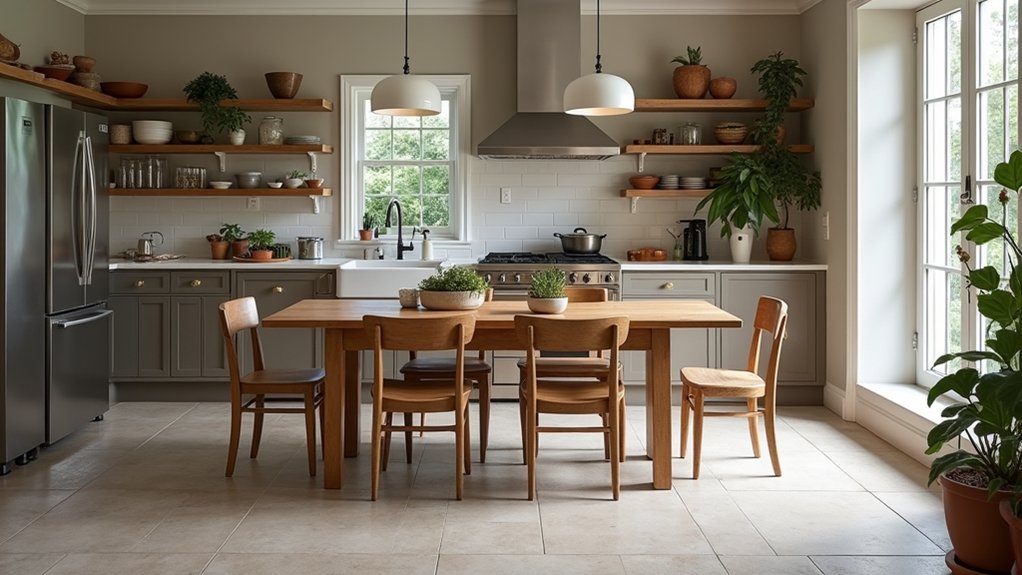
Choosing the best flooring for a busy dining kitchen means balancing moisture resistance, slip safety, impact protection, comfort, and maintenance. You’ll need a surface that handles dropped dishes, food spills, frequent cleaning, and constant foot traffic without becoming damaged or difficult to maintain. Porcelain tile, luxury vinyl, laminate, natural stone, and sealed concrete each perform differently in these conditions. The right choice depends on how you use the space, your budget, and the compromises you’re willing to accept.
Key Takeaways
- Choose porcelain tile for exceptional water, stain, scratch, abrasion, and impact resistance in busy dining kitchens.
- Consider luxury vinyl for comfortable, warm, resilient flooring that cushions feet and simplifies everyday maintenance.
- Select textured or matte surfaces for traction, avoiding deep grooves that trap crumbs and grease.
- Compare total costs, including preparation, installation, underlayment, sealing, repairs, and long-term maintenance.
- Test samples under kitchen lighting and coordinate colors and patterns with cabinets and adjoining rooms.
Which Kitchen Flooring Features Matter Most?
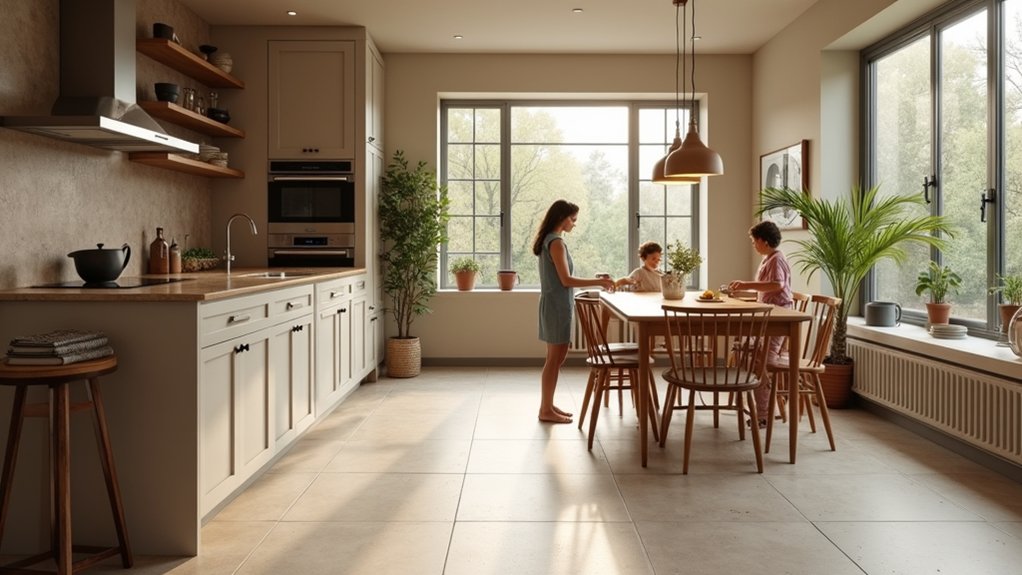
When choosing flooring for a busy kitchen, prioritize water resistance, durability, slip resistance, and easy maintenance. Select a surface with low porosity, sealed joints, and a protective finish to limit absorption from spills, steam, and cleaning solutions.
Check its wear rating and thickness, especially if you’ll move appliances, chairs, or heavy tables across it. A textured or matte surface can improve traction, but avoid deep grooves that trap grease and crumbs.
Confirm that the material tolerates your preferred cleaner and won’t discolor under frequent mopping. Consider thermal comfort and sound control if you spend hours cooking or host meals nearby.
Color coordination should support cabinets, walls, and furnishings while disguising minor debris. Evaluate pattern options carefully; smaller, varied motifs can conceal stains without overwhelming the room or complicating visual maintenance.
Compare the Best Kitchen Flooring Options
Compare kitchen flooring by weighing durability and maintenance requirements against style and comfort. You’ll want a surface that resists moisture, stains, impacts, and heavy traffic without demanding difficult upkeep.
Consider how each option’s appearance, underfoot feel, and noise control fit your kitchen’s daily use.
Durability and Maintenance
For a busy kitchen, choose flooring that resists moisture, impact, stains, and abrasion while remaining easy to clean. Porcelain tile offers excellent hardness, low water absorption, and strong scratch resistance; however, grout lines require sealing and routine scrubbing.
Luxury vinyl provides resilient performance, straightforward replacement, and seamless cleaning, but sharp objects and prolonged standing water can damage its wear layer or edges.
Sealed concrete withstands heavy traffic and spills, though you’ll need periodic resealing to prevent staining and surface wear.
Natural stone delivers substantial durability when properly sealed, yet porous varieties demand prompt spill removal and scheduled maintenance.
Laminate can resist everyday abrasion, but moisture around sinks and dishwashers may cause swelling.
Choose a floor with a documented wear rating, maintain manufacturer-recommended sealants, and use pH-neutral cleaners to preserve performance.
Style and Comfort
Style and comfort depend on how a floor looks, feels underfoot, and supports the kitchen’s overall design. When you choose tile, evaluate color coordination with cabinets, countertops, walls, and dining furniture.
Porcelain and ceramic provide extensive pattern options, including stone, wood, geometric, and subtle textured finishes.
Luxury vinyl offers realistic visuals, warmer contact, and quieter movement than hard tile, making it comfortable for extended meal preparation.
Cork supplies natural resilience and insulation, while sealed hardwood adds warmth but requires tighter moisture control.
Use larger tiles or continuous plank layouts to make a compact kitchen appear more spacious; smaller patterns can define a dining zone.
Matte or low-sheen surfaces hide crumbs and reduce glare, but textured finishes demand more detailed cleaning.
Add cushioned mats at standing stations for targeted comfort without compromising the floor’s design.
Why Porcelain Tile Handles Busy Kitchens
Porcelain tile handles busy kitchens because it combines low water absorption with high density, giving spills less opportunity to penetrate the surface. You’ll get reliable Porcelain durability when you choose a properly rated product and install it over a stable, level substrate.
Its fired composition resists scratches, dents, and abrasion from dropped cookware, dining chairs, and frequent foot traffic. Stain resistance also simplifies cleanup: wipe grease, sauces, and beverage spills before residue dries into textured areas.
Select a suitable slip-resistant finish for safer footing near sinks and dishwashers, but avoid overly rough surfaces that trap debris. Rectified edges can create narrow, consistent grout joints, while quality grout and accurate sealing protect the installation’s vulnerable seams.
Sweep regularly, mop with a pH-neutral cleaner, and replace damaged tiles individually when necessary.
Why Luxury Vinyl Feels Better Underfoot
Luxury vinyl provides slight cushioning that reduces pressure on your feet and joints during long cooking sessions. Its resilient core feels more forgiving than porcelain tile, while the surface stays stable under everyday traffic.
You’ll also notice that vinyl feels warmer and more comfortable, especially in kitchens without radiant heating.
Soft Cushioning Underfoot
Because kitchen work often keeps you standing for long periods, luxury vinyl’s resilient construction provides noticeable cushioning underfoot. Its layered design typically combines a durable wear layer, printed surface, and flexible core that compresses slightly under your weight. That controlled give helps reduce cushioning impact when you shift, turn, or walk across hard subflooring.
You’ll notice more underfoot softness than rigid tile or natural stone, particularly when you choose a thicker plank with an attached resilient backing. Select products with specified indentation-resistance ratings, since excessive compression can lead to visible dents beneath heavy appliances.
Proper subfloor preparation also matters: a level, smooth base lets the vinyl flex evenly instead of transmitting isolated pressure points. With accurate installation, you get stable support and responsive cushioning without sacrificing durability. It’s a practical advantage during extended meal preparation and cleanup.
Warmth and Comfort
Beyond cushioning, luxury vinyl feels more comfortable because it doesn’t draw heat from your feet as quickly as tile or stone. Its layered construction, including a resilient wear layer and flexible core, reduces the sharp, cold sensation you notice during early-morning meal preparation.
You’ll also appreciate how vinyl maintains a more consistent surface temperature when your dining kitchen experiences drafts or seasonal changes. Choose planks or tiles with textured finishes to add traction without sacrificing comfort; cozy textures can make the room feel less utilitarian while supporting secure footing.
Underfoot warmth pairs effectively with inviting colors, such as warm oak, muted clay, or soft beige, helping your kitchen feel welcoming. For maximum comfort, install vinyl over a properly prepared, level subfloor, since unevenness can create pressure points and reduce its supportive feel.
When Laminate Flooring Fits Your Budget
Laminate flooring can fit a busy kitchen budget when you need an affordable, low-maintenance surface with the appearance of wood or stone. You’ll find budget friendly options in multiple thicknesses, wear ratings, plank widths, and designs, so compare specifications rather than choosing by price alone.
For dining kitchens, select a product with a durable AC rating, a moisture-resistant core, and sealed edges. Laminate versatility lets you coordinate cabinets, furniture, and adjacent rooms without custom materials.
You’ll also save on installation because many planks use click-lock construction over a level subfloor. However, you’ll need to wipe spills promptly and use rugs near sinks and dishwashers.
Check the manufacturer’s cleaning limits and warranty before buying. Accurate measurements, an expansion gap, and quality underlayment help prevent movement and extend performance.
When Natural Stone Is Worth the Investment
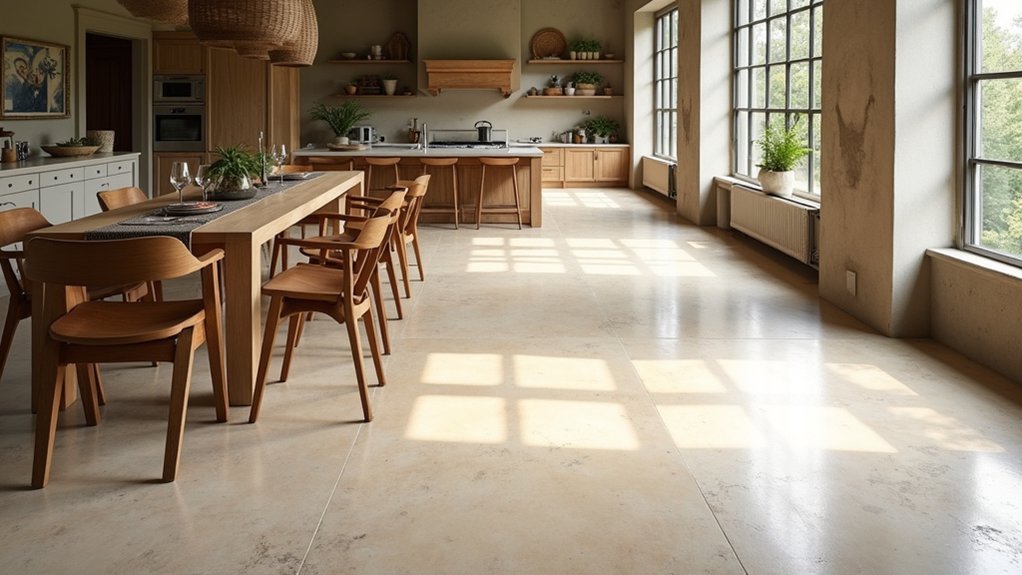
Natural stone is worth the investment when you want a long-lasting kitchen floor with distinctive color, texture, and resale appeal. You’ll get a hard, dense surface that handles daily foot traffic, rolling chairs, and dropped utensils without looking manufactured.
Choose granite or quartzite for strong resistance to scratching and heat; select slate for naturally textured traction and visual depth. Marble creates an elegant finish, but you’ll need to accept greater sensitivity to acids and staining.
Before choosing a slab or tile, inspect samples under your kitchen’s lighting, because mineral variation makes every installation unique. Natural stone can also connect your dining kitchen to surrounding rooms, creating a cohesive architectural finish.
Its investment value is strongest when you prioritize permanence, authentic character, and a floor that can enhance your home’s overall design.
Compare Flooring Costs, Care, and Installation
When comparing kitchen flooring, weigh the full installed cost—not just the price per square foot—alongside maintenance and labor requirements. Add underlayment, adhesive, grout, trim, delivery, subfloor repairs, and removal of existing material to your estimate.
Vinyl and laminate generally install quickly, while tile and natural stone demand more preparation, cutting, leveling, and curing time. Your flooring installation method also affects moisture protection and long-term performance; follow the manufacturer’s specifications rather than relying on shortcuts.
Compare care requirements carefully. Some surfaces need periodic sealing, specialized cleaners, or prompt stain removal, while others require only sweeping and damp mopping.
Check flooring warranties for exclusions involving commercial-style traffic, standing water, improper installation, or unapproved products. Keep receipts, installation records, and maintenance instructions, because manufacturers may require documentation before honoring a claim.
Match Kitchen Flooring to Your Budget and Habits
Choose flooring based on both your budget and the way you use the kitchen. If you cook daily, host large meals, or track in grit, prioritize a dense, water-resistant surface with strong wear ratings.
Porcelain tile costs more to install, but it resists stains, heat, and moisture; luxury vinyl may reduce upfront costs while providing softer footing and simpler replacement.
If your budget is tight, compare total ownership costs, including subfloor repairs, underlayment, grout sealing, and professional labor.
Your cleaning habits matter, too: textured tile can trap debris, while low-maintenance sheet flooring offers fewer seams.
Coordinate color coordination with cabinets and dining furniture, then evaluate pattern options carefully; busy patterns can disguise crumbs but may visually crowd a small room.
Order samples and test traction, comfort, and lighting before committing to one floor.
Frequently Asked Questions
Can Kitchen Flooring Be Installed Over Existing Flooring?
Yes, you can install kitchen flooring over existing flooring if it’s firmly bonded, level, dry, and undamaged. Skip flooring removal, but complete thorough surface preparation, including cleaning, repairs, moisture testing, and primer application.
How Long Should You Wait Before Walking on Newly Installed Kitchen Flooring?
You’ll typically wait 24 hours before walking on newly installed kitchen flooring, though the flooring material and adhesive determine the installation timeline. Follow manufacturer instructions, avoid heavy traffic for 48–72 hours, and protect seams.
Are Heated Floors Compatible With Porcelain Tile or Luxury Vinyl?
Heated flooring works with porcelain tile, offering excellent porcelain compatibility and heat transfer. Luxury vinyl can also work, but verify manufacturer temperature limits, use compatible systems, and follow installation considerations, including sensors, adhesives, and expansion gaps.
Can Kitchen Flooring Be Repaired Without Replacing the Entire Surface?
Yes, you can repair kitchen flooring without replacing everything. Match damaged tiles, patch vinyl, or refinish wood; schedule Flooring maintenance and use proper Repair techniques to preserve surrounding areas, prevent moisture intrusion, and maintain a seamless appearance.
Which Flooring Options Are Safest for Households With Pets?
Choose non toxic flooring with slip-resistant, scratch-resistant surfaces, such as porcelain tile, luxury vinyl, or sealed cork. You’ll protect paws with Pet safe finishes, low-VOC adhesives, rounded connectors, and easily cleaned, moisture-resistant construction.
Conclusion
Choose flooring for the kitchen you actually use, not the showroom fantasy where spills politely evaporate. Porcelain tile, luxury vinyl, laminate, or sealed stone can all work when you match water resistance, slip control, durability, comfort, maintenance, and installation costs to your habits. You’ll save frustration by planning for dropped dishes, muddy shoes, and constant cleaning. After all, the best floor isn’t merely attractive—it survives dinner service without demanding a standing ovation.