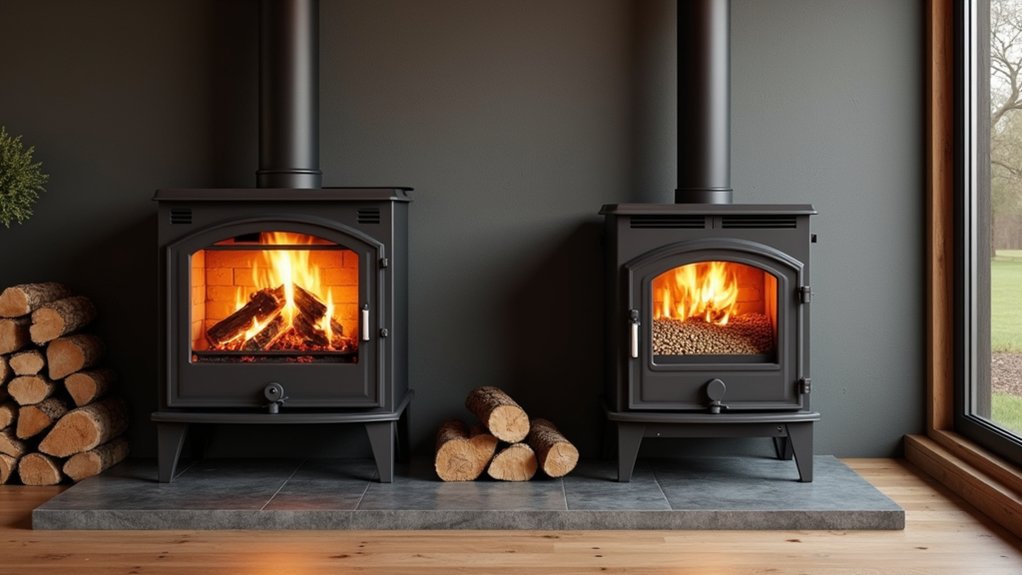
Modern pellet burners can achieve efficiency levels above 80%, while many log burners depend more heavily on fuel quality, loading technique, and chimney performance. That difference matters when you’re balancing heat output, running costs, maintenance, and emissions. A log burner gives you greater fuel flexibility and traditional appeal, whereas a pellet burner offers automated control and consistent heat. Your available storage, installation options, and daily routine will determine which system fits your home best.
Key Takeaways
- Choose a log burner for traditional flames, lower-cost local fuel, and hands-on operation, provided you can store and season logs properly.
- Choose a pellet burner for programmable, consistent heating, automatic feeding, and cleaner combustion, especially with limited time for manual maintenance.
- Log burners need dry wood below 20% moisture, while pellet burners require reliable pellet supplies and moisture-protected storage.
- Both require suitable flues, ventilation, clearances, regular cleaning, and professional installation matched to your home’s heat-loss requirements.
- Pellet burners depend on electricity and sensors; log burners offer greater independence but respond more slowly and require manual loading and adjustment.
Log Burner or Pellet Burner: Which Suits You?
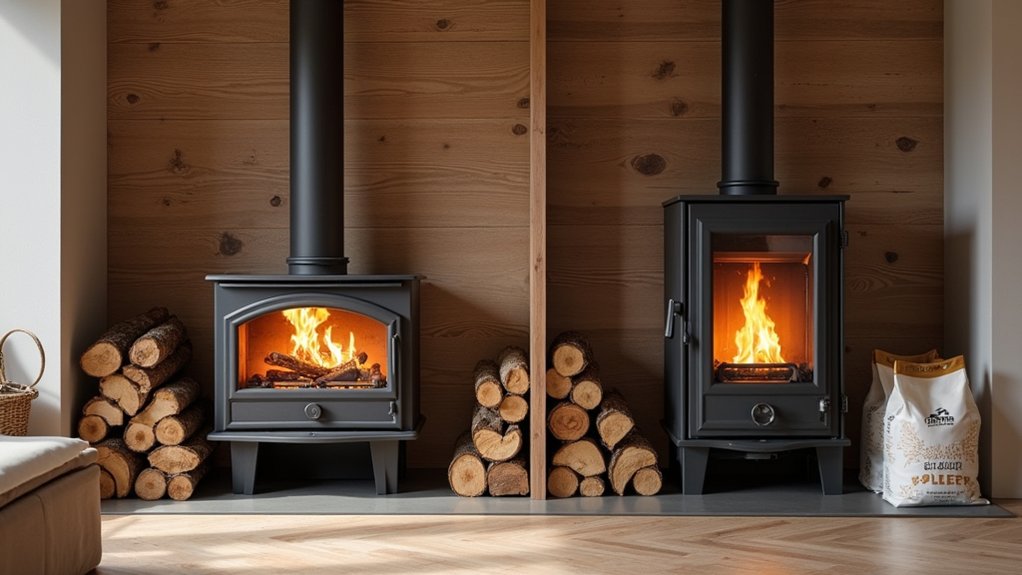
Choosing between a log burner and a pellet burner depends on how you heat your home, source fuel, and manage daily operation.
Choose a log burner if you value direct control, local firewood availability, and independent operation during power interruptions. You’ll need covered storage, regular loading, ash removal, and properly seasoned logs to maintain efficient combustion.
Select a pellet burner if you prefer automated feeding, programmable temperature control, and consistent fuel sizing. You’ll need reliable electricity, dry pellet storage, and periodic cleaning of the hopper, burn pot, and flue.
Consider your room size, heating demand, installation constraints, and maintenance tolerance before deciding.
Design aesthetics may also influence your choice: a log burner offers traditional aesthetic appeal, while a pellet model often provides a cleaner, contemporary appearance suited to modern interiors and compact living spaces.
How Do Log and Pellet Burners Work?
You load seasoned logs into the firebox, where controlled airflow supports combustion and transfers heat into your room.
A pellet burner automatically feeds compressed pellets into a combustion chamber, regulating fuel and air to maintain a steady output.
These fuels burn differently: logs produce variable, radiant heat, while pellets deliver cleaner, more consistent combustion.
Log Burner Operation
A log burner heats your home by burning seasoned logs in a firebox, where controlled airflow supports combustion and transfers heat through the stove body and flue gases.
You control combustion with primary and secondary air vents. Open them fully when lighting to establish a strong draft; then reduce primary airflow as the fire develops. Secondary air helps burn volatile gases, improving combustion and limiting smoke.
Add dry logs gradually, keeping clear space around the fuel so air can circulate. You’ll achieve better fuel efficiency when logs contain less than 20% moisture, burn at a steady temperature, and avoid smouldering.
The flue must remain unobstructed, because adequate draft protects performance and safety.
Your environmental impact depends on wood sourcing, moisture content, operating technique, and particulate emissions. Clean the stove and chimney regularly.
Pellet Burner Mechanism
Pellet burners automate fuel delivery and combustion by feeding compressed wood pellets from a hopper into a burn pot through a controlled auger. You set the desired heat level, and the controller adjusts the Pellet feed to maintain consistent operation.
An ignition element starts the fire, while a fan supplies measured air and directs exhaust through the flue. Sensors monitor temperature, airflow, and safety conditions, allowing the system to regulate output or shut down when necessary.
Inside the combustion chamber, the burn pot supports the fuel and contains the active fire. You’ll typically remove ash from this area and empty the ash drawer periodically.
Because the mechanism relies on electricity, you’ll need a backup plan during power cuts and regular servicing to keep motors, seals, and sensors reliable.
Fuel Combustion Differences
Although both systems burn wood, they combust it in different forms and at different rates. In a log burner, you load split timber onto a grate. Air enters manually or through controlled vents, and the logs heat, release gases, and burn through staged combustion. You must add fuel periodically and adjust airflow to maintain steady heat.
A pellet burner uses compressed, uniform pellets delivered automatically from a hopper by an auger. A fan meters combustion air, while an igniter starts the fire. This controlled feed produces consistent heat and lets you regulate output precisely.
Your choice affects Fuel efficiency and combustion temperature. Dry logs can burn efficiently, but moisture and loading variations reduce performance. Pellets generally achieve cleaner, more stable combustion because their size, moisture content, and supply rate remain consistent.
Which Burner Gives Better Heat Control?
You’ll find that pellet burners offer finer adjustable heat output through automated fuel feeding and airflow control.
Log burners respond more slowly, as you must adjust the air supply and add fuel manually.
For consistent temperature control, pellets generally provide steadier heat, while logs deliver greater variation.
Adjustable Heat Output
When you need precise, repeatable heat control, a pellet burner generally offers the advantage because its auger and thermostat regulate fuel delivery automatically. You can select a target temperature, and the controller adjusts fuel feed and combustion airflow to maintain it.
Many models provide several power levels, helping you match output to room size and reducing wasted fuel. This supports energy efficiency while keeping operating conditions consistent.
A log burner gives you manual control through log size, loading frequency, and air vents, but results vary with wood moisture, arrangement, and combustion habits. You can achieve substantial output changes, though fine adjustment requires experience and attention.
For aesthetic appeal, logs provide a traditional flame and sound; however, pellet systems typically deliver more predictable, measurable heat output.
Response Time Differences
Heat output precision also depends on how quickly each burner responds to a change in demand. A pellet burner usually reacts faster because its controller adjusts fuel delivery and fan speed within minutes. You can raise or reduce output with relatively fine control, provided the appliance has a responsive thermostat and correctly configured settings.
A log burner responds more slowly. Once you add wood, combustion continues until the fuel bed changes, so you must anticipate demand rather than correct it instantly. This slower response can suit you if you value radiant warmth and aesthetic considerations, but it requires planning and careful loading.
Pellet systems may also support efficiency improvements through automatic modulation, while log burners depend more heavily on your fuel choice, loading technique, and airflow management.
Consistent Temperature Control
For the most consistent indoor temperature, a pellet burner generally offers better heat control because its thermostat can regulate fuel feed and airflow automatically. You can set your target temperature, and the system modulates combustion to maintain it with minimal fluctuation. This precise operation also improves fire safety by reducing overheating and limiting unattended combustion, provided you maintain sensors, vents, and the hopper correctly.
A log burner requires manual adjustment. You’ll add fuel, regulate air controls, and respond to changing heat output as each log burns. Although this method provides useful control with experience, room temperatures typically cycle between warmer and cooler periods.
A log burner may offer greater aesthetic appeal, but a pellet model suits you better if predictable comfort matters most. Choose a unit with reliable thermostatic controls, programmable settings, and sufficient capacity for your room’s heat loss.
Compare Fuel Costs and Availability
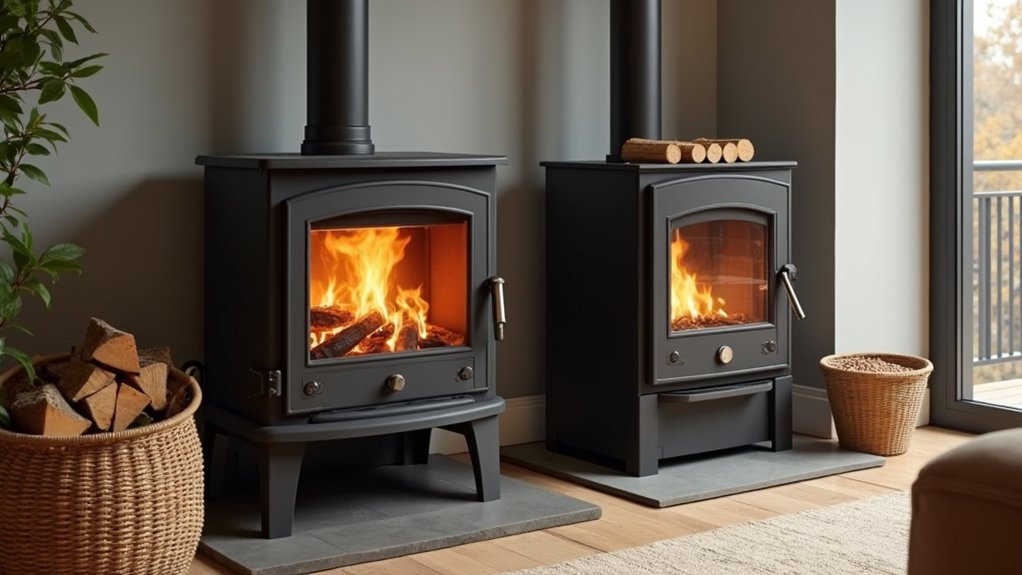
Fuel costs and availability can considerably affect your heating budget. With a log burner, you’ll often find lower local prices, especially if you can buy seasoned hardwood directly from a reputable supplier. However, fuel pricing varies by species, moisture content, delivery distance, and seasonal demand.
You must burn properly dried logs; wetter fuel reduces efficiency and increases smoke and deposits.
Pellet burners use compressed, standardized fuel that typically delivers predictable heat output and cleaner combustion. Pellet prices may be higher per delivered bag, and regional supply can fluctuate when demand rises or transport disruptions occur.
Check local suppliers before choosing this system, and compare prices per usable kilowatt-hour rather than per unit. Your assessment should include supplier reliability, seasonal price changes, and supply stability.
Neither fuel offers universal savings, so use local quotes and realistic annual consumption estimates.
Compare Installation and Fuel-Storage Space
Local fuel prices are only part of the calculation; installation requirements and storage capacity can also affect the total cost and practicality of your heating system.
A log burner usually needs a suitable chimney or flue, non-combustible hearth, ventilation, and clearances from walls and furniture. You’ll also need a dry, covered log store, and logs require substantial floor area because irregular shapes reduce stacking efficiency.
Pellet burners generally require a compatible flue, electrical supply, and space for a hopper or external pellet silo. Standard pellet bags offer better space efficiency, but you must keep them dry and accessible for delivery and refilling.
Assess installation complexity, available routes for fluework, and storage location before choosing. Measure doorways, access paths, and structural capacity, particularly if you’ll install a large hopper or silo.
Which Burner Is Easier to Maintain?
Maintenance is generally simpler with a pellet burner because automated feeding and combustion controls reduce day-to-day handling, but the system has more mechanical and electrical components to service. You’ll typically empty its ash drawer weekly, inspect the burn pot, and clean heat-exchange surfaces according to the manufacturer’s schedule.
Check the hopper, auger, seals, fan, and sensors during annual servicing, and replace worn parts promptly.
A log burner has fewer components, so you can troubleshoot it more easily, but it demands more physical work. You’ll remove ash regularly, brush soot from internal surfaces, inspect firebricks and door gaskets, and arrange professional chimney sweeping at the required interval.
Your maintenance frequency depends on fuel quality and usage. Follow documented cleaning procedures, keep access points clear, and never ignore damaged seals or restricted flues.
Which Burner Has Lower Emissions?
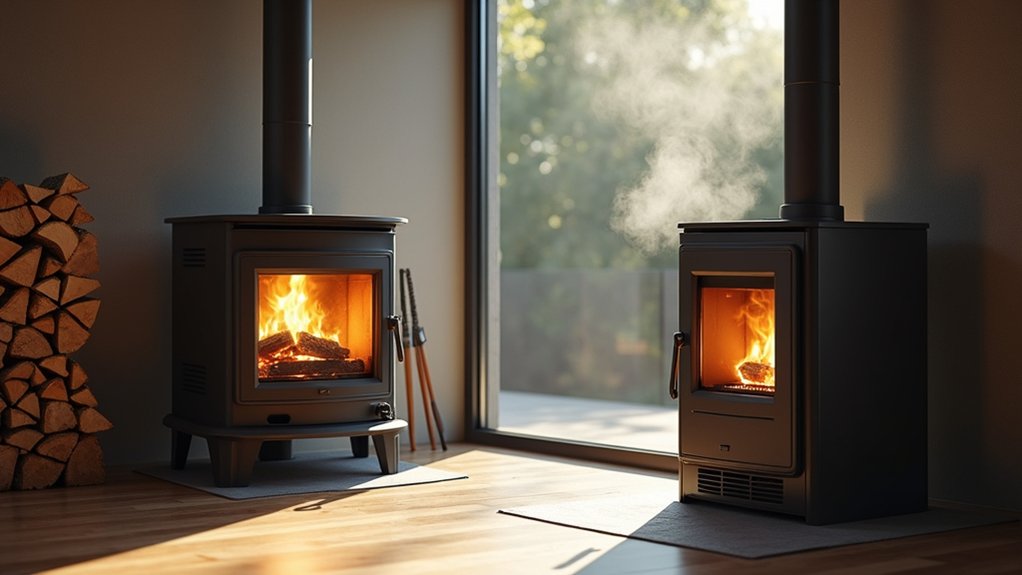
When operated correctly, a pellet burner usually produces lower particulate and carbon monoxide emissions than a log burner because its controlled fuel feed and combustion settings maintain a more consistent burn. You’ll also benefit from automated air regulation, which helps limit incomplete combustion.
However, performance depends on certified pellets, correct installation, regular servicing, and a properly functioning flue. A log burner can achieve comparatively clean combustion when you burn dry, seasoned wood and maintain adequate airflow, but wet logs and restricted air supply increase smoke, soot, and carbon monoxide.
For the lowest Environmental impact, compare tested emission ratings and use fuel that meets the manufacturer’s specification. Your air quality also depends on chimney design and ventilation, so have the appliance commissioned and inspected by a qualified professional before regular use.
Match the Burner to Your Home and Lifestyle
Lower emissions are only part of the decision; the burner must also suit your home’s layout, heating demand, and daily routine.
A log burner works well in open-plan rooms where you can store seasoned wood nearby and enjoy hands-on operation. You’ll need adequate ventilation, a suitable flue, and time to light, refuel, and clean it.
A pellet burner suits tighter schedules and consistent heating requirements. Its hopper and automatic controls deliver reliable output, while thermostatic programming improves energy efficiency. However, you’ll need electricity, regular pellet deliveries, and space for dry fuel storage.
Consider heat distribution, too: one room may need a boiler-linked model or additional radiators.
Match the appliance’s size to your calculated heat loss, not its maximum marketing output.
Finally, choose a finish that complements your decor style.
Frequently Asked Questions
Can I Use a Log Burner During a Power Cut?
Yes, you can use a log burner during a power cut because it burns wood without electricity. Check ventilation, chimney safety, and installation requirements first; fuel efficiency depends on dry logs, proper loading, and regular maintenance.
Are Pellet Burners Safe to Leave Running Overnight?
You shouldn’t leave a pellet burner running overnight unless your manual permits it; use certified fuel, maintain clearances, test alarms, and inspect components. Check fuel efficiency and emission levels, then enable automatic shutdown safeguards before sleeping.
Do Log and Pellet Burners Qualify for Home-Heating Grants?
Grant eligibility depends on your location and scheme rules. You’ll usually need an approved, efficient appliance, certified installation, and qualifying fuel. Check current government guidance, as eco friendly heating incentives often exclude standard log burners.
Can Either Burner Heat Water for Radiators?
Yes, you can heat radiator water with either burner by installing a compatible boiler model and properly sized buffer tank. Compare Water heating performance, controls, installation requirements, and Fuel efficiency; consult an accredited installer before purchasing.
What Happens if Pellet Supplies Are Temporarily Unavailable?
If pellets vanish, you’ll need alternative fuel sources, such as seasoned logs, though your appliance may not accept them. You’ll face maintenance requirements, including cleaning, storage checks, and arranging supply before reserves run out.
Conclusion
Choosing between a log burner and a pellet burner comes down to control versus convenience. You’ll enjoy the crackling, hands-on character of logs, but you’ll need space, preparation, and regular tending. Pellets offer automated, consistent heat with cleaner combustion, yet depend on electricity, equipment, and reliable fuel supply. Compare installation, storage, maintenance, emissions, and running costs before deciding. Choose the burner that matches your home’s layout, heating demand, and willingness to manage fuel—not merely the one that looks best.