
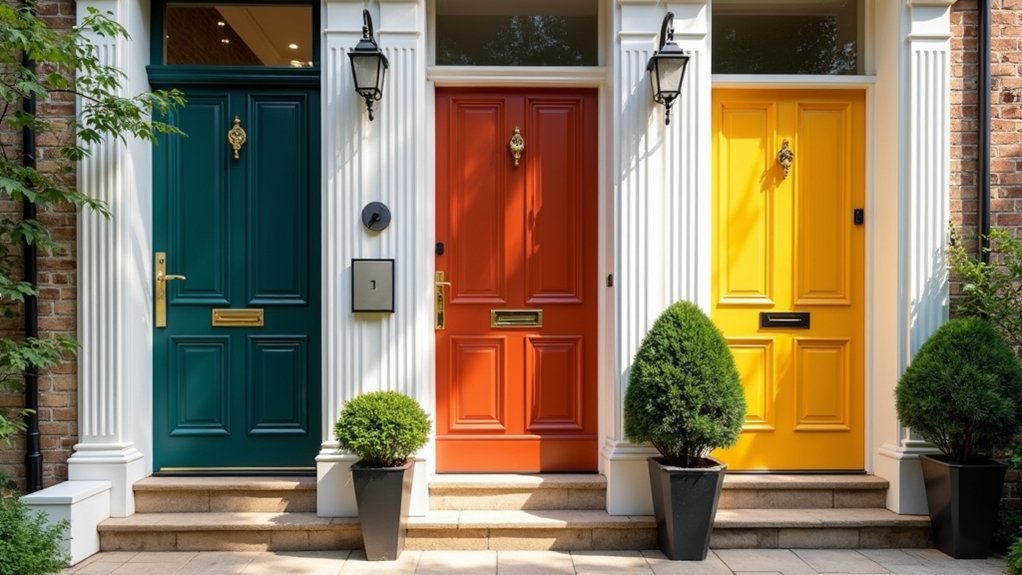
A deep blue front door can make a white-sided home feel more distinctive without overwhelming its clean exterior. To choose the right colour, assess your brick, siding, trim, roof, natural light, and architectural style before selecting a paint sample. Consider whether you want contrast or coordination, then test the colour outdoors at different times of day. Your choice also affects hardware, lighting, and paint durability, so the best shade may depend on details you haven’t considered yet.
Key Takeaways
- Coordinate your door colour with brick, siding, roof, trim, landscaping, and existing exterior undertones.
- Choose colours suited to your home’s style, such as navy for traditional homes, sage for cottages, or charcoal for modern architecture.
- Consider colour psychology: red creates impact, blue feels calm, green connects with nature, and yellow or orange feels welcoming.
- Test outdoor paint samples in morning and afternoon light to check undertones, contrast, and harmony with surrounding materials.
- Select weather-resistant exterior paint and coordinate the finish, hardware, and lighting for durability and a cohesive entrance.
How Do You Choose a Front Door Colour?
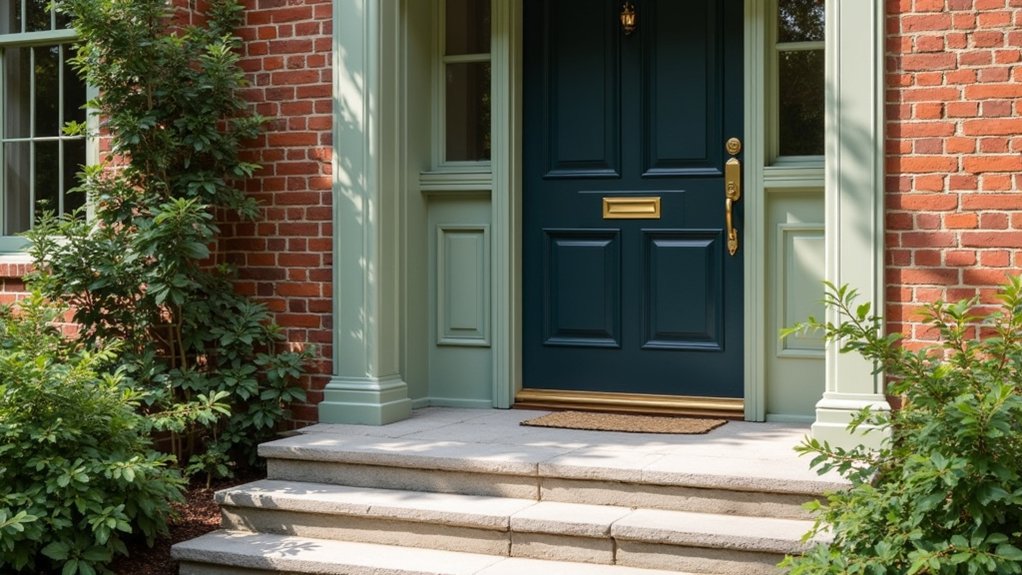
Choose a front door colour that complements your home’s exterior, including the brick, siding, roof, trim, and surrounding landscape. Compare paint samples outdoors at different times, because daylight, shade, and nearby surfaces can alter how colours appear.
Use your trim as a reference: select a colour that creates measurable contrast without clashing with existing tones. Consider the door’s material and finish, too; satin or semi-gloss paint highlights details and resists moisture, while darker colours may absorb more heat and fade faster.
Apply Color psychology thoughtfully: blue can suggest calm, green can connect with nature, and red can create energy.
Account for cultural symbolism, especially if colour traditions influence your household or neighbourhood. Check local guidelines, then test a small area before committing to the final colour.
Match Door Colours to Home Styles
Once you’ve considered how the colour works with your exterior materials, match its character to your home’s architectural style.
For a traditional house, choose deep red, navy, forest green, or black to reinforce formal proportions and classic detailing.
A cottage can support softer sage, muted blue, or warm yellow, creating a welcoming, informal impression.
Modern architecture suits crisp white, charcoal, cobalt, or saturated orange, especially when you want the entrance to function as a strong geometric accent.
For a farmhouse, consider slate blue, barn red, or earthy green.
Mediterranean and Spanish-inspired homes often suit turquoise, terracotta, or rich blue.
Treat Seasonal colour trends as optional guidance, not a rule.
Also consider Cultural symbolism: colours can communicate welcome, prosperity, protection, or mourning, depending on your community and location.
Test samples in daylight before deciding.
Coordinate Colours With Brick, Trim and Windows
Match your front-door colour to your brick’s warm, cool, or neutral undertones. Choose a shade that complements, rather than competes with, your trim and window frames.
Consider these fixed exterior elements together to create a balanced colour scheme.
Match Brick Undertones
Your front door colour should pick up an undertone already present in the brick rather than compete with it. Examine the masonry in daylight, identifying whether its base leans warm, cool, pink, orange, yellow, brown, or grey. Check several bricks, because mortar and weathering can distort your first impression.
For brick undertone harmony, choose a door colour that shares or gently echoes that underlying hue. A muted terracotta door can reinforce reddish brick, while deep olive can suit brown or yellow undertones.
If you prefer a contrasting colour, keep its intensity controlled; excessive paint colour contrast can make the entrance look disconnected. Test large samples beside the brick, viewing them morning, afternoon, and evening.
Account for shade, since low light can deepen colours and exaggerate undertones.
Complement Trim And Windows
Coordinate the door colour with the trim and window frames so the façade reads as one considered scheme. Use trim as your reference: match the door for a quiet, unified effect, or choose a deeper or brighter value for controlled contrast.
If your windows have dark frames, repeat that tone in the door hardware or paint; with white frames, nearly any saturated colour can work. Check undertones, because warm cream trim can clash with blue-based reds, while cool grey trim may sharpen them.
Consider door color psychology: blue can feel dependable, green welcoming, and red energetic, but your home’s architecture should guide the final choice.
Review samples outdoors in changing light, rather than relying on screens. Seasonal color trends can inspire accents, yet select a finish you’ll still appreciate year-round.
Classic Black and White Door Ideas
Choose a timeless black door style to add contrast and suit traditional or modern façades. Use crisp white for a clean, bright entrance, or combine black and white across the door, frame, glazing, and hardware.
You’ll achieve the best result by matching the finish and proportions to your brickwork, trim, and windows.
Timeless Black Door Styles
Timeless black door styles pair a crisp white exterior with strong contrast, creating a classic entrance that suits traditional, modern, and transitional homes. Choose a low-sheen or satin exterior paint to minimise glare and conceal minor surface marks.
If your door receives strong sunlight, select a UV-resistant formulation to reduce fading and maintain an even finish. Black works especially well on panelled, glazed, or period doors because it defines their proportions without competing with architectural details.
Use brushed metal, aged brass, or polished chrome hardware to adjust the character from understated to formal. Consider door colour psychology: black can communicate authority, security, and sophistication.
You won’t need to follow seasonal colour trends, as this neutral shade remains adaptable. Check local light conditions before confirming your final colour.
Crisp White Door Ideas
Crisp white door ideas create a clean, welcoming entrance that reflects natural light and complements nearly any exterior palette. Choose a durable exterior enamel with UV resistance to reduce yellowing, and select a satin or semi-gloss finish for easier cleaning.
Before painting, wash the surface, sand lightly, repair defects, and apply a suitable primer. Consider your home’s exposure: a shaded entrance may suit a warmer white, while strong sunlight can emphasize cooler undertones.
Coordinate hardware, lighting, and trim carefully so the door remains the focal point. Add personality with a bold accent, such as a vivid wreath, planter, or doormat, without permanently changing the colour.
Rotate seasonal themes through removable accessories, and inspect the finish annually for peeling, chalking, or moisture damage. A quality door sweep also limits drafts and dirt.
Black And White Combinations
Black and white door combinations give your entrance strong contrast and a structured, timeless look. Choose a black door with white trim to emphasize architectural lines, or select a white door with black hardware for a lighter effect.
Match the finish to your exterior: satin or semi-gloss paint resists moisture and highlights panel details, while matte paint produces a softer, contemporary appearance. Consider your cladding, porch depth, and natural light before choosing the balance.
In door color psychology, black can suggest authority and sophistication, whereas white communicates cleanliness and simplicity. Use black numbers, hinges, and a lantern to unify a white door.
These combinations also adapt easily to seasonal door color trends; you can refresh the look with wreaths, planters, or seasonal accents without repainting. Assure contrasting colors meet local weather-resistant coating requirements.
Welcoming Red, Orange and Yellow Doors

Red, orange, and yellow front doors create a warm, energetic entrance, but each colour produces a different effect. Red adds visual weight, confidence, and urgency, making a large or recessed doorway feel more prominent.
Orange feels sociable and creative, especially on homes with brick, timber, or neutral render.
Yellow reflects light and can make a shaded entrance appear brighter, although strong sunlight may intensify its saturation.
Use color psychology as a guide, not a rule: choose red for impact, orange for friendliness, or yellow for optimism.
Consider cultural symbolism, since these colours may communicate celebration, welcome, prosperity, or caution in different communities.
Test sample cards outdoors at morning and afternoon angles.
Select an exterior-rated satin or gloss paint, prepare the surface thoroughly, and check that the colour complements your existing trim, hardware, and porch lighting.
Calm Green and Blue Door Colours
Green and blue front doors create a calmer, more grounded entrance, with each colour offering a distinct effect. Choose green when you want garden inspired hues that connect your home with planting, lawn, or woodland views. Sage and muted olive suit traditional façades, while deeper forest green provides stronger definition.
Blue works well for a fresh, reassuring welcome. Soft blue supports coastal colour schemes and reflects daylight, whereas navy adds contrast without feeling harsh. Before choosing, test sample cards on the door in morning and evening light. Check how the colour interacts with brick, stone, render, and surrounding foliage.
Select an exterior-grade paint with UV resistance and moisture protection, then prepare the surface carefully for an even finish. Use satin or eggshell finishes to balance durability with subtle sheen, avoiding overly reflective results.
Modern Grey, Brown and Neutral Doors
Grey, brown, and other neutral door colours create a contemporary entrance with understated contrast. Modern grey palettes range from pale greige to charcoal, so you can match visual weight to your home’s exterior. Choose light grey for dark brick or cladding, and use deeper grey on pale façades to define the doorway.
Brown doors introduce warmth while retaining a modern profile; consider walnut, espresso, or muted taupe finishes. If you prefer flexibility, select neutral door accents such as stone, mushroom, or soft black, which coordinate easily with masonry and render.
Check samples outdoors, because daylight and surrounding materials can alter undertones. Compare the colour against your walls, porch surfaces, and paving before ordering.
A low-sheen finish generally looks contemporary and helps disguise minor surface marks over time.
Match Door Colours With Hardware and Lighting
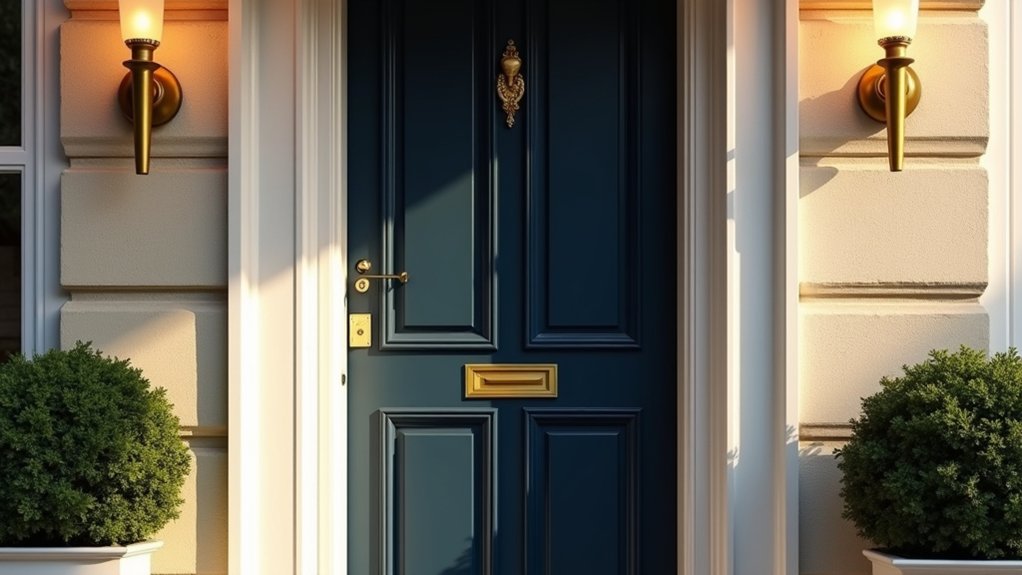
Once you’ve chosen a grey, brown, or neutral door, coordinate its hardware and lighting to reinforce the colour rather than compete with it.
For effective door hardware coordination, match the metal’s undertone to the door and surrounding trim. Black or dark bronze suits charcoal, taupe, and warm brown, while satin nickel complements cool grey and pale greige. Brass adds warmth to brown or cream but can look harsh against blue-based neutrals. Check the finish in daylight and under your porch light before deciding.
Plan lighting accentuation around the door’s undertones. Use warm-white LEDs, around 2700–3000K, to enhance brown and beige. Choose neutral white, around 3500K, to keep grey crisp.
Position sconces at eye level, and aim downlights to reveal the door without creating glare. Keep all exterior fixtures consistent for a balanced entrance.
Choose a Durable Door Paint Finish
Choose a durable door paint finish based on exposure, material, and desired sheen. If your entrance receives strong sunlight, rain, or snow, select exterior acrylic paint with UV protection and weather resistant finishes. These coatings resist fading, cracking, and moisture penetration better than interior products.
Match the formulation to your door’s surface. Use a bonding primer on metal, a stain-blocking primer on wood, and a suitable adhesion primer on previously painted fiberglass. Sand glossy areas, repair damage, and let each coat cure fully before applying the next.
Your door paint sheen also affects performance and appearance. Satin offers moderate reflectivity and hides minor imperfections, while semi-gloss creates a harder, more washable surface. High-gloss paint provides maximum wipeability but highlights dents and brush marks.
Check the manufacturer’s temperature and recoat-time requirements for lasting results.
Frequently Asked Questions
Can I Change My Front Door Colour Without Replacing the Existing Door?
Yes, you can repaint your existing front door. Clean, sand, prime, and apply suitable exterior paint. Consider door color psychology and seasonal color trends, then protect hardware and allow proper drying between coats.
How Often Should I Repaint My Front Door?
Repaint your front door every three to five years, or sooner if fading, peeling, or cracking appears. Choose durable exterior products with strong door paint durability and weather resistant finishes for longer-lasting protection.
What Tools Do I Need to Paint a Front Door?
You’ll need a screwdriver, drop cloth, sandpaper, scraper, cleaning solution, painter’s tape, brushes, a roller, primer, and exterior paint. Choose suitable door paint types and apply reliable painting techniques for durable results.
Can Renters Change Their Front Door Colour?
You can change your front-door colour only with your landlord’s written permission. Check your lease, propose suitable door paint finishes, and use weather resistant coatings. Restore the original colour when required, following local tenancy regulations.
How Can I Test a Door Colour Before Committing?
Picture your door glowing in morning light. Try color swatch testing beside its trim, then use digital color visualization. Apply a small sample, observe it in changing light, and remove it cleanly before deciding.
Conclusion
Choosing a front door colour is like selecting the final note in a welcome song: it should suit your home and express you. Start with the exterior, then test samples in morning, afternoon, and evening light. A homeowner who compared three blue swatches found the darkest looked almost black by sunset, proving that light can transform colour. Coordinate your choice with hardware, lighting, and trim, then protect it with durable exterior paint for lasting curb appeal.