Just what exactly is ‘ Minimalist Interior Design ‘ and who is suited best towards?
Many people find that cluttered spaces increase mental fatigue, making minimalist interior design a powerful tool for creating calm and focus. You can transform your home into a serene environment by prioritizing clean lines, functional furniture, and intentional choices. Removing excess decor and embracing negative space allows architecture and quality materials to take center stage. This approach is not about stark emptiness, but about curating only what adds value and beauty to your daily life.
Key Takeaways:
- A mid-sized SaaS firm redesigned its office space using minimalist principles, reducing visual clutter by removing redundant furniture and standardizing storage solutions, which led to a noticeable improvement in employee focus and workflow efficiency.
- Minimalism extends beyond aesthetics; it often involves a deliberate reduction in material possessions, with some practitioners adopting a “one in, one out” rule to maintain balance and prevent accumulation over time.
- Neutral color palettes dominate minimalist interiors, but subtle texture variation-such as pairing matte finishes with smooth stone or brushed metal-adds depth without visual noise.
- Furniture selection prioritizes clean lines and multifunctionality; a common example is a sofa with hidden storage or a dining table that extends only when needed, supporting both form and practicality.
- Lighting plays a structural role in minimalist design, with recessed ceiling fixtures and directional task lights used to define zones in open-plan spaces without physical dividers.
Defining the Minimalist Aesthetic
Minimalism in interior design centers on clarity, restraint, and intention. You eliminate clutter not just for visual calm but to highlight what truly matters. Surfaces remain uncluttered, materials are natural and honest, and every object serves a purpose or brings genuine joy. The result is a space that feels both expansive and deeply personal, free from excess yet rich in character.
The Philosophy of Functionalism
Function dictates form in minimalist interiors. You choose furniture and fixtures based on utility first, ensuring each piece contributes meaningfully to daily life. A dining table must seat your household comfortably, a shelf must organize without overcrowding. Beauty emerges from efficiency, not ornamentation, making your environment both practical and serene.
The Strategic Use of Negative Space
Negative space is not emptiness to be filled but a deliberate design element. You allow walls, floors, and corners to breathe, creating visual pauses that enhance focus and tranquility. This intentional void guides the eye and prevents sensory overload, turning stillness into a powerful part of the composition.
When you treat negative space as an active component, it transforms the perception of size and flow. A sofa placed away from the wall, for instance, defines zones without barriers. In a small studio, this technique can make a single room feel like distinct areas for rest, work, and dining. Architects like John Pawson have demonstrated how absence can shape experience as strongly as presence, using gaps between elements to establish rhythm and balance.
Common Types of Minimalist Styles
Minimalist design expresses itself through distinct stylistic interpretations, each rooted in cultural or architectural traditions. You can identify Scandinavian minimalist, Japanese Zen, Wabi-Sabi, Modern Industrial, and Minimalist Modern as leading variations. After exploring their core traits, your choices align more closely with your lifestyle and aesthetic preferences.
| Style Type | Key Characteristics |
| Scandinavian Minimalist | Light palettes, natural wood, functional furniture |
| Japanese Zen | Open space, symmetry, meditative simplicity |
| Wabi-Sabi | Imperfection, aged materials, organic textures |
| Modern Industrial | Exposed elements, metal finishes, raw surfaces |
Scandinavian Minimalist Influence
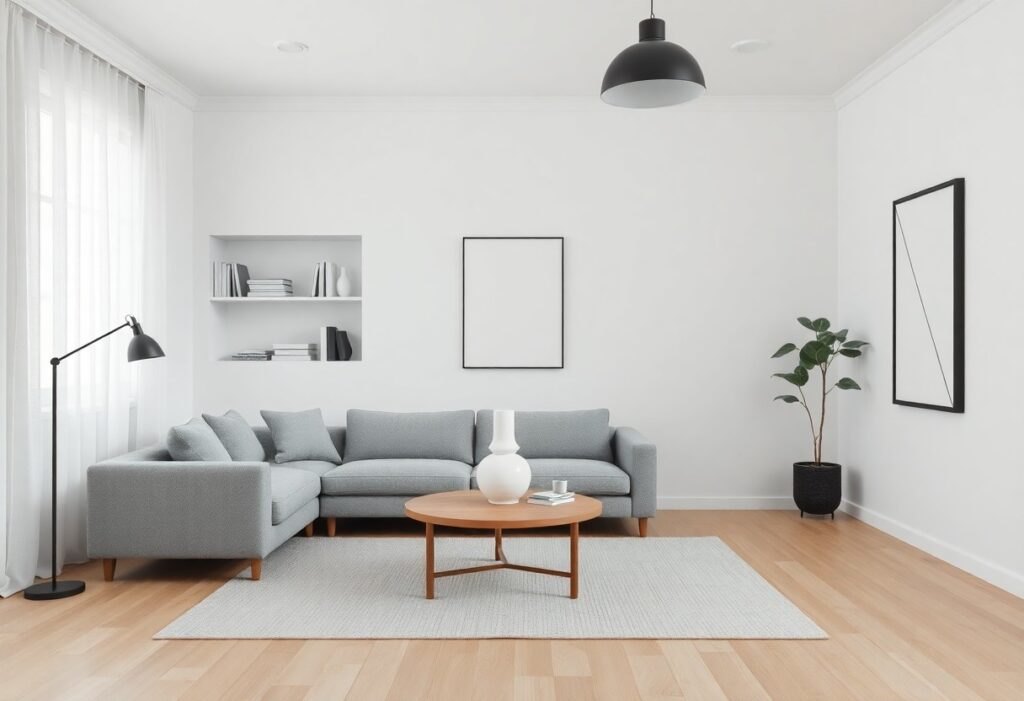
Originating in Nordic countries, this style emphasizes light, warmth, and usability. You experience brightness through white walls, pale wood floors, and uncluttered layouts. Soft textiles add comfort without visual weight. After prioritizing function and natural light, spaces feel inviting yet restrained.
Japanese Zen and Wabi-Sabi
Inspired by mindfulness and nature, this approach values stillness and asymmetry. You incorporate neutral tones, handmade objects, and unvarnished materials. Imperfections are celebrated as part of an object’s story. After embracing transience, your space becomes a quiet retreat.
Rooted in Buddhist philosophy, Japanese Zen design strips away excess to highlight peace and intentionality. You might use tatami mat flooring, shoji screens, or a rock garden view to deepen the sense of calm. Wabi-Sabi complements this by honoring cracks, weathering, and handmade irregularities in ceramics or wood. A chipped bowl or a table with visible grain becomes a focal point, not a flaw. These elements ground the space in authenticity.

Modern Industrial Minimalism
Born from converted lofts and urban warehouses, this style exposes structural elements like ductwork and beams. You work with steel, concrete, and reclaimed wood in monochrome schemes. Functional lighting fixtures serve as sculptural accents. After integrating raw finishes, your space gains an edgy, unpretentious character.
Modern Industrial Minimalism merges utilitarian design with sparse detailing, favoring open plans and minimal partitions. You might install black steel windows, polished concrete floors, or pendant lights with visible wiring. Furniture is simple, often modular, with an emphasis on durability over ornament. Exposed brick walls or ceiling pipes are not hidden but highlighted as design features. A mid-sized SaaS firm retrofitting a downtown building could adopt this look to reflect innovation and transparency.
Essential Factors for a Minimalist Layout
Successful minimalist spaces prioritize functionality, proportion, and intentional placement. Each piece serves a purpose, avoiding clutter while enhancing spatial harmony. Clean lines and uncluttered sightlines guide movement and focus. After selecting only what supports daily life, the room breathes with clarity and purpose.
Architectural Integrity and Spatial Flow
Preserve original architectural lines to maintain the space’s authentic structure. Exposed beams, flat ceilings, and open floor plans support unbroken movement. Avoid unnecessary partitions that disrupt sightlines. After removing decorative obstructions, the architecture itself becomes the focal point.
Natural Lighting and Neutral Color Palettes
Maximize windows and use sheer or absent window treatments to invite in daylight. Neutral tones like warm gray, beige, or white reflect light evenly, expanding perceived space. These palettes reduce visual noise, creating calm. After aligning lighting with surface color, the room feels consistently balanced.
Abundant natural light transforms minimalist interiors by eliminating harsh contrasts and shadows. Rooms facing north benefit from pale walls to amplify dim light, while south-facing spaces use light-reflective flooring to diffuse brightness. Neutral schemes extend beyond walls to textiles and finishes, ensuring tonal continuity. Afternoon sun on a white oak floor, for example, adds warmth without disrupting simplicity.
Step-by-Step Guide to Minimalist Transformation
Transforming your space into a minimalist haven requires deliberate choices and consistent execution. The process is not about emptying rooms but making room for clarity through thoughtful reduction and intentional design. Follow these structured steps to achieve a balanced, uncluttered environment that supports calm and functionality.
| Assessment & Planning | Survey each room, identifying excess and defining purpose. |
| Decluttering | Remove non-important items, sorting by category and use. |
| Furniture Selection | Choose pieces that combine utility with clean lines. |
| Storage Solutions | Integrate hidden or built-in storage to maintain openness. |
| Finishing Touches | Add limited decor, prioritizing texture and light. |
Systematic Decluttering and Curation
Begin by isolating one area at a time, sorting belongings into keep, donate, or discard piles. Focus on items you haven’t used in the past year or that no longer align with your daily life. Emotional attachments can cloud judgment, so assess each object for function or meaningful value, not just habit.
Selecting High-Quality Functional Furniture
Choose furniture that serves a clear purpose while enhancing spatial flow. Prioritize pieces with dual functions, such as a bed with built-in drawers or a coffee table with storage. Well-constructed materials like solid wood or powder-coated metal ensure longevity and reduce the need for replacement.
Investing in functional furniture means evaluating proportion and placement before purchase. A mid-sized SaaS firm’s office redesign demonstrated how modular seating and height-adjustable desks improved both aesthetics and employee movement. Design that supports how you live or work eliminates excess without sacrificing comfort or efficiency.
Professional Tips for Enhancing the Home
Thoughtful execution separates functional minimalism from sterile spaces. Focus on intentional design, quality materials, and hidden storage to maintain clean sightlines. Introduce subtle contrast through finishes like matte black fixtures or warm wood tones. This ensures lasting comfort and visual depth without clutter.
Incorporating Texture to Provide Warmth
Natural materials like wool, linen, and rattan add tactile depth without visual noise. A nubby throw blanket or a handwoven jute rug introduces softness to hard surfaces. This subtle layering prevents the space from feeling cold or overly austere.
Curating Meaningful Statement Decor
Choose one or two purposeful pieces-a hand-thrown ceramic vase or an heirloom clock-that reflect personal history. These items serve as quiet focal points, replacing decorative excess with emotional resonance. This restraint amplifies their impact.
Selecting statement decor demands discernment. A mid-sized SaaS firm’s office redesign centered on a single walnut credenza, transforming a generic lobby into a grounded, humanized entry. The piece was neither ornate nor oversized, yet its craftsmanship and material honesty commanded attention. This proves that minimalism gains strength through authenticity, not absence.
Pros and Cons of Minimalist Interior Design
Adopting minimalist interior design brings both advantages and challenges, depending on your lifestyle and expectations. The clarity of open space can enhance daily living, while the discipline it demands may strain habitual clutterers. Below is a balanced overview of what to anticipate.
| Pros | Cons |
| Reduces visual clutter for a calming environment | Requires constant upkeep and organization |
| Lowers cleaning time and maintenance effort | Can feel cold or impersonal if under-decorated |
| Highlights architectural features and quality materials | Limited space for decorative objects or collections |
| Promotes mindful consumption and intentional purchases | Difficult to adapt in shared households with differing tastes |
| Improves focus and mental clarity in living spaces | Higher upfront cost for premium, durable furnishings |
| Maximizes small spaces through efficient design | Risk of appearing sterile or incomplete |
| Supports sustainable living by reducing excess | Storage solutions must be built-in and carefully planned |
| Enhances natural light and spatial flow | Personal expression is more constrained |
| Easy to rearrange and refresh with minimal effort | Not ideal for those who enjoy eclectic or layered decor |
| Timeless aesthetic resists design trends | Comfort can be compromised if form overrides function |
Benefits of Reduced Visual Noise and Maintenance
You experience greater mental ease when surrounded by clean lines and uncluttered surfaces. Reduced visual noise helps minimize distractions, making rooms feel larger and more peaceful. With fewer items to clean and organize, your daily upkeep becomes significantly lighter, especially in high-traffic areas like kitchens and entryways.
Challenges of Rigorous Organization and Comfort
You must commit to a strict routine of sorting and storing, as even minor clutter disrupts the minimalist effect. Comfort can suffer if seating is chosen for form over cushioning or warmth, leaving spaces feeling sleek but unwelcoming during extended use.
Living with minimalist design demands consistency in how you manage belongings. A single misplaced item can break the harmony of an entire room, requiring you to adopt habits like daily tidying and regular decluttering. A mid-sized SaaS firm’s office redesign showed that employees initially praised the open layout, but within months, personal items began reappearing on desks, indicating the difficulty of sustaining minimalism without cultural reinforcement. Upholstery choices matter-cold materials like leather or metal may look refined but reduce coziness, especially in living rooms or bedrooms where warmth is expected.
Final Words
You achieve a refined living space by focusing on intentionality, clean lines, and functional pieces. A mid-sized SaaS firm’s office redesign demonstrated how removing excess furniture improved both workflow and employee focus. Your environment reflects clarity when every object serves a purpose. Simplicity, once established, sustains itself through mindful choices and consistent editing over time.
FAQ
Q: What defines minimalist interior design beyond just having fewer items in a space?
A: Minimalist interior design centers on intentionality, where every object serves a purpose or brings meaningful aesthetic value. It emphasizes clean lines, uncluttered surfaces, and a neutral color palette, often incorporating materials like wood, concrete, and metal to create visual calm. Unlike simple decluttering, minimalism in design follows a disciplined approach to layout, lighting, and spatial flow, ensuring that negative space is treated as an active design element. A mid-sized SaaS firm converted its office using this principle, reducing visual distractions to support employee focus and workflow efficiency.
Q: Can minimalist design work in a home with children or pets?
A: Yes, minimalist design can adapt to family living when planned with practicality. Storage solutions such as built-in cabinets, under-bed drawers, and concealed shelving help maintain order without sacrificing accessibility. Durable, easy-to-clean materials like sealed oak flooring or performance fabric upholstery allow the space to remain low-maintenance. One family in Portland implemented a rotating toy system, keeping only five toys visible at a time, which reduced chaos while teaching children mindful consumption.
Q: Is a neutral color palette mandatory in minimalist interiors?
A: While neutral tones like white, gray, beige, and soft black dominate minimalist spaces for their calming effect, subtle accents in muted earth tones or natural greens can be introduced without breaking the aesthetic. The key is restraint-color is used sparingly to highlight architecture or a single focal point, such as a textured wall or a piece of sculptural furniture. A designer in Oslo used a single olive-green accent wall behind a built-in desk to define a home office zone within an open-plan apartment.
Q: How much storage is typical in a minimalist home?
A: Minimalist homes prioritize hidden or integrated storage to preserve visual simplicity. Cabinetry is often handle-less and flush with walls, and furniture may double as storage, such as ottomans with interior compartments or platform beds with drawers. In a Tokyo micro-apartment, a single floor-to-ceiling unit housed a kitchen, fold-down table, wardrobe, and sleeping loft, proving that high functionality can coexist with minimal visual noise.
Q: Does minimalist design require expensive, custom-built furniture?
A: Not necessarily. While custom pieces can enhance seamless integration, many off-the-shelf items from Scandinavian or Japanese brands align with minimalist principles-simple forms, natural materials, and functional design. Secondhand markets also offer quality mid-century modern pieces that complement minimalism due to their clean silhouettes. A designer in Berlin furnished an entire minimalist apartment using refurbished pieces from local thrift stores, proving affordability and sustainability can align with the style.