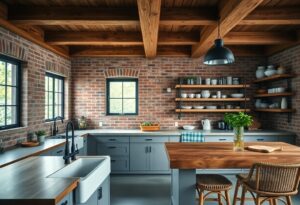

Your hallway and stairs are the spine of your home, carrying people and daily wear between every room. You’ll need ideal flooring that provides dependable traction, resists stains, and withstands repeated foot traffic without creating trip hazards. Hardwood, laminate, carpet, and vinyl each offer different benefits in safety, maintenance, comfort, and cost. The right choice depends on your family’s routine, pets, moisture exposure, and tolerance for noise—details that can considerably affect performance over time.
Key Takeaways
- Choose slip-resistant, durable flooring that withstands heavy family traffic and remains safe when wet.
- Hardwood offers repairability and longevity; use non-glossy finishes, secure installation, and durable stair nosings.
- Laminate provides an affordable, low-maintenance option, but needs approved underlay, tight joints, and prompt spill cleanup.
- Low-pile carpet improves comfort and reduces noise, provided it is professionally fitted without loose edges or thick cushioning.
- Vinyl suits busy halls and stairs because it is water-resistant and easy to clean; select textured, stair-rated products.
Best Flooring for Halls and Stairs: Key Criteria
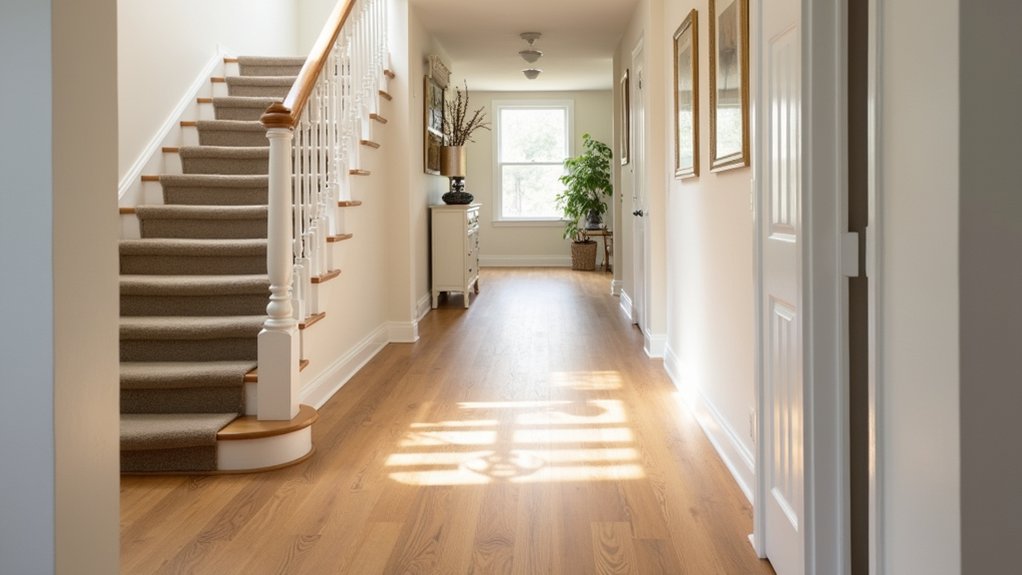
When choosing flooring for halls and stairs, prioritise slip resistance, durability, and secure installation over appearance alone. Choose a surface with tested traction, especially where moisture, children, or pets may increase fall risks. Check that stair coverings fit each tread and nosing precisely, without loose edges, raised transitions, or curling corners.
Select materials that tolerate frequent foot traffic and allow straightforward cleaning without becoming dangerously slick when wet. Confirm the subfloor is level, dry, and structurally sound before installation; uneven bases can cause movement and premature failure. Use compatible adhesives, underlays, and stair rods or trims where specified by the manufacturer.
Plan Color coordination after confirming performance requirements. Aesthetic appeal matters, but contrast at stair edges can improve visibility. Review warranties, maintenance instructions, and professional installation requirements before purchasing any product.
Hardwood Flooring: Durable, Stylish, and Repairable
Hardwood flooring suits halls and stairs because it combines high wear resistance, a repairable surface, and a wide range of finishes. You can select oak, maple, or engineered hardwood according to traffic, humidity, and subfloor conditions.
Secure boards firmly and specify a stair-rated, slip-resistant finish; glossy coatings can increase fall risk, particularly where children or older adults walk. Protect exposed stair edges with durable nosings, and maintain clear progressions between floor levels.
You can sand and refinish solid hardwood when scratches or worn areas appear, extending its service life. Custom finishes let you match your interior while improving stain resistance and grip.
Consider Environmental impact by choosing responsibly sourced timber, certified products, and low-emission adhesives. Keep moisture controlled, wipe spills promptly, and use entrance mats to reduce grit and abrasion.
Laminate Flooring: Affordable and Easy to Maintain
Laminate flooring offers a cost-effective, low-maintenance option for halls and stairs, with a wear-resistant surface that handles daily traffic and resists stains. You can sweep regularly and wipe spills promptly to protect its sealed finish.
Choose a textured, slip-resistant rating for safer footing, particularly on stairs, and install secure nosings with high-contrast edges to improve step visibility.
Use manufacturer-approved underlayment to reduce movement, limit noise, and support dimensional stability.
Keep moisture controlled, because excessive water can swell fiberboard cores; avoid wet mopping and repair leaks quickly.
For Eco friendly options, select products with recycled content, low emissions, and responsible certifications.
You’ll also find extensive aesthetic customization through wood-look patterns, tile effects, plank widths, and surface finishes.
Professional installation helps maintain tight joints and consistent stair alignment.
Carpet: Quiet, Comfortable, and Safer on Stairs
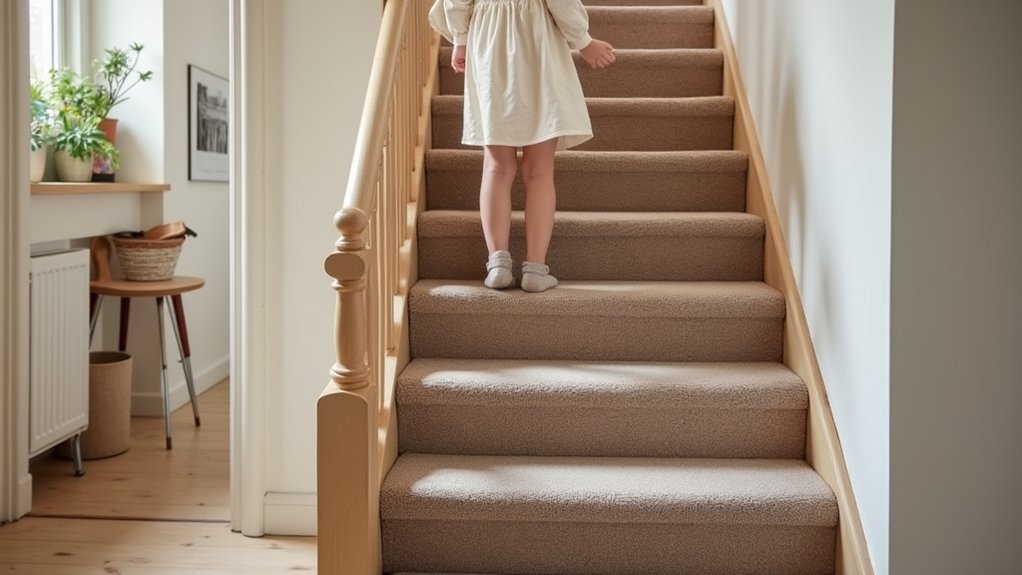
Carpet softens footfall, reduces echo, and provides a warmer, more forgiving surface for halls and stairs. Choose a dense, low-pile construction that resists crushing and gives you reliable footing.
On stairs, use a professionally fitted carpet with secure edges, tight seams, and a suitable stair runner or full coverage. Compare underlay options carefully: a firm, high-density layer improves comfort, insulation, and dimensional stability without making treads feel unstable.
Avoid loose rugs, exposed passages, or thick cushioning that can create trip hazards. You’ll need regular vacuuming to remove abrasive grit, while prompt spot treatment protects fibres.
Plan periodic carpet cleaning, especially in busy hallways, and check stair edges after installation. If anyone in your household has allergies, select low-emission materials and maintain effective ventilation during fitting.
Vinyl Flooring: Water-Resistant and Simple to Clean
When you need a resilient surface for a busy hall or stair area, vinyl flooring offers water resistance, straightforward cleaning, and dependable wear performance. Choose a textured, slip-resistant finish to improve traction, especially near entrances where moisture accumulates.
Luxury vinyl planks or sheets can provide decorative patterns that complement your home’s design while hiding minor marks.
For safe results, follow essential installation tips: prepare a level, dry subfloor, secure every edge, and use manufacturer-approved adhesive or locking systems.
On stairs, select stair-rated vinyl and install compatible nosings to define each tread and reduce foot slippage. Keep seams tight and seal vulnerable joints where recommended.
You’ll maintain the surface by sweeping grit regularly and wiping spills promptly with a damp, non-abrasive mop. Avoid soaking the stairs or using harsh solvents.
Compare Flooring Costs, Safety, and Maintenance
Beyond vinyl’s practical performance, compare each flooring type by installed cost, traction, durability, and upkeep.
Laminate usually costs less than hardwood, but its slick surface can become hazardous on stairs unless you choose a textured, slip-rated finish.
Hardwood costs more initially, yet refinishing can extend its service life; add secure stair nosings and a compatible runner for traction.
Carpet offers strong underfoot grip and sound absorption, though it demands frequent vacuuming and professional cleaning.
Tile resists wear and moisture, but hard, cold surfaces require textured ratings, tight grout maintenance, and contrasting edges to improve visibility.
Check installation complexity, subfloor preparation, and repair costs before deciding.
Current design trends include polished concrete and cork, while eco-friendly options include bamboo and reclaimed wood; verify sealants, durability, and slip resistance carefully.
Match Flooring to Your Family’s Routine
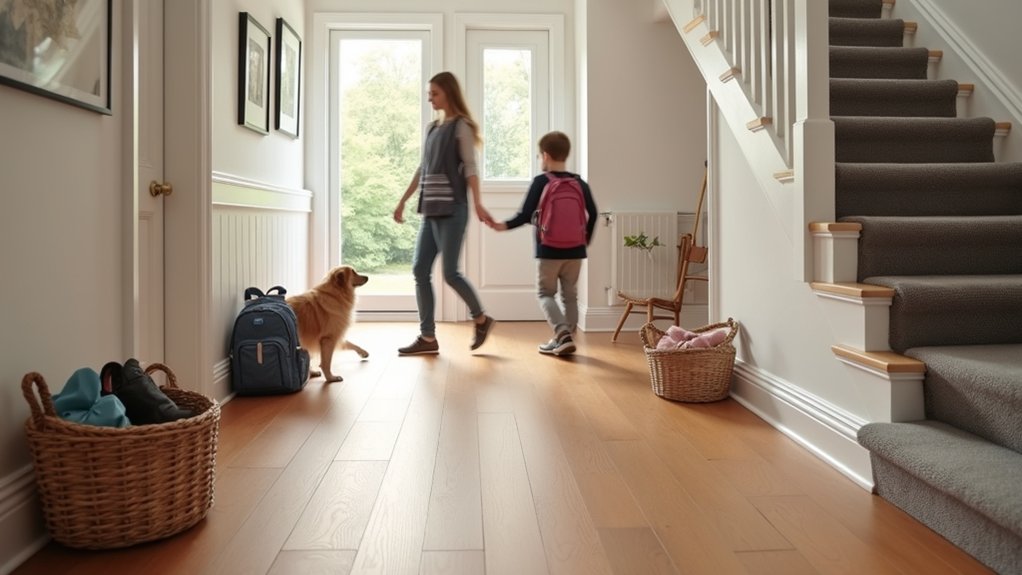
Match your flooring to daily traffic, especially if children, pets, or frequent guests use the hall and stairs. Choose a durable, slip-resistant surface that can handle wear without creating trip hazards.
Prioritize low-maintenance materials you can clean quickly and inspect regularly.
Match Daily Traffic
Assess how many people use the hall and stairs, how often they pass through, and whether they carry dirt, moisture, or heavy items before choosing a floor.
A busy household needs a wear-resistant surface with a suitable commercial rating, stable installation, and secure stair nosings.
Choose porcelain tile, engineered wood, luxury vinyl, or tightly woven carpet according to impact levels and walking habits.
If children, pets, or frequent deliveries increase traffic, prioritize slip resistance and a textured finish, particularly near entrances and on stair treads.
Check that the product tolerates rolling loads, footwear abrasion, and occasional wet contact without becoming hazardous.
Use decorative patterns to disguise tracking and color coordination to connect adjoining zones, but don’t let appearance override traction, edge visibility, or consistent height progressions.
Your flooring should support safe movement every day.
Choose Easy Maintenance
Choose flooring maintenance based on your family’s cleaning routine, not just its appearance. If you have pets, children, or frequent visitors, select sealed, stain-resistant surfaces that tolerate regular vacuuming and damp mopping.
Porcelain tile, luxury vinyl, and properly finished hardwood simplify cleanup, but confirm each product’s slip rating, especially for stairs. Avoid highly polished finishes, which can become hazardous when wet, and choose textured surfaces that provide reliable traction without trapping dirt.
Trendily patterns may disguise minor marks, yet complex textures can require more scrubbing. Eco-friendly materials, such as cork or responsibly sourced wood, can work well when manufacturers provide durable, low-maintenance finishes.
Install washable runners in entry zones, use protective mats, and follow manufacturer instructions. Your routine should determine cleaning products, refinishing needs, and long-term safety.
Frequently Asked Questions
Can Underfloor Heating Be Installed Beneath Hall and Stair Flooring?
Yes, you can install underfloor heating beneath hall flooring, but stairs require specialist design. Check radiator compatibility, maintain even heat distribution, choose suitable coverings, protect controls, and use qualified installers to meet safety requirements and manufacturer specifications.
How Should Flooring Transitions Between Hallways and Staircases Be Handled?
Use threshold crossings like a bridge between surfaces: one homeowner’s loose strip caused a trip. Align heights, secure profiles, and apply flooring edge finishing; you’ll prevent snags, protect stair nosings, and maintain safe, clean movement.
Are Certain Flooring Materials Better for Allergy Sufferers?
Yes, you’ll generally breathe easier with hard, sealed flooring, such as tile, vinyl, or finished wood. Choose allergen resistant finishes, guarantee Air purifier compatibility, and avoid carpets that trap dust, dander, and pollen.
Can Existing Stair Treads Be Covered Without Removing Them?
Yes, you can install stair tread coverings over existing treads if they’re sound, clean, and level. Secure them firmly, preserve nosing dimensions, maintain consistent riser heights, and consider professional existing stair upgrades for safety.
What Flooring Choices Suit Homes With Pets and Muddy Outdoor Access?
Choose Pet friendly surfaces like porcelain tile, luxury vinyl, or sealed concrete. You’ll benefit from Mud resistant flooring, textured slip resistance, sealed joints, and dark, patterned finishes that conceal dirt while simplifying cleaning and maintenance.
Conclusion
Choosing flooring for your hall and stairs isn’t merely about appearance—it’s about preventing the dramatic trip nobody wants to star in. Compare hardwood, laminate, carpet, and vinyl for grip, durability, cleaning needs, and cost. You’ll get the safest result by selecting textured, securely fitted surfaces, especially on stair treads, and adding appropriate nosings where needed. Match your choice to your family’s traffic, pets, and spills. Install it correctly, maintain it regularly, and let style follow safety.