

When heavy rain arrives, your guttering becomes your home’s first line of defence. It channels water away from the roof, walls, and foundations, helping prevent leaks, damp, soil erosion, and costly structural damage. If your gutters are undersized, poorly secured, or blocked with debris, runoff can quickly overwhelm them. You’ll need to understand the damage effective guttering prevents, how to maintain reliable flow, and when repairs or replacement become necessary.
Key Takeaways
- Guttering channels heavy rainwater away from roofs, walls, foundations, paving, and garden beds, preventing pooling and water damage.
- Correctly sized gutters and downpipes manage intense rainfall, reducing overflow, sagging, soil erosion, and foundation undermining.
- Secure brackets, proper gutter fall, sealed joints, and stable discharge points maintain efficient drainage during severe weather.
- Regular cleaning, inspections, and prompt repairs prevent blockages, leaks, corrosion, and structural damage that compromise performance.
- Professional assessment identifies whether repairs or replacement are needed when gutter failures persist or water reaches the home’s structure.
What Damage Does Guttering Prevent?
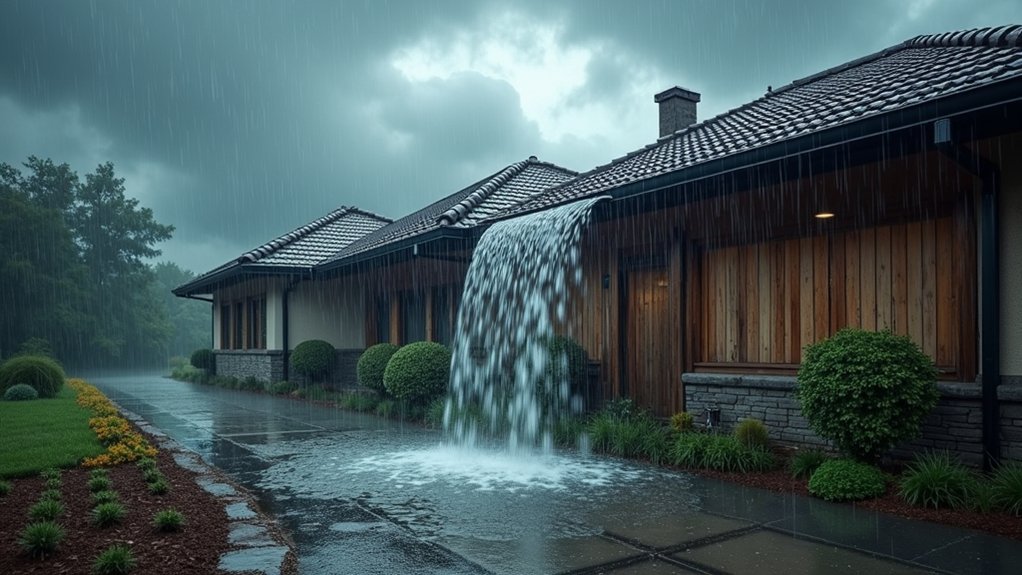
Guttering prevents rainwater from pooling around your roof, walls, and foundations, where it can cause damp, staining, rot, soil erosion, and structural damage. By collecting runoff and directing it safely away, you protect paving, garden beds, exterior finishes, and foundation soil from repeated saturation.
Controlled discharge also limits washout beneath paths and reduces the risk of overflowing water damaging fascia boards, soffits, and landscaping. Choose adequate capacity for your roof area and local rainfall intensity, then position downpipes to prevent concentrated flow near the building.
Gutter material durability matters because corrosion, cracking, or distortion can interrupt drainage and increase maintenance demands. You should also consider gutter aesthetics: well-proportioned profiles and suitable colours can complement your property while maintaining effective performance.
Regularly remove leaves and inspect joints, brackets, and outlets for damage.
Prevent Roof Leaks and Wall Damp
When roof runoff isn’t controlled, it can seep beneath tiles, saturate fascia and soffits, and stain or dampen external walls. You can prevent this damage by keeping gutters correctly sized, securely fixed, and free from leaves or silt.
Confirm each channel has a consistent fall towards properly sealed outlets, while downpipes discharge efficiently without overflowing at joints. Inspect seals, brackets, and roof edges after heavy rainfall, and replace cracked sections promptly.
Leaf guards can reduce blockages, but you’ll still need periodic cleaning and inspection. Effective maintenance limits moisture penetration, mould growth, timber decay, and expensive internal repairs.
Choose durable profiles and finishes that complement your property; thoughtful Gutter aesthetics needn’t compromise performance. These cost-effective solutions protect your roof envelope and keep walls dry throughout severe weather.
Protect Foundations From Runoff and Erosion
Protect your foundation by directing gutter discharge away from the building through downspouts and suitable extensions. You’ll reduce runoff near the footing and limit soil erosion that can expose or undermine the foundation.
Make sure outlets drain onto stable, graded surfaces or into approved drainage systems.
Direct Water Away
Well-designed guttering directs roof runoff into downpipes and away from your home’s foundation, reducing soil erosion, water pooling, and hydrostatic pressure against foundation walls.
Effective rainwater diversion starts with correctly sized gutters that match your roof area and local rainfall intensity. Your gutter design should maintain a consistent fall, provide adequate outlets, and include secure joints to prevent leaks beside foundation walls.
Downpipes must discharge into extensions, splash blocks, or a suitable drainage system that carries water a safe distance from the building. You’ll also need to check that outlets remain clear and that extensions haven’t shifted after storms.
Directing water away limits saturation around footings, helping protect masonry, slabs, and basement spaces from moisture-related damage. Schedule inspections before wet seasons and repair defects promptly.
Prevent Soil Erosion
Keeping discharge away from the foundation also helps prevent soil erosion, which can expose footings and undermine supporting ground.
Direct water through properly sized gutters, secure downpipes, and extensions that release flow well beyond the footing line. Without this control, concentrated runoff can carve channels through soil, wash away backfill, and reduce soil stability around your home.
Inspect outlets after heavy rainfall to confirm they’re firmly connected and draining freely. Where slopes increase flow speed, add splash blocks, drainage channels, or a connected stormwater system to disperse water safely.
Maintain mulch, ground cover, and edging around discharge areas to support landscaping preservation and limit exposed soil.
Don’t allow downpipes to discharge beside walls, paths, or retaining structures; persistent saturation can cause movement, cracking, and costly foundation repairs.
Choose Gutters That Handle Heavy Rain
When heavy rain arrives, your gutter system must move large volumes of water quickly without overflowing, sagging, or pulling away from the fascia. Choose a capacity suited to your roof area, pitch, and local rainfall intensity. Larger gutters and downpipes handle higher flow rates, while correctly positioned outlets reduce backup at corners.
Consider durable Gutter materials such as powder-coated steel, aluminium, or copper, weighing longevity, corrosion resistance, and maintenance requirements. Your Gutter design should include deep channels, secure brackets, reinforced joints, and adequate fall toward each outlet.
Install brackets at manufacturer-recommended intervals so the system remains rigid under water loads and wind. Oversized downpipes can improve discharge during cloudbursts, particularly on broad or steep roofs.
A qualified installer can calculate capacity and confirm that your fascia can support the selected system.
Keep Gutters Clear and Flowing

Keep your gutters clear by removing leaves and debris regularly, especially during autumn and after storms.
Check that each downspout flows freely and directs water away from your foundation.
These simple checks prevent blockages, overflow, and moisture damage.
Remove Leaves Regularly
Leaves can quickly block gutters and downspouts, preventing rainwater from draining away from your roof and foundation. Inspect your guttering in autumn and after strong winds, when falling foliage accumulates fastest.
Remove leaf buildup at least twice yearly, or more often if trees overhang your roof. Wear gloves, use a stable ladder, and scoop material into a bucket rather than onto pathways or garden beds.
For safer ground-level maintenance, consider a telescopic gutter scoop or vacuum attachment. Clear compacted organic matter carefully; wet leaves can become heavy and cause gutter joints, brackets, or sections to deform.
Check for debris blockage around outlet openings and remove it before buildup hardens. Installing a suitable gutter guard can reduce maintenance, but you’ll still need to inspect and clean the gutters regularly.
Never lean beyond the ladder’s safe working position.
Check Downspout Flow
Once you’ve cleared the gutter channels, test each downspout to confirm water flows freely to a suitable discharge point. Run a hose into the gutter and watch the outlet. Slow drainage, backing water, or overflow indicates leaves, sediment, or a blockage inside the pipe.
Remove the outlet elbow, flush the downspout from both ends, and use a plumber’s snake for stubborn obstructions. Check joints for leaks and secure loose connections before heavy rain arrives.
Your Downspout design should direct water at least 1.5 metres from the foundation, using extensions, splash blocks, or underground drainage where necessary.
During Gutter installation, installers should size downspouts for roof area and local rainfall intensity. Recheck flow after repairs, and inspect discharge points regularly to prevent erosion, pooling, and foundation damage around your home.
Know When to Repair or Replace Gutters
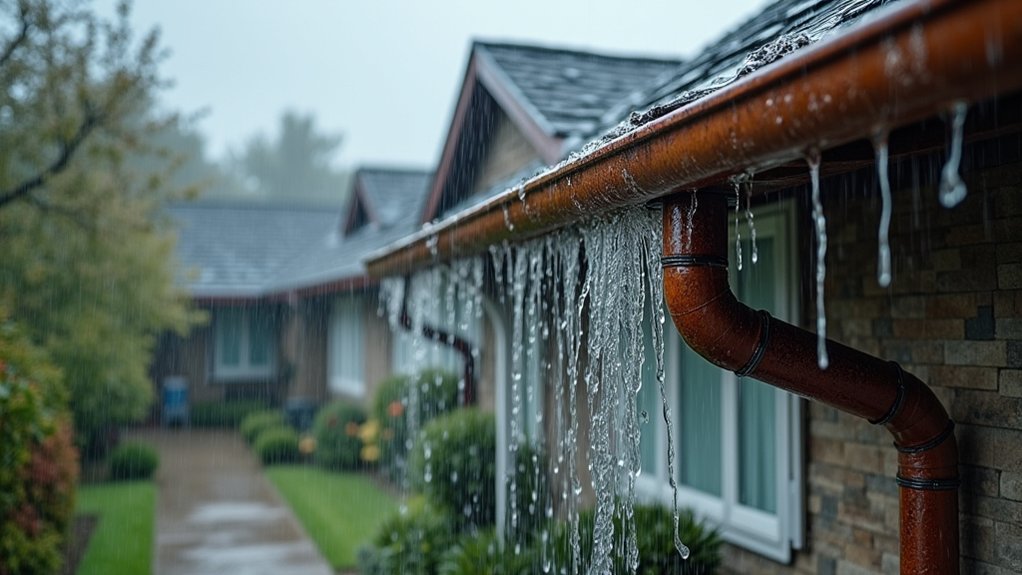
You should repair gutters when you find small leaks, loose fasteners, or isolated sections of sagging, but replacement is usually the better option when corrosion, repeated leaks, or structural damage affects multiple sections.
Inspect joints, seams, hangers, and fascia connections during dry weather. Seal minor holes with compatible gutter sealant, tighten fasteners, and realign short, sagging runs to restore the correct slope.
Consider the gutter material before choosing patches; aluminum, steel, copper, and vinyl require different repair products and methods. Replace sections that remain distorted, split, or rusted after repair.
Review installation techniques if failures recur, because inadequate pitch, undersized downspouts, or excessive hanger spacing can shorten service life.
Replace the system when repairs approach replacement cost or water continues reaching walls, foundations, or landscaping.
Schedule professional assessment when structural damage is extensive.
Frequently Asked Questions
How Much Does Professional Gutter Installation Typically Cost?
Professional gutter installation typically costs $1,000–$3,000, depending on your home’s size, materials, accessibility, and complexity. Request multiple itemized quotes, and budget separately for gutter maintenance and gutter cleaning to preserve performance and longevity.
Are Gutter Guards Suitable for Every Type of Roof?
Not every roof suits gutter guards. You’ll need to assess roof pitch, materials, runoff, and maintenance access. Compare Gutter guard types carefully, then verify Roof compatibility with your installer before choosing a system.
What Gutter Materials Offer the Longest Lifespan?
Copper and stainless-steel gutters offer the longest lifespan, often exceeding 50 years with proper installation. Their material durability resists corrosion; however, you’ll still need regular gutter maintenance to prevent debris, blockages, and premature failure.
Can Rainwater Be Collected and Reused From Guttering?
Yes, you can collect and reuse rainwater through a clean, covered barrel. Begin Rainwater harvesting by installing leaf guards, filters, and an overflow outlet; schedule Gutter system maintenance regularly, and use stored water for gardening, cleaning, or flushing.
Do Gutters Require Planning Permission or Building Regulations Approval?
You generally don’t need planning permission or building regulations approval for replacement gutters. However, your gutter design and planning considerations must address listed buildings, conservation areas, extensions, drainage connections, and local restrictions; check with your council first.
Conclusion
When heavy rain arrives, your gutters will either protect your home—or expose its weakest points. By directing water away from the roof, walls, and foundations, correctly sized and securely fitted guttering prevents leaks, damp, erosion, and costly structural damage. Keep every channel clear, inspect joints and fixings regularly, and replace damaged sections before failure occurs. Don’t wait for stains, pooling, or cracks to reveal the problem; proactive gutter maintenance keeps stormwater where it belongs: safely away from your home.