You may not know that fascia capping boards rely on the original timber for support, so they can hide serious decay without fixing it. If your fascia is dry, sound, and firmly attached, capping can improve weather resistance and appearance at lower cost. However, rot near gutter fixings or behind the visible surface usually calls for replacement. Before choosing, you’ll need to check the timber’s condition, repairs, safety, and long-term value.
Key Takeaways
- Fascia capping boards cover sound timber with weather-resistant uPVC, aluminium, or steel, improving protection, appearance, and gutter connections.
- Inspect timber thoroughly for rot, soft spots, warping, movement, insect damage, leaks, and insecure fixings before choosing capping.
- Choose capping only when existing fascia is dry, structurally sound, securely fixed, and capable of supporting guttering.
- Replace timber fascia when decay, splitting, distortion, or water damage affects the board, rafter ends, or fixing strength.
- Capping usually costs less and installs faster, while replacement removes concealed deterioration but requires more labour, materials, and maintenance.
What Are Fascia Capping Boards?

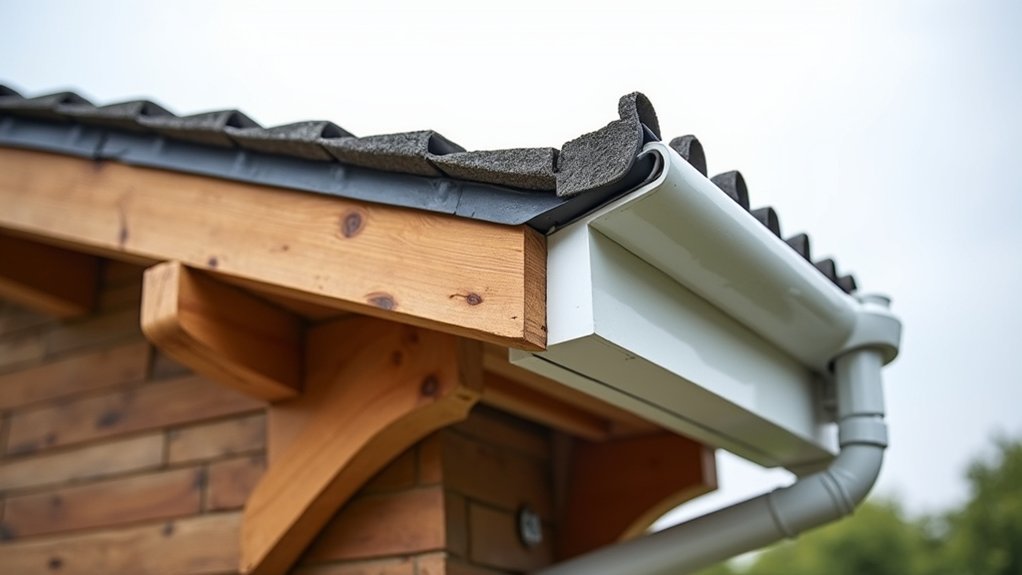
Fascia capping boards are protective coverings installed over existing fascia boards along a roof’s edge. You’ll typically find them made from uPVC, aluminium, or coated steel, with profiles designed to shield the fascia from rain, ultraviolet exposure, and physical damage.
Their primary purpose is to create a weather-resistant outer surface while supporting a neat connection between the roofline, soffit, and guttering. Material durability depends on the product’s thickness, coating, fixings, and resistance to impact and thermal movement.
You’ll also gain aesthetic enhancement through clean lines, consistent colours, and reduced visibility of minor surface defects. During installation, you should verify that the underlying roofline is sound, maintain correct gutter falls, and use compatible fasteners.
Don’t obstruct ventilation paths, and always use secure access equipment when working at height.
Can You Cover Existing Timber Fascia?
Yes, you can cover existing timber fascia with uPVC, aluminium, or coated steel capping, provided the timber is sound, dry, securely fixed, and free from rot or significant distortion.
The capping acts as a protective outer skin, improving weather resistance and providing decorative options in different colours, profiles, and finishes.
Before installation, confirm material suitability for your roof design, local exposure, and existing gutters.
The board must offer a firm, continuous fixing surface, while the capping should be measured accurately to avoid open joints or buckling.
Use compatible trims, corner details, and corrosion-resistant fixings, and maintain ventilation where the system requires it.
Don’t trap moisture behind the cover, obstruct the roof edge, or rely on capping to stabilise loose timber.
Follow the manufacturer’s instructions and use appropriate access equipment.
What Repairs Should You Check First?
Before fitting fascia capping boards, check the timber for rot, soft spots, and insect damage.
Inspect for roof leaks or damp pathways that could continue damaging the fascia and soffit.
Assess structural damage, and arrange qualified repairs before installation if the boards or roof edges aren’t secure.
Check for Rot
Inspect the fascia, soffit edges, rafter tails, and roof-deck ends for soft spots, discoloration, swelling, or crumbling wood, since rot often spreads beyond the visible damage.
Probe suspicious areas with an awl or screwdriver; sound timber resists pressure, while decayed wood collapses easily.
Check fastener holes, joints, and board ends especially carefully, because exposed end grain absorbs moisture quickly.
Mark every affected section, then remove loose or structurally weakened timber before fitting capping boards.
Don’t cover rot with aluminum or PVC; trapped moisture can accelerate deterioration and hide unsafe framing.
Replace damaged wood with treated, properly sized material, and seal cut ends.
Wear gloves, eye protection, and stable fall-protection equipment when working at height.
Improving ventilation, drainage, and flashing supports long-term rot prevention and moisture control.
Confirm replacement boards remain dry and securely fastened.
Inspect Roof Leaks
Once the fascia is sound, trace any roof leaks before installing capping boards, since hidden moisture can damage new materials and framing. Start with the most common entry points: slipped or cracked tiles, failed slates, deteriorated flashing, and open joints around chimneys, vents, and skylights.
Check the underlay and roof penetrations from the loft, but don’t walk on a wet or fragile roof; use a qualified roofer where access is hazardous.
Inspect valleys and eaves for blocked drainage, then verify Gutter alignment so water flows into, rather than behind, the trough.
Check Roof ventilation, including soffit vents, for condensation-related moisture and blocked airflow.
Repair defective coverings, flashing, seals, and drainage first, then hose-test the area carefully. Allow everything to dry before fitting capping boards.
Assess Structural Damage
After leaks are repaired and the roof structure is dry, check the fascia, rafter tails, soffits, and wall plate for rot, splitting, movement, or insect damage. Probe suspect timber with an awl; soft fibres, deep cracks, or crumbling edges indicate repairs before fitting any capping.
Check fixings, joints, and gutter brackets for looseness, and verify that the rafter tails still provide solid support. Replace decayed sections with treated timber, correcting the water entry point and preserving ventilation.
If damage extends into the wall plate or roof framing, consult a qualified roofer or structural professional. Don’t cover unstable wood: capping can hide deterioration and trap moisture.
Confirm surfaces are sound, dry, and level before installation. This approach protects fascia aesthetics while improving material durability and preventing premature failure.
When Is Timber Fascia Replacement Better?

Timber fascia replacement is often the better choice when boards are extensively rotten, split, warped, or unable to hold gutter fixings securely. You’ll also need replacement where decay extends behind the visible face, compromises rafter ends, or leaves gaps that admit water and pests.
Remove damaged timber carefully, inspect the supporting structure, and replace any deteriorated fixings before installing properly treated, dimensionally stable boards. Guarantee joints align over support, edges receive preservative, and the finished fascia provides a sound base for gutters.
Replacement can improve drainage reliability and reduce recurring repairs, particularly when seasonal maintenance has revealed progressive moisture damage. Consider aesthetic considerations too: mismatched repairs, staining, and distorted lines may detract from the roofline.
Wear suitable respiratory and eye protection, use stable access equipment, and seek professional assessment if structural timber appears affected. Never conceal unsafe damage; resolve its cause first.
Fascia Capping vs Full Replacement
When comparing fascia capping with full replacement, you’ll need to weigh installation cost and time against the extent of timber deterioration.
Inspect the fascia, rafter ends, and fixings for rot or movement before choosing a cover that could conceal structural damage.
Consider your long-term maintenance needs, as sound capping may reduce upkeep, while replacement provides a more durable repair.
Cost And Installation Time
Fascia capping usually costs less and installs faster than full fascia replacement because contractors retain the sound substrate and fit a protective cover over it. You’ll typically pay less for materials, labour, access equipment, and waste disposal. Installation may finish within a day, depending on property size, detailing, and weather.
Full replacement takes longer because your installer must remove boards, inspect fixings, cut new timber, protect exposed roof edges, and refit gutters before applying finishes.
Request itemised quotes so you can compare cover thickness, fixings, sealants, trims, and any access charges.
Although capping provides aesthetic enhancement and can support energy efficiency by sealing minor draught paths, don’t choose it solely for speed. Confirm the installer uses compatible materials, secure mechanical fixings, and safe roof access procedures throughout the work.
Structural Condition Assessment
Before choosing capping, you’ll need to confirm that the existing fascia is structurally sound, firmly fixed, and free from significant rot, splitting, insect damage, or water ingress. Probe timber around fixings, rafter tails, joints, and gutter brackets with a screwdriver, and check for movement, soft spots, staining, or distorted edges.
If damage extends into the roof structure or fixings no longer hold, replace the fascia rather than covering it. Capping only suits a stable substrate; it won’t restore lost strength or conceal unsafe deterioration.
A full replacement lets you repair supporting timbers, install suitable fixings, and improve load transfer from gutters. Consider Material durability and the site’s exposure when selecting replacement boards or capping.
Also assess aesthetic impact: capping may alter profiles, reveals, and colour consistency, while replacement offers a cleaner, uniform finish.
Long-Term Maintenance Needs
Once the substrate is confirmed sound, compare the maintenance demands of capping with those of full replacement. Quality uPVC or aluminium capping usually needs only periodic washing and inspection of joints, corners, and fixings. Check for movement, impact damage, blocked ventilation, and failed sealant, then repair defects before water reaches the timber.
Full replacement removes concealed decay, but it creates more installation joints and may require repainting if you choose timber.
Your Weatherproofing options include sealed joints, correctly formed drips, and compatible coatings; never trap moisture beneath poorly fitted capping.
Review Aesthetic considerations, because fading, colour mismatch, or warped boards can make patch repairs conspicuous.
Inspect from a safe platform, not a ladder positioned on unstable ground.
Schedule annual checks, especially after storms, and use a competent contractor for high-level repairs or suspected structural deterioration.
How Much Do Fascia Capping and Replacement Cost?
The cost of fascia capping or replacement depends on the material, board condition, property size, access, and labour required. Capping typically costs less because installers fit aluminium or uPVC over sound timber, reducing removal and disposal time.
Replacement costs more when contractors must strip damaged boards, inspect rafter ends, repair rot, and install new timber or uPVC. Material durability and aesthetic appeal also affect the quotation: powder-coated aluminium may cost more initially, while uPVC often offers a lower-cost finish.
Steep roofs, scaffolding, awkward access, and extensive cutting increase labour charges.
Ask for an itemised estimate covering materials, fixings, ventilation details, waste removal, and making-good work.
Don’t accept a low quote that omits roof-edge repairs or safe access equipment; hidden defects and unsafe working practices can create expensive risks.
How to Choose Between Capping and Replacement

Choose capping when the existing fascia boards are structurally sound, dry, securely fixed, and free from significant rot, splitting, or insect damage. Capping can provide paint preservation and aesthetic enhancement while reducing future maintenance.
Before installation, inspect behind the gutter and along every fixing point; trapped moisture or concealed decay can compromise the finished system.
Opt for replacement when timber feels soft, bows, cracks deeply, has loose joints, or can’t support new fixings. You should also replace boards if water damage extends into rafter ends or the roofline lacks adequate ventilation.
Don’t use capping to hide structural defects. Have a qualified professional assess unsafe access, unstable gutters, or suspected asbestos-containing materials.
Confirm replacement timber receives preservative treatment, remains properly ventilated, and supports correctly aligned gutters before you install any covering.
Frequently Asked Questions
How Long Do Fascia Capping Boards Typically Last?
Fascia capping boards typically last 20–30 years, depending on material durability, installation, weather exposure, and maintenance. You’ll benefit from comparing warranties and cost comparison, while inspecting joints and securing loose sections promptly.
Do Fascia Capping Boards Require Regular Cleaning or Maintenance?
Yes, you’ll need occasional cleaning and inspection. Cleaning frequency depends on exposure, but twice yearly works well. Maintenance tips: use mild detergent, check joints, avoid ladders without proper support, and repair damage promptly.
Can Fascia Capping Boards Improve a Property’s Appearance?
Yes, your fascia capping boards can dramatically improve fascia aesthetics, especially when you want exterior enhancements without replacing sound timber. Choose secure, weather-resistant profiles, maintain clean edges, and inspect fixings regularly to prevent hazards and deterioration.
Are Fascia Capping Boards Suitable for Every Roof Design?
Not every roof design suits fascia capping boards. Check roof aesthetics, ventilation, drainage, and material compatibility first. You’ll need secure fixing, accurate measurements, and professional assessment where complex profiles, damage, or unusual construction exists.
Can You Install Fascia Capping Boards During Winter?
Yes, you can install fascia capping boards during winter, but Winter installation requires careful Temperature considerations. Choose dry weather, follow manufacturer temperature limits, allow materials to acclimatise, and don’t work on icy, wet, or windy roofs.
Conclusion
Ultimately, you should cap timber fascia only when it’s sound, dry, and securely fixed; otherwise, replace it to protect the roofline and gutter supports. Don’t hide rot beneath a new cover—inspect joints, fixings, ventilation, and any moisture sources first. As a useful benchmark, well-maintained uPVC fascia can last around 30 years, while untreated timber may need attention much sooner. If you’re unsure, get a professional assessment before work begins, because a neat finish must also be structurally safe.