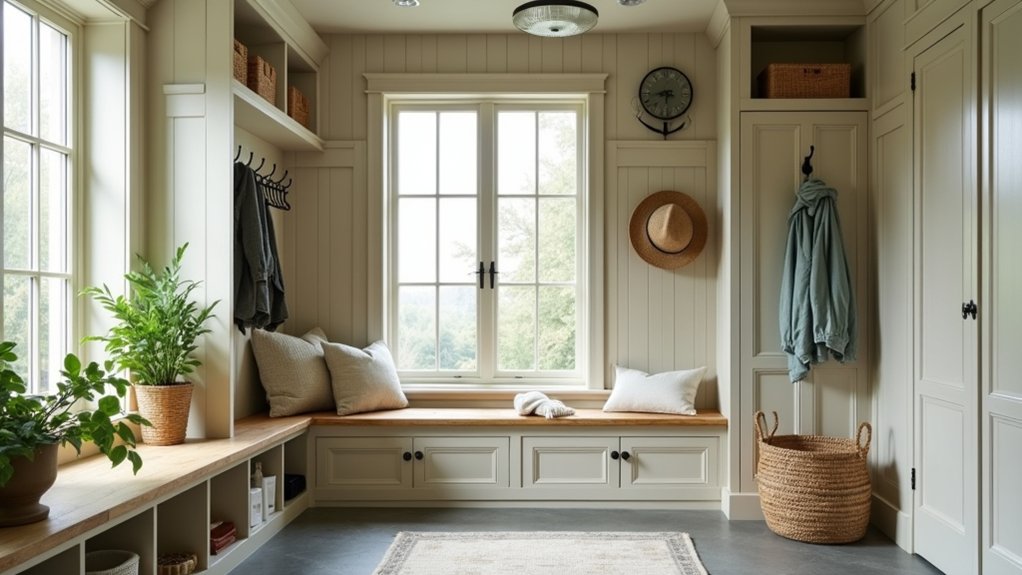
Creating a practical and welcoming mud room means choosing the best mud room colour means balancing appearance, maintenance, and available light. Start by checking how your flooring, cabinets, and fittings work together, then consider warm neutrals such as oatmeal, putty, or soft taupe to create a welcoming backdrop that hides everyday dirt. Sage green can add a calm, natural feel, while pale shades help small rooms look larger. Durable, washable paint is essential—but the right contrast colour and finish may depend on more than you expect.
Key Takeaways
- Choose warm neutrals like oatmeal, mushroom, taupe, or beige to create a welcoming, practical foundation.
- Use muted sage or soft green for a calming, nature-inspired colour that helps conceal minor marks.
- Select mid-tone, low-saturation shades such as greige or muted grey to disguise everyday dirt and wear.
- Brighten small mud rooms with pale warm whites, soft greys, or gentle beiges that reflect available light.
- Add navy, charcoal, or forest-green accents to doors, benches, or storage for contrast and visual definition.
Check Light, Dirt and Paint Durability
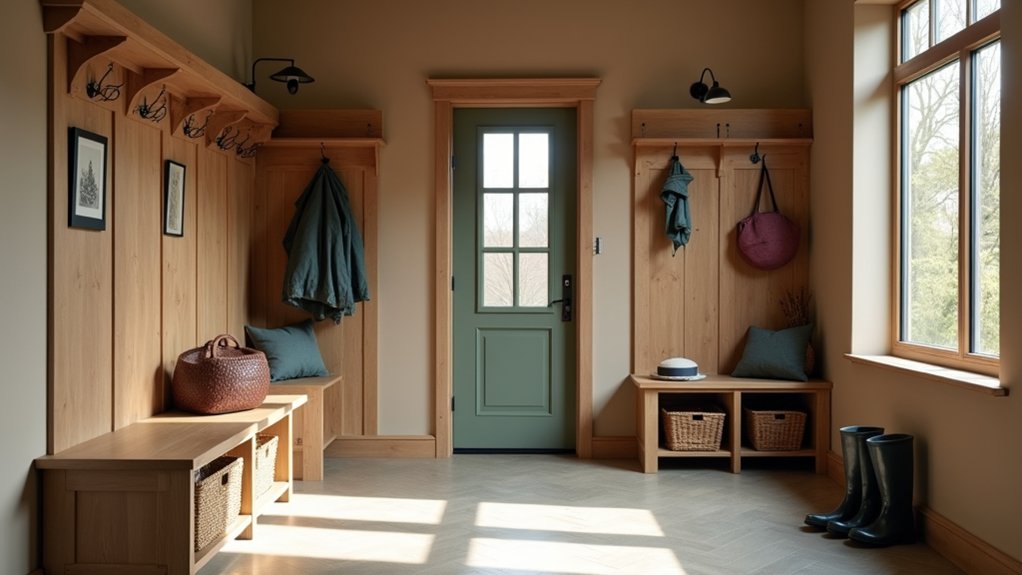
Before choosing a colour, assess how much natural and artificial light your mud room receives, since both affect how the paint will look throughout the day. Test sample patches on multiple walls, then check them in morning, afternoon, and evening conditions.
Consider your Lighting options, including overhead fixtures, task lights, and motion-activated bulbs, because their colour temperature can make paint appear warmer or cooler.
Next, evaluate dirt exposure. Entry areas collect mud, salt, dust, and scuff marks, so choose a washable coating that tolerates regular cleaning.
A durable eggshell or satin paint finish usually offers a practical balance between low sheen and scrub resistance.
Use quality primer on patched or porous surfaces to improve adhesion and colour consistency.
With these checks, you’ll select paint that stays attractive and performs reliably under daily wear.
Match Mud Room Colours to Cabinets and Flooring
Coordinate the mud room colour with your cabinets and flooring so the finishes look intentional and balanced. Start by identifying the dominant undertone in each material.
Warm oak, beige tile, and brass hardware pair well with cream, taupe, terracotta, or muted sage.
Cool white cabinetry, grey flooring, and stainless-steel fittings suit blue-grey, charcoal, crisp white, or soft green walls.
If your cabinets and floor have different tones, choose a low-saturation wall colour that bridges them rather than competing with either surface.
Use Color coordination techniques such as repeating one cabinet undertone in trim or selecting a wall shade two or three steps lighter than the cabinetry.
Add Decorative wall accents through artwork, hooks, or a painted bench in a controlled complementary colour.
Test samples beside both finishes before committing.
Choose Mud Room Colours That Hide Dirt
Choose mid-tone, low-saturation colours to conceal everyday dirt, paw marks, and damp footprints without making the mud room feel dark. Shades with muted grey, taupe, or green undertones disguise variable grime better than very pale or highly saturated paint.
Choose a finish with moderate reflectance and a washable, scrubbable rating; eggshell or satin typically balances stain resistance with manageable glare. Test samples beside your flooring and cabinets, then view them under daylight and evening lighting.
Use darker tones strategically on lower walls, around doorways, or behind coat hooks, where contact is most frequent. Mud room colour psychology also matters: subdued hues can create a calm, orderly impression.
Consider cultural colour symbolism when selecting accents, but prioritise how the colour performs with your household’s traffic, pets, and cleaning routine.
Use Warm Neutral Mud Room Colours
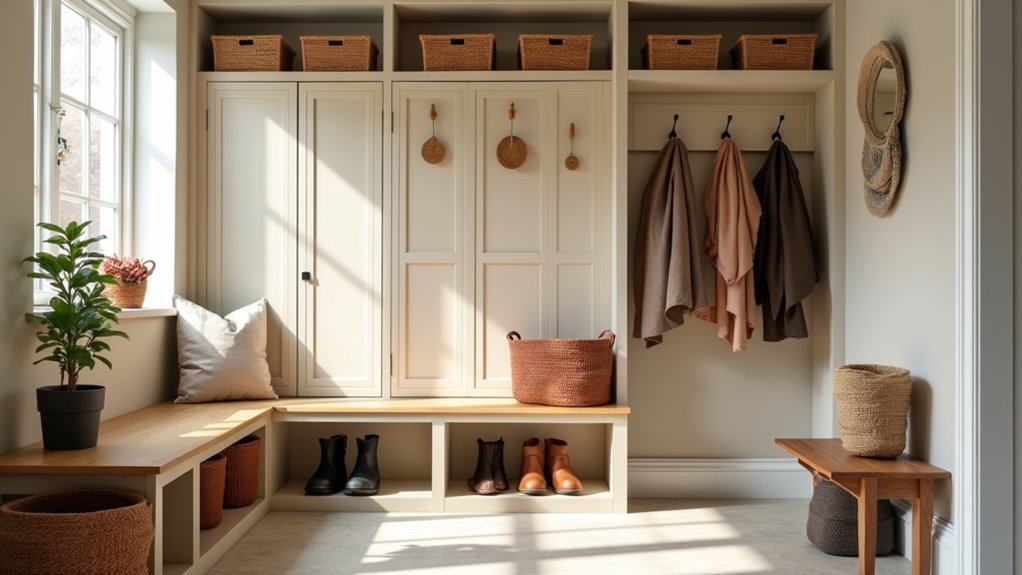
Use warm neutral mud room colours to create a cosy, practical foundation that feels welcoming. Layer earthy tones through walls, cabinetry, and flooring to add depth without making dirt more noticeable.
Balance light and warmth by pairing soft neutrals with adequate lighting and durable, easy-clean finishes.
Create a Cosy Foundation
Warm neutral mud room colours create a welcoming foundation while helping conceal everyday dirt and scuffs. Choose shades such as oatmeal, putty, mushroom, or soft taupe to add warmth without making the room feel dark.
These tones also provide visual flexibility: you can refresh accessories and storage accents through seasonal colour changes without repainting the walls.
Consider colour psychology when selecting your base. Soft beige can feel calm and approachable, while muted greige offers a cleaner, more structured appearance.
Test samples beside your flooring, cabinetry, and natural light, because undertones can shift noticeably throughout the day.
Select a washable, low-sheen finish to withstand coats, bags, and muddy footwear.
A consistent warm neutral across walls and trim can make a compact mud room feel larger, calmer, and easier to maintain.
Layer Earthy Tones
Layer earthy tones by pairing your warm neutral base with muted clay, olive, sand, or terracotta accents. This natural color pairing gives your mud room visual depth without making the space feel busy. Choose one dominant neutral for walls, then add a darker earthy shade through cabinetry, benches, or built-in storage.
Use mid-tone accents on hooks, baskets, or seat cushions to connect each surface. For durability, select washable eggshell or satin paint on walls and hard-wearing finishes on high-contact joinery.
Keep undertones consistent: combine yellow-based beige with warm olive and terracotta, or pink-based beige with dusty clay and muted taupe. Test samples beside your flooring and trim before committing.
You’ll create a cohesive, forgiving palette that conceals everyday scuffs and supports practical organisation.
Balance Light and Warmth
A warm neutral palette can keep your mud room bright without making it feel stark or overly cool. Choose shades such as oatmeal, soft beige, greige, or warm ivory for walls and cabinetry. These colours reflect useful light while disguising everyday dust, splashes, and scuffs better than pure white.
Use Color psychology to create a calm shift between outdoors and your living spaces. Warm undertones can make the room feel welcoming, while a mid-tone neutral adds visual depth and supports practical storage zones.
Apply effective Lighting techniques to control the result. Combine ceiling fixtures with under-shelf or wall lighting, and select bulbs between 2700K and 3000K for a comfortable glow.
Test paint samples throughout the day, because daylight and artificial light can considerably alter each neutral’s appearance. Finish with washable, low-sheen paint for easy maintenance.
Try Green Mud Room Colours Inspired by Nature
Bring sage green into your mud room for a calm, nature-inspired backdrop that hides everyday marks. Use forest green on cabinets, trim, or an accent wall to add depth without overwhelming the space.
Choose washable, durable finishes so the room stays practical as well as inviting.
Sage Green Serenity
Sage green gives your mud room a calm, natural foundation while hiding minor scuffs better than very pale shades. Its muted undertone supports colour psychology by encouraging a grounded, restful feeling when you enter or leave home.
As part of current Interior design trends, sage also adapts easily to changing furnishings and seasonal accessories.
Choose a washable, low-sheen eggshell or satin paint so you can wipe away dirt without highlighting wall imperfections. Test samples beside your flooring and under both daylight and artificial light; sage can appear warmer or cooler depending on nearby surfaces.
Pair it with balanced neutral storage, durable flooring, and clear lighting to maintain practical visibility. If your room lacks windows, select a lighter sage to prevent a cramped appearance.
You’ll create a welcoming backdrop that remains easy to maintain.
Forest Green Accents
Want a stronger connection to the outdoors? Use forest green accents to give your mud room depth without making it feel enclosed. Apply this rich shade to a durable bench, storage doors, or one feature wall, then balance it with warm white, cream, or pale timber. These lighter surfaces reflect light and prevent the room from appearing smaller.
For natural woodland themes, pair forest green with oak hooks, woven baskets, stone-look flooring, and botanical artwork. Choose washable, satin-finish paint for walls and moisture-resistant coatings for cabinetry, especially where wet coats and muddy footwear are common.
If you’re unsure about using a large area, start with green shelving or a painted internal door. Test samples under your room’s actual lighting first; forest tones can shift from crisp to almost charcoal throughout the day.
Brighten Small Spaces With Pale Colours
Pale colours can make a small mud room feel brighter and more spacious by reflecting available light. Choose warm whites, soft greys, or gentle beige for walls and cabinetry to create a calm, practical base.
Pastel palettes, including powder blue, sage, or blush, add personality without visually crowding the room. Use the same light tone on upper walls and shelving to reduce harsh boundaries and improve continuity.
Monochrome schemes can also make the space feel larger, especially when you vary texture rather than colour. Test samples beside your flooring and under both daylight and artificial lighting, as undertones can change noticeably.
Select washable, moisture-resistant paint for areas exposed to wet coats and muddy hands. A pale, durable finish will keep your mud room welcoming while simplifying regular cleaning and maintenance.
Use Navy or Charcoal for Contrast
Navy or charcoal can add definition to a pale mud room without making it feel enclosed. Use navy contrast on a bench, door, or tall storage unit to anchor the room and give lighter walls a clear visual boundary.
If your space receives limited daylight, choose a softened navy rather than an almost-black shade, which can appear heavy. Charcoal accents offer a neutral alternative and work well with white, cream, timber, and brushed metal.
Apply the darker colour selectively: one substantial feature usually creates more balance than several small patches. You can also repeat it in hooks, handles, or a runner to connect the scheme.
Keep the pale base dominant, so the room still feels open, organised, and easy to navigate during busy routines. This approach adds structure without overwhelming compact spaces.
Choose a Washable Finish for Busy Walls

How can you keep pale mud-room walls looking clean when coats, bags, and muddy hands pass through daily? Choose a washable finish designed for frequent cleaning. Satin or eggshell paint provides a practical balance: its low-sheen surface disguises minor marks, while its smoother film lets you wipe away dirt without excessive scrubbing.
Check the label for scrub resistance, stain resistance, and suitability for high-traffic areas, because these specifications indicate real paint durability. Apply two even coats over a properly prepared surface, allowing each coat to cure according to the manufacturer’s instructions.
Use a mild detergent, soft cloth, and minimal water when cleaning; harsh chemicals or abrasive pads can damage the finish. Keep a small amount of leftover paint for touch-ups, and repair scuffs promptly before grime settles into the surface.
Test Colours in Morning and Evening Light
Because mud rooms often receive different amounts and types of light, test paint samples before committing to a colour. Paint large, removable boards rather than small patches, then place them on several walls.
Observe each sample at different times, including under Morning light, when cooler daylight may make blue or green tones appear sharper. Check again at midday and after sunset, when warm bulbs influence the evening ambiance and can deepen beige, taupe, or grey shades.
Keep samples near flooring, cabinetry, hooks, and doors to judge the complete combination. If your room has a window, note how weather changes the colour’s appearance.
Live with the samples for at least two days before choosing. This simple test helps you select a shade that remains welcoming and practical throughout the day.
Frequently Asked Questions
What Furniture Is Essential for an Organised Mud Room?
You’ll need a sturdy bench, closed cabinets, open cubbies, and a durable mat. Add Decorative hooks for coats, plus Shoe storage options that ventilate footwear and keep walkways clear, making daily routines easier.
How Can I Maximise Storage in a Small Mud Room?
Treat your small mud room like a vertical toolbox: install hooks, shelving, and overhead cabinets. Use slim benches with drawers, labeled bins, and door organizers. Coordinate color schemes and wall accents to maintain visual order.
Which Flooring Materials Work Best in High-Traffic Mud Rooms?
Choose porcelain tile, luxury vinyl, or sealed concrete for high-traffic mud rooms. These durable surfaces resist scratches, moisture, and stains. Prioritise water resistant options, textured finishes, and simple maintenance; you’ll gain dependable, long-lasting performance.
How Can I Prevent Mud Room Clutter From Building Up?
Stop clutter before it starts: assign every item a home. Use Shoe organization for footwear, Coat storage with labeled hooks, and a weekly reset; you’ll keep surfaces clear, traffic flowing, and daily routines manageable.
What Lighting Fixtures Are Most Suitable for a Mud Room?
Choose moisture-resistant LED ceiling fixtures for even mud room lighting, then add flush-mounts or recessed lights near doors and storage. You’ll get practical lighting fixtures that resist impact, simplify cleaning, and prevent shadows.
Conclusion
With the right colour, your mud room can handle almost everything life throws at it. Check natural light, flooring, cabinetry, and traffic before choosing a shade. Warm neutrals, sage, pale tones, navy, or charcoal can balance welcome, practicality, and visual interest. Select a durable, washable finish, then test samples in morning and evening light. You’ll create a brighter, more cohesive entrance that hides everyday dirt and stays inviting with minimal maintenance.