
Choosing flooring for a high traffic hallway requires more than comparing colors and prices. You’ll need to assess foot traffic, moisture exposure, pets, children, maintenance demands, and the product’s wear layer or surface finish. Porcelain tile delivers maximum durability, while luxury vinyl balances comfort, water resistance, and value. Hardwood offers lasting style with more upkeep, and laminate provides affordable performance. The right choice depends on which risks your hallway faces most often.
Key Takeaways
- Porcelain tile offers maximum durability, moisture resistance, and scratch protection for heavily trafficked hallways.
- Luxury vinyl balances comfort, affordability, water resistance, and realistic wood or stone appearances.
- Factory-finished hardwood provides timeless style and durability when protected from moisture and maintained properly.
- Scratch-resistant laminate is a cost-effective option, especially when selecting an appropriate heavy-use AC rating.
- Choose textured, low-VOC flooring with proper underlayment, expansion gaps, sealed transitions, and regular cleaning for lasting safety.
Define Your Hallway’s Traffic and Wear
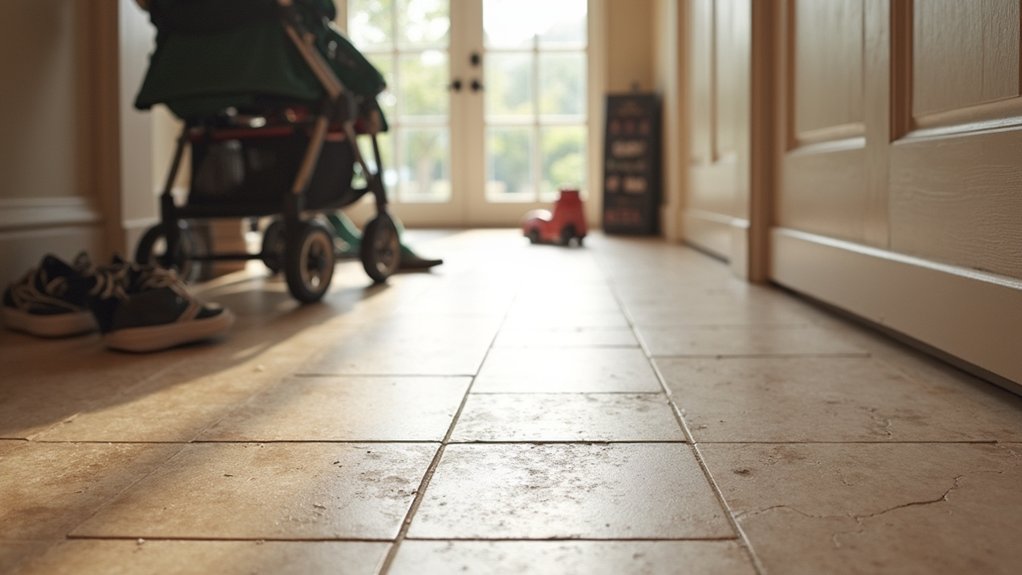
Before choosing a flooring material, assess how much traffic your hallway receives and what types of wear it must withstand. Count daily users, including children, pets, and visitors, then note whether shoes track in grit, moisture, or deicing salt.
Observe concentrated wear near entrances, stairs, and room *passages*. Identify impacts from dropped objects, rolling luggage, or furniture, and check whether sunlight may cause fading.
Your assessment should also account for cleaning frequency and the hallway’s width, which affects turning and scuffing. Record these conditions before selecting a surface profile, texture, or finish.
Decorative patterns can disguise minor marks, while color coordination helps integrate the corridor with adjacent rooms. Define your traffic and wear requirements first, so your eventual flooring choice matches actual hallway conditions and maintenance demands.
Compare Hallway Flooring by Cost and Durability
With your hallway’s traffic and wear profile defined, compare flooring by installed cost, service life, and maintenance requirements rather than by material price alone. Budget vinyl often costs least upfront, installs quickly, and resists moisture, but you may replace it sooner under heavy use.
Laminate typically offers moderate pricing, strong scratch resistance, and straightforward cleaning; however, damaged planks can expose moisture-sensitive cores.
Engineered wood costs more and requires careful maintenance, yet it can deliver a longer service life when you control moisture and refinishability suits the product.
Include underlayment, subfloor preparation, connectors, waste, and labor in every estimate.
For practical installation tips, verify flatness, acclimate applicable materials, and protect expansion gaps. Coordinate plank direction with sightlines, and use color coordination to conceal dirt while supporting your interior scheme.
Track annual maintenance and replacement costs, not just purchase price.
Choose Tile for Maximum Durability
Tile is the strongest choice for hallways that need maximum durability, particularly porcelain rated for floor use and tested for heavy residential or commercial traffic. Its dense, low-absorption body resists scratches, stains, moisture, and impact, while a textured surface can improve traction.
Choose a through-body or color-body product to reduce visible damage from chips. Review the tile’s PEI rating, breaking strength, water absorption, and slip resistance before buying.
Customization options include plank, square, or hexagonal formats; varied colors, patterns, and grout widths let you coordinate the hallway with adjacent rooms.
Use proper installation techniques, including a flat, rigid subfloor, full mortar coverage, movement joints, and correctly sized grout joints. You’ll also need accurate cuts at doorways and connectivity.
Seal porous grout and replace cracked tiles individually when necessary.
Consider Luxury Vinyl for Comfort and Value
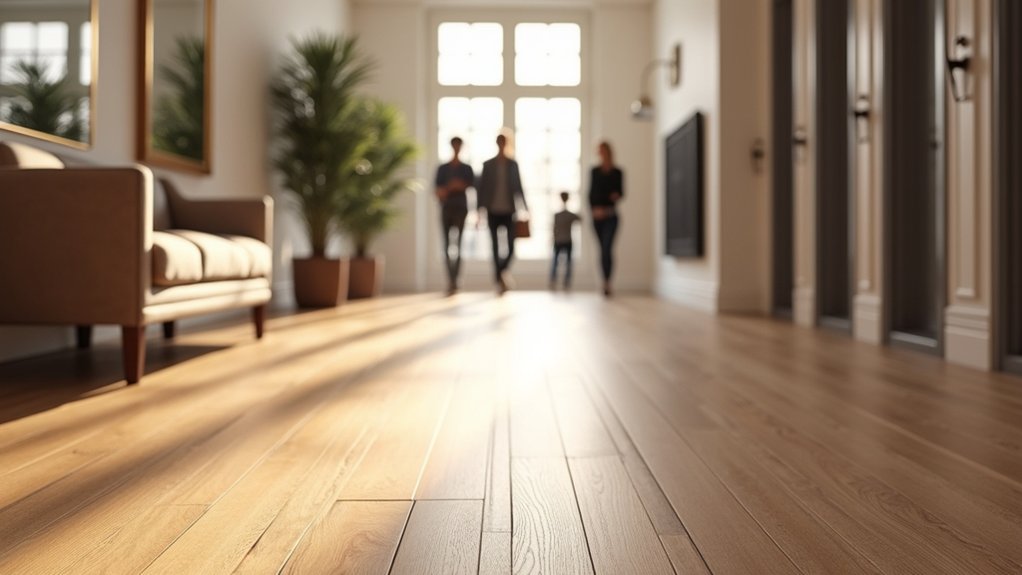
Luxury vinyl gives you durable, resilient comfort for demanding hallway traffic. You’ll get a refined appearance at a lower cost than many natural materials.
Its protective wear layer also simplifies routine cleaning and helps resist stains, scuffs, and moisture.
Durable Everyday Comfort
Luxury vinyl offers a practical balance of comfort, durability, and value for high-traffic hallways. Its resilient construction absorbs some impact, giving you a more comfortable surface underfoot than rigid tile.
Choose planks or tiles with a wear layer suited to your household’s traffic; thicker, commercial-grade layers generally resist scuffs, scratches, and abrasion more effectively.
Waterproof cores and sealed seams also help protect the subfloor from tracked-in moisture, though you’ll still need prompt cleanup and proper installation.
Textured finishes can improve traction without making routine sweeping difficult.
You can use decorative patterns to guide movement or define the hallway’s visual length, while color coordination helps connect adjacent rooms.
Regular vacuuming, damp mopping with a manufacturer-approved cleaner, and protective pads beneath furniture will preserve the finish and reduce maintenance demands over time.
Affordable Luxury Appeal
When you want a refined hallway appearance without a premium installation cost, luxury vinyl delivers convincing wood, stone, and patterned visuals at a more accessible price. You can select planks or tiles that reproduce luxury textures with impressive detail, including grain variation, veining, and subtle surface embossing. These options help you coordinate the hallway with adjacent rooms while maintaining a polished, intentional design.
Luxury vinyl also gives you practical comfort underfoot. Its resilient construction provides slight flexibility, reducing the hard sensation associated with ceramic or natural stone. Many products offer elegant finishes, from matte oak looks to honed-stone effects, so you can achieve a tailored appearance without investing in premium materials.
Compare wear layers, thicknesses, and installation formats to match your budget and design goals. Sample flooring under your hallway’s lighting before you commit.
Easy-Care Performance
For a hallway that sees daily dirt, spills, and foot traffic, luxury vinyl offers a practical surface that’s easy to maintain. Its wear layer resists scratches, stains, and moisture, while textured finishes can improve traction underfoot. You can sweep or vacuum regularly, then use a manufacturer-approved damp mop for deeper cleaning.
Unlike porous materials, vinyl doesn’t require sealing, polishing, or specialized stain treatment. Choose thicker planks or tiles with a robust wear layer for better dimensional stability and longer service life. Cushioned backing can also reduce impact noise and improve walking comfort.
If you’re comparing eco-friendly options, look for low-VOC products, recycled content, and FloorScore certification. For DIY installation tips, acclimate planks, level the subfloor, and maintain expansion gaps.
You’ll get durable performance without demanding upkeep or costly professional maintenance.
Pick Hardwood for Timeless Style
Hardwood brings durable, timeless style to high-traffic hallways, provided you choose a dense species and protect it with a commercial-grade finish. Select oak, maple, or hickory for better resistance to dents and abrasion. Specify a factory-cured aluminum-oxide coating or apply a professional polyurethane finish; both create a harder wear layer than basic residential coatings.
Seal every exposed edge, especially near entry doors, to limit moisture intrusion. Hardwood’s weather resistance remains limited, so use walk-off mats, remove wet footwear, and clean spills immediately.
Maintain stable indoor humidity, ideally 30–50%, to reduce seasonal gapping, cupping, and shrinkage. Consider the plank’s acoustic properties: solid wood can transmit footfall, while an engineered, underlayment-backed assembly may reduce impact noise.
Choose a low-sheen finish to disguise scuffs, and refinish when wear reaches the wood.
Use Laminate for Affordable Performance
Laminate offers a lower-cost alternative to hardwood while delivering strong resistance to scratches, stains, and everyday hallway traffic. You’ll find a dense wear layer helps protect the printed surface, while click-lock edges speed installation and create consistent seams.
Choose planks with an AC rating suited to heavy residential use for better long-term performance. Before installation, follow essential laminate installation tips: acclimate planks, level the subfloor, install underlayment as specified, and maintain the manufacturer’s expansion gap.
You’ll also find numerous laminate color options, including oak, maple, walnut, and gray finishes, so you can match existing rooms or brighten a narrow passage. Use connector strips at adjoining floors, and stagger end joints to improve stability and create a more natural appearance.
Regular sweeping and prompt spot cleaning will preserve the finish.
Choose Flooring for Pets, Kids, and Moisture

When pets, children, and moisture affect your hallway, choose flooring with a durable wear layer, slip resistance, and low water absorption.
Pet friendly materials, including luxury vinyl and porcelain tile, resist scratches, claws, stains, and frequent cleaning. Choose textured surfaces to improve traction, but avoid deep grooves that trap fur and dirt.
Moisture resistant options protect the subfloor from wet shoes, spills, and pet accidents. Waterproof luxury vinyl offers resilient performance and comfortable acoustics, while porcelain tile provides exceptional hardness and water resistance.
Seal grout periodically to limit staining and microbial growth.
For children, select low-VOC products with secure locking systems or professional installation.
Use washable runners at entrances, dry spills promptly, and inspect seams, passages, and grout regularly. These measures extend service life and maintain hallway safety.
Frequently Asked Questions
How Should Hallway Flooring Transition Between Adjoining Rooms?
You should align flooring edges at doorways, use transition strips for height differences, and maintain color coordination. A decorative border can define boundaries while ensuring flush, secure, and accessible progression between adjoining rooms.
Can Underfloor Heating Be Installed Beneath Hallway Flooring?
Yes, you can install underfloor heating beneath hallway flooring. Choose compatible materials, verify insulation and moisture barriers, and follow manufacturer limits. Radiant heating improves temperature regulation, but professional installation guarantees safe, even performance and protects flooring.
What Subfloor Preparation Does Hallway Flooring Require?
You’ll want a clean, stable foundation beneath your hallway flooring. Check subfloor moisture, repair cracks, remove debris, and complete surface leveling. Secure loose panels, then follow the flooring manufacturer’s requirements before installation for lasting performance.
How Long Does Professional Hallway Flooring Installation Typically Take?
Professional hallway flooring installation typically takes one to three days. You’ll need additional time for subfloor repairs, adhesive curing, connectors, Decorative accents, or Soundproofing solutions, depending on material, layout, and project complexity.
Which Hallway Flooring Options Are Easiest to Repair or Replace?
Don’t assume repairs require replacing everything: you’ll find luxury vinyl planks, carpet tiles, and engineered wood easiest to repair selectively. Keep spare pieces for matching, add Decorative inlays, and consider Noise reduction during replacement.
Conclusion
The best hallway flooring balances durability, maintenance, safety, and appearance. Assess your traffic, moisture exposure, pets, and budget before choosing porcelain tile, luxury vinyl, hardwood, or laminate. Select a strong wear layer, textured or slip-resistant finish, and low-maintenance surface for lasting performance. With proper installation and routine cleaning, your floor can handle daily activity like a well-built roadway. Choose the material that fits your household’s demands, and you’ll create a durable, attractive passageway.